
Hear from Our Customers
If your garage floor is pitted, stained, or dusting every time you sweep, it is not just an eyesore — it is concrete that has been absorbing Michigan winters without any protection. Royal Oak’s housing stock skews heavily toward mid-century construction, which means most garage floors and basement slabs in this city are somewhere between 60 and 75 years old. That concrete has been through a lot. A professionally applied epoxy floor coating seals the surface completely, stabilizes hairline cracks, and gives you a floor that actually holds up instead of continuing to deteriorate season by season.
The road salt factor is real here. Every time you pull into your garage off Woodward Avenue or the I-75 corridor between November and March, you are bringing salt-coated tires onto bare concrete. That salt does not just sit there — it pulls moisture into the slab and accelerates the freeze-thaw damage that Michigan winters already cause on their own. Once your floor is properly coated, that salt sits on the surface and wipes clean. It stops working its way into the concrete.
There is also a moisture issue specific to Royal Oak’s clay-rich soil. Clay expands when wet and contracts when dry, and that seasonal movement pushes moisture vapor upward through concrete slabs from below. If a coating is applied without testing for this first, that moisture pressure is what causes epoxy to bubble and peel — not from the top, but from underneath. Getting this right from the start means your floor stays bonded and intact instead of failing within the first year.
Legends Painting LLC is a family-owned painting and specialty coating contractor serving Royal Oak and the surrounding Oakland County area. We are owned and run by two brothers who spent more than a decade in the painting and coating trades before launching our own company. That matters because you are not hiring a new operation still working through its learning curve — you are hiring people who have already solved the problems your Royal Oak floor is about to present.
When you call Legends Painting, the owners are the ones showing up. There is no estimator handing off to a crew you have never spoken with. If something needs to be addressed — before, during, or after the job — you are talking directly to the people responsible for the outcome. For homeowners in neighborhoods like Vinsetta Park or anywhere along the Woodward Corridor, that kind of direct accountability is not something you find with every contractor.
Our 4.9-star rating on HomeAdvisor and Angi comes from verified completed jobs, and customers consistently mention punctuality, quality, and fair pricing. That is the standard every project gets held to.
The first thing that happens is a proper assessment of your concrete. For Royal Oak homes — especially those built around 1950 — that means looking at the surface condition, checking for existing cracks or previous coating attempts, and testing for moisture vapor transmission. That last step is one most contractors skip entirely, but Royal Oak’s clay soil makes it non-negotiable. If moisture is migrating upward through the slab and you coat over it without addressing that first, the floor will fail. It is that straightforward.
Once the assessment is done, surface preparation begins. This is where the real work happens. Diamond grinding opens the concrete’s pores so the epoxy can chemically bond to the surface rather than just sitting on top of it. Any cracks get repaired before a single drop of coating goes down. This step takes time and equipment, and it is the step that separates a floor that lasts from one that starts peeling within a season or two. Acid washing — which is what a lot of low-bid contractors use instead — leaves calcium residue on the surface that prevents proper adhesion. We do not do that.
After prep, the coating system goes down in the correct sequence: primer, base coat, and topcoat, using commercial-grade epoxy floor coating materials selected for Michigan’s climate conditions. Curing time varies depending on temperature and humidity — both of which fluctuate significantly in southeastern Michigan — and we will give you a clear timeline before we start so you know exactly when you can park on it again.
Ready to get started?
We handle both residential and commercial epoxy floor coating in Royal Oak, MI. On the residential side, that typically means garage floors and basement slabs — the two surfaces that take the most punishment from Michigan winters and are most often neglected until the damage is already visible. For homeowners preparing to list a property in Royal Oak’s active real estate market, a clean, professionally coated garage floor is one of the highest-visibility improvements you can make before a showing. Buyers notice it immediately, and it signals that the home has been maintained with care.
On the commercial side, the scope expands to include warehouse floor paint, specialty coating services for high-traffic environments, and chemical-resistant floor systems for facilities that need more than a standard coating. Royal Oak has a real commercial market — from businesses along Woodward Avenue to facilities near the Beaumont Hospital corridor — and those environments require durable, slip-resistant floor systems that hold up under daily operational demands. The same preparation standards and commercial-grade materials that go into a residential garage floor apply to every commercial project.
Beyond epoxy, we are a full-service painting contractor. Interior painting, exterior painting, and specialty coating services are all part of what our team handles across Oakland and Macomb County. If you have other painting work on the property, you do not need a second contractor — the same team that coats your floor can take care of the rest.
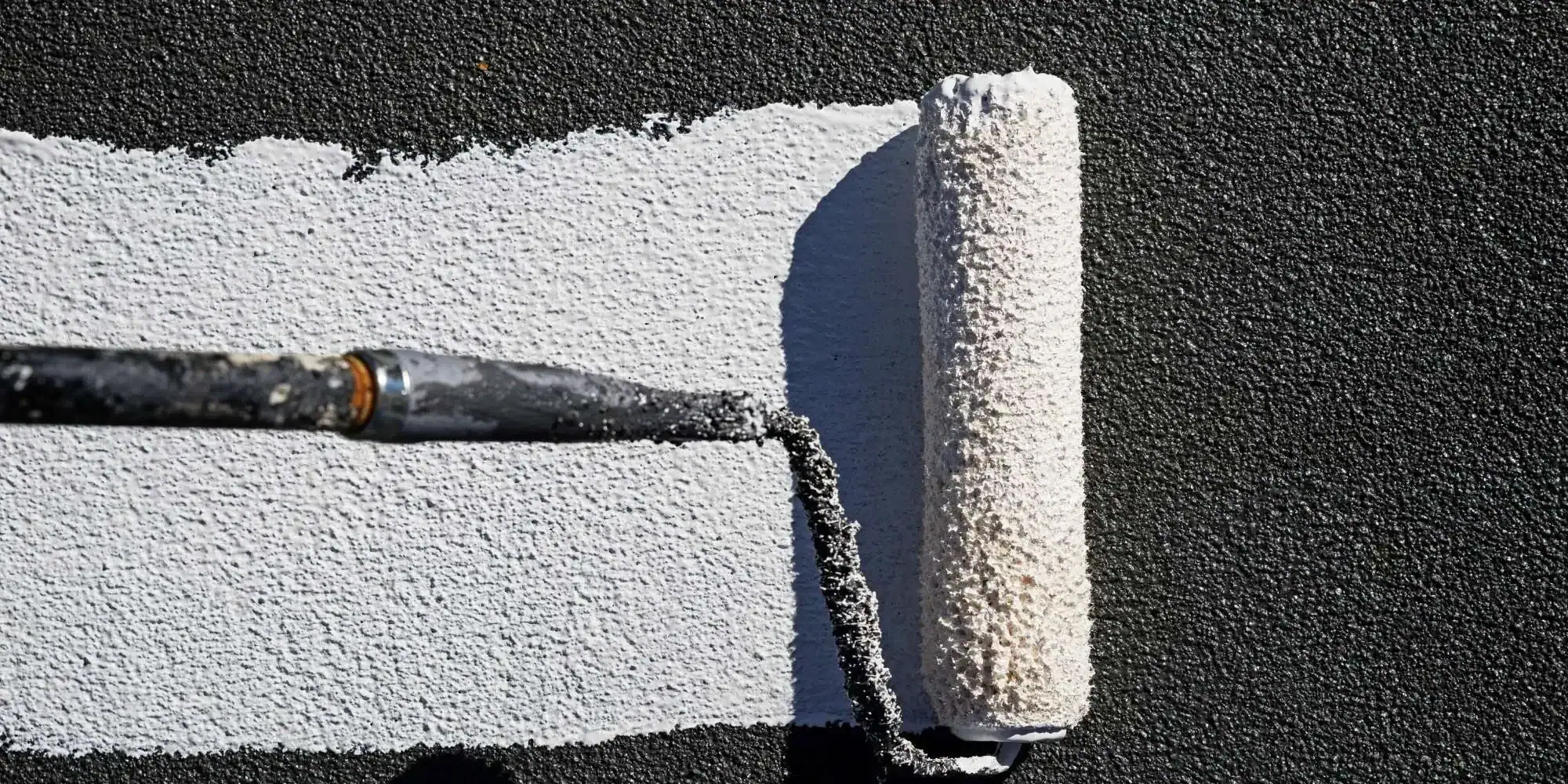
The short answer is surface preparation — specifically, what happens before the coating ever goes down. The most common cause of epoxy failure in Royal Oak homes is inadequate prep. A lot of contractors use acid washing to clean the concrete surface before coating it. The problem is that acid washing leaves behind calcium salt residue that prevents the epoxy from bonding properly to the concrete. The floor looks fine for a few months, and then it starts to delaminate.
The other factor specific to Royal Oak is moisture vapor transmission. The city sits on clay-rich soil that moves seasonally, and that movement drives moisture upward through concrete slabs from below. If a contractor does not test for moisture before applying the coating, that vapor pressure builds underneath the epoxy and eventually pushes it off the surface. This is why moisture testing before application is not optional here — it is the difference between a floor that bonds permanently and one that fails before the second winter. Diamond grinding instead of acid washing, combined with a proper moisture assessment, eliminates both of these failure points.
A professionally applied epoxy floor coating on a properly prepared concrete surface should last anywhere from 10 to 20 years under normal residential use, even in Michigan’s climate. The variables that affect that range are the quality of the surface prep, the grade of materials we use, and how the floor is maintained after installation. A commercial-grade epoxy system applied over diamond-ground concrete with proper moisture management on the front end will significantly outlast a lower-grade coating applied over a surface that was not adequately prepared.
For Royal Oak specifically, the age of the housing stock is worth factoring in. Garage floors poured in the 1940s and 1950s are not structurally compromised in most cases, but they have accumulated surface damage over decades — pitting, hairline cracks, staining — that needs to be addressed before coating. When that prep work is done correctly, the epoxy coating effectively resets the surface and extends the functional life of concrete that would otherwise continue to deteriorate. Maintenance is straightforward: regular sweeping and occasional mopping with a pH-neutral cleaner is all it takes to keep the surface in good shape for years.
Yes, temperature and humidity both affect epoxy application and curing, and Michigan’s seasonal swings make timing a real consideration. Epoxy requires a minimum concrete surface temperature — typically around 50°F — to cure properly. Applying it when the slab is too cold results in incomplete curing and adhesion problems. For Royal Oak homeowners, spring and fall tend to be the most reliable windows for garage floor coating projects, though summer works well too as long as the concrete is not overheated from direct sun exposure.
Winter applications in an unheated garage are generally not recommended unless the space can be properly climate-controlled during the curing period. If you are planning a project in late fall or early spring, it is worth having the concrete temperature checked before scheduling. The good news is that Royal Oak’s spring season — when most homeowners are assessing winter damage and planning improvements — lines up well with ideal application conditions. If you are thinking about getting your floor done before the next winter, spring is the right time to schedule it rather than waiting until fall.
In most cases, yes — existing cracks in the concrete can be repaired as part of the preparation process before the epoxy coating goes down. The approach depends on the type and severity of the crack. Hairline cracks and minor surface fractures are typically filled and stabilized during prep, and the epoxy coating bonds over the repaired surface without issue. Wider or deeper cracks that indicate structural movement need to be evaluated more carefully before coating.
For Royal Oak homes with mid-century concrete, some degree of cracking is almost expected. Sixty to seventy years of freeze-thaw cycling and seasonal soil movement from the clay-rich ground beneath the slab will leave marks on even well-poured concrete. That does not mean the floor cannot be coated — it means the prep work needs to account for what is actually there. Part of our initial assessment on any Royal Oak project is a thorough look at the existing surface condition so that crack repairs are factored into the process before anything else starts. A floor that has been properly prepped and repaired before coating will hold up significantly better than one where those issues were ignored or covered over.
The main differences are in the materials, the preparation, and the expected lifespan. Hardware store epoxy kits are typically water-based, single-component products with a much lower solids content than commercial-grade epoxy systems. They are designed for DIY application, which means they are formulated to be forgiving — but that also means they are thinner, less durable, and far more prone to peeling, especially in Michigan’s climate conditions.
Commercial-grade epoxy floor coating used by professional contractors is a two-component system with a significantly higher solids content, better chemical resistance, and a stronger bond to properly prepared concrete. The other factor is surface preparation — most DIY kit instructions recommend cleaning the floor and etching it with acid, which is not sufficient for a lasting bond on concrete that has been absorbing road salt and moisture for decades. Our professional application includes diamond grinding, crack repair, and moisture testing before any coating goes down. The result is a floor that bonds at a chemical level rather than just sitting on the surface. For Royal Oak homeowners who have tried a DIY kit before and watched it peel, the difference in process is usually the explanation.
For a standard two-car garage in Royal Oak, professional epoxy floor coating typically runs in the range of $1,000 to $2,500 depending on the size of the slab, the condition of the concrete, and the coating system used. Per-square-foot pricing for residential work generally falls between $3 and $8, with the final number reflecting the extent of crack repair needed, whether moisture mitigation is required, and the specific materials specified for the project.
Royal Oak’s housing stock tends toward attached and detached garages on standard residential lots, so most projects fall within a predictable size range. What affects cost more than square footage is the condition of the concrete going in — a floor that needs significant crack repair or has a previous coating that needs to be stripped will take more prep time, and prep time is where most of the labor cost lives. That is also why getting a proper on-site assessment before any quote is given matters. A number thrown out over the phone without looking at the actual slab is not a reliable estimate. For commercial projects — warehouse floor paint, specialty coating services for Woodward Avenue retail or office spaces, or institutional facilities — pricing is scoped per project based on square footage, coating system, and operational requirements like downtime windows and slip-resistance ratings.
