
Hear from Our Customers
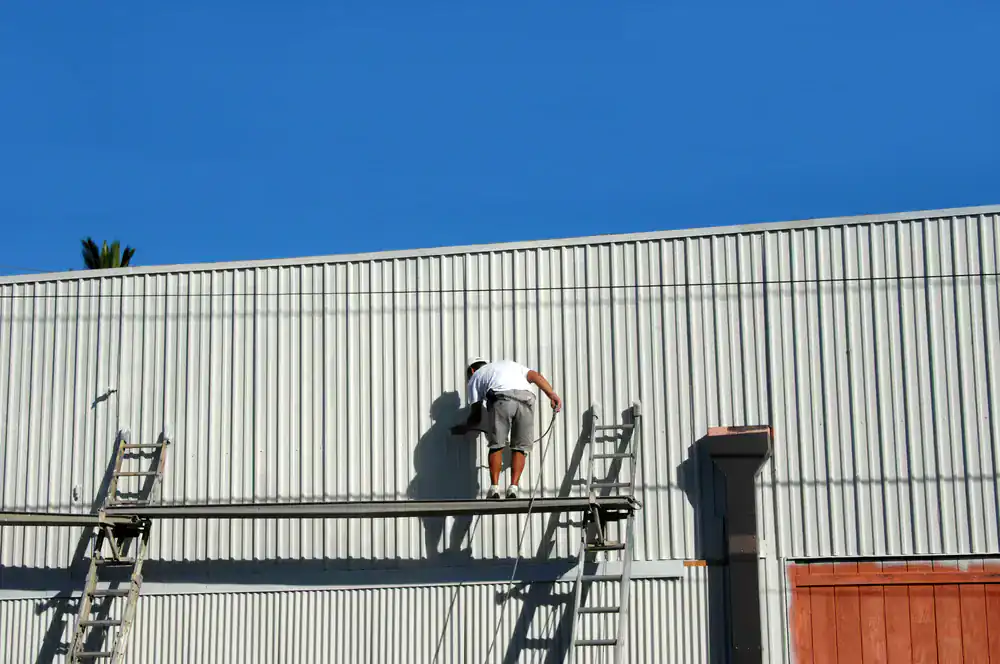
A fresh coat of paint isn’t just cosmetic. In Royal Oak, where temperatures swing from the low 20s in January to the mid-80s in July, that kind of range puts real stress on exterior surfaces. Paint that wasn’t applied over a properly prepped surface will start failing — peeling, cracking, letting moisture in — sometimes within a single season. When that happens on a busy corridor like Woodward Avenue or Main Street, it’s not a minor inconvenience. It’s visible to every customer who walks by.
Done right, commercial exterior painting protects the structure underneath. Properly caulked joints keep water out. A sealed, primed surface gives the topcoat something to hold onto through freeze-thaw cycles. The right paint chemistry handles Michigan’s humidity and UV load without fading or chalking out in two summers. That’s what you’re actually paying for — not just color, but protection that lasts.
For Royal Oak’s downtown building stock, which includes a lot of older brick and masonry structures from the early 1900s, this matters even more. Aged substrates need more attention during prep, and skipping those steps on a historic building doesn’t just look bad — it can cause real damage that costs far more to fix than the paint job itself. A commercial painting contractor who knows what they’re looking at before a brush ever touches the wall is the difference between a job that lasts five years and one that needs to be redone in eighteen months.
We’ve been operating for about two years, but the experience behind Legends Construction LLC goes back over a decade. The two brothers running this operation have been in the painting industry long enough to know what corners get cut when a contractor is moving too fast or pricing too low — and we don’t cut them.
This is a family-owned business, which means when something goes wrong, there’s no franchise office to call and no subcontractor to pass the blame to. The people who gave you the estimate are the people doing the work. That kind of accountability is harder to find than it should be, especially in a market like Oakland County where there’s no shortage of contractors competing for the same jobs.
We serve Royal Oak and the surrounding Oakland County area, and we’ve built our reputation the straightforward way — by doing the work right, communicating clearly, and making sure customers don’t have to follow up twice on the same issue. If you’re near the Corewell Health corridor on 13 Mile or running a storefront closer to the downtown district, the process is the same: show up, prep properly, and finish what was promised.
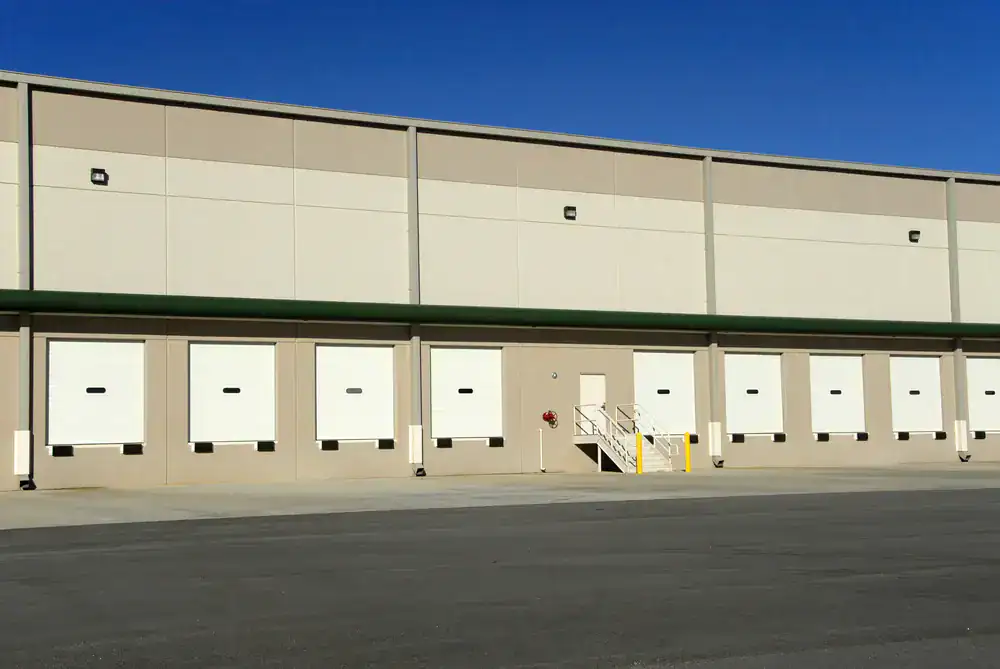
It starts with a free estimate. A member of our team walks the property with you, looks at the current surface conditions, identifies any areas that need attention before painting begins, and gives you a written breakdown of the full scope — labor, materials, timeline, and what’s included. No vague line items, no numbers pulled out of thin air.
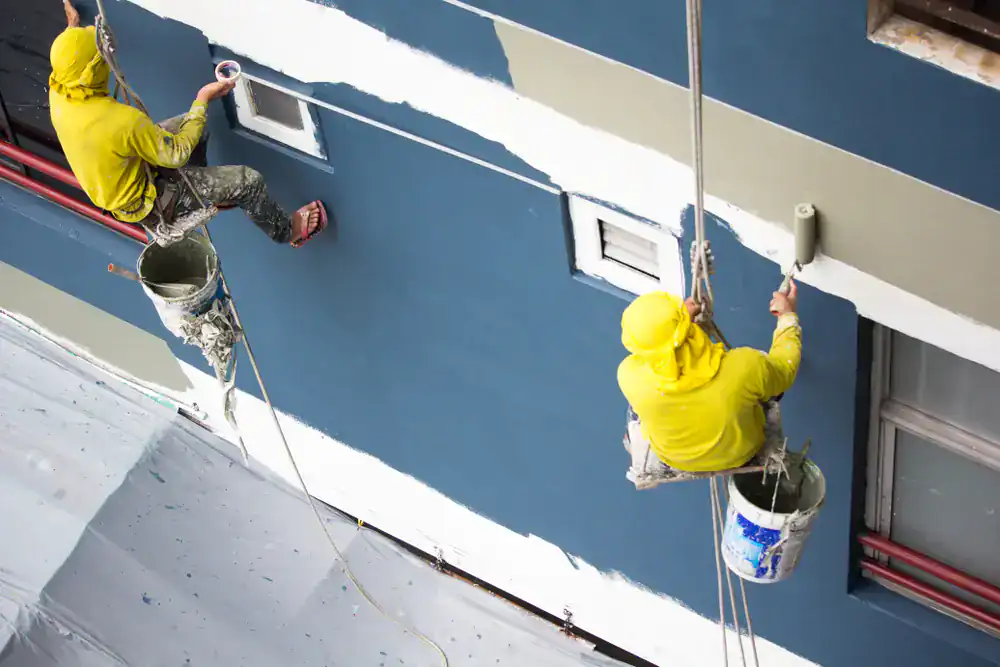
Once the job is scheduled, prep work comes first — and it’s not rushed. That means power washing the entire surface to remove dirt, mildew, and any chalking from the existing paint. Then scraping and sanding anything that’s deteriorated. Caulking every joint, seam, and penetration point. Addressing minor surface repairs before primer goes down. In Royal Oak’s climate, this step is what separates a paint job that lasts from one that starts peeling after the first hard winter. If a contractor skips it or speeds through it, you’ll know by spring.
For downtown properties that may fall within the Royal Oak DDA’s Façade Grant Program, we can provide the documentation you need for the application — paint samples, project descriptions, before photos — so the process doesn’t stall on your end. Scheduling is built around your business hours when possible, because a Washington Avenue storefront can’t go dark for a week while painters work. Early morning starts, phased sections, weekend availability — it gets figured out before the job begins, not after.
Ready to get started?
Commercial exterior painting in Royal Oak covers a wide range of building types, and our approach shifts depending on what you’re working with. Older brick and masonry buildings in the downtown district need different prep and primer than a modern medical office building near the Corewell Health campus on 13 Mile Road. Mid-century retail structures along Woodward Avenue have their own set of surface conditions. We work across all of it — the prep process and material selection are always matched to what’s actually on the building, not a one-size-fits-all checklist.
Every commercial exterior project we complete includes a full surface assessment before any work begins, power washing, scraping and sanding of deteriorated areas, caulking of all joints and penetrations, priming of bare surfaces, and application of premium exterior coatings selected for Michigan’s climate — specifically formulated to handle freeze-thaw cycling, humidity, and UV exposure without breaking down prematurely. Minor surface repairs are addressed as part of the prep, not billed as a surprise add-on at the end.
If your building is in Royal Oak’s downtown DDA district, it may qualify for the Façade Grant Program, which reimburses 50% of eligible façade costs up to $10,000 — and painting is an eligible expense. That’s a meaningful offset on a professional exterior paint job, and it’s worth knowing about before you get estimates. We can walk you through what the documentation process looks like so you’re not navigating it alone.
In most cases, no. Routine exterior painting of a commercial building in Royal Oak doesn’t require a building permit — cosmetic changes are generally exempt under the city’s building code. That said, there are a few situations where it’s worth paying closer attention. If your building is located within the Downtown Development Authority district and you’re applying for the Façade Grant Program, the DDA does require documentation before work begins — including proposed paint colors, before photos, and a description of the scope. That’s not a permit, but it does mean the project needs to be planned in advance rather than started on short notice.
For buildings constructed before 1978, which includes a good portion of Royal Oak’s older downtown stock, Michigan’s lead-safe renovation requirements apply if you’re disturbing existing painted surfaces. A qualified contractor should be following EPA RRP (Renovation, Repair, and Painting) rule protocols in those situations. It’s worth asking any contractor you’re considering whether they’re familiar with those requirements — not just for legal compliance, but because it affects how the prep work gets handled on older masonry and wood-framed structures.
The honest answer is that it depends almost entirely on how the surface was prepared before the paint went on. With proper prep — power washing, scraping, caulking, priming — and a quality exterior coating formulated for Michigan conditions, a commercial paint job should last seven to ten years in most cases. Without it, you might be looking at peeling and failure within one to three years, especially on a building that takes a lot of weather exposure.
Royal Oak’s climate is particularly demanding because of freeze-thaw cycling. When temperatures hover near freezing and swing back and forth — which happens regularly in a Metro Detroit winter — paint films, caulk joints, and masonry substrates expand and contract repeatedly. If the paint wasn’t bonded to a clean, properly prepped surface, or if the caulk joints weren’t sealed before painting, that cycling creates entry points for moisture. Once water gets behind the paint film, you’re not dealing with a cosmetic problem anymore. The surface prep step isn’t optional — it’s what the longevity of the job is built on.
The practical window for exterior painting in Royal Oak runs from roughly May through October, when temperatures are consistently above 50°F. Most exterior coatings need to be applied and allowed to cure above that threshold — below it, the paint doesn’t bond properly and adhesion suffers. The sweet spot is late spring through early fall, when temperatures are stable, humidity is manageable, and you’re not racing the calendar.
That said, the highest-demand period is late summer into early fall — August through October — when property owners who’ve been putting it off all season realize winter is coming and the building still needs work. If you’re planning a fall project in Royal Oak, getting your estimate scheduled in July or August gives you the best chance of landing a slot before the season fills up. Spring is also a natural trigger point, when the damage from the previous winter becomes visible and owners start assessing what needs to be addressed. Either window works well — the key is not waiting until November when your options are limited and the weather is already working against you.
A thorough estimate should spell out every component of the job before you sign anything. That means the scope of prep work — what surfaces are being washed, scraped, sanded, caulked, and primed — the specific materials being used, the number of coats, the timeline, and the total cost with no vague line items. If a contractor hands you a single number without explaining what’s behind it, that’s a red flag. The estimate is where you find out whether they actually looked at your building or just eyeballed it from the parking lot.
For commercial properties in Royal Oak, a good estimate will also account for building-specific factors: the age and condition of the existing surface, the substrate type (brick, stucco, wood, metal, EIFS), the number of stories, and any access challenges — scaffolding requirements, proximity to foot traffic on a busy street, or scheduling constraints around business hours. If your building is in the downtown district and you’re considering the DDA Façade Grant, the estimate documentation can also serve as part of your application package, so it’s worth discussing that upfront. We provide written estimates at no charge and no obligation.
Yes, and for most downtown Royal Oak businesses, that’s a non-negotiable part of the planning conversation. A restaurant on Washington Avenue or a retail shop on Main Street can’t lose its storefront access during peak hours — the work has to be scheduled around when your business actually operates. That might mean early morning starts before you open, evening work after you close, weekend scheduling, or breaking the project into phases so one section is always accessible while another is being worked on.
This gets figured out before the job starts, not improvised on the first day. The schedule is part of the estimate conversation — how the work gets sequenced, what access is needed and when, and how to minimize any disruption to your customers and staff. It takes a little more planning on the front end, but it’s the difference between a project that fits your operation and one that creates problems you didn’t sign up for. If your building has specific constraints — a loading zone that can’t be blocked, a neighboring tenant with their own hours, a weekend-only closure window — those details matter and should be part of the conversation from the start.
Yes — painting is explicitly listed as an eligible expense under the Royal Oak Downtown Development Authority’s Façade Grant Program. The program reimburses approved applicants for 50% of eligible façade improvement costs, up to $10,000, which means a professional exterior paint job on a qualifying downtown property could be significantly offset by grant funding. The building needs to be located within the DDA district, and the work needs to be approved before it begins — you can’t complete the project first and then apply retroactively.
The application requires documentation: proposed paint colors or samples, photos of the existing façade, and a description of the planned improvements. It’s not a complicated process, but it does require some lead time, so if you’re interested in using the program, it’s worth starting the conversation early rather than waiting until you’re ready to schedule the work. We can provide the documentation the DDA application typically requires — paint samples, project scope descriptions, before photos — so you’re not scrambling to pull that together on your own. If you’re a downtown Royal Oak business owner and you haven’t looked into the program yet, it’s worth a conversation before you move forward with getting estimates.