
Hear from Our Customers
Every winter, you’re driving home on Gratiot Avenue with road salt packed into your wheel wells and undercarriage. It ends up on your garage floor. If that floor is bare concrete, the salt soaks in, the freeze-thaw cycle does its thing, and you’re looking at cracks, spalling, and a surface that gets worse every season. A properly installed epoxy floor coating creates a sealed barrier that stops that cycle before it starts.
For homeowners in Pembrooke, Decora Park, and the newer builds going up around New Haven right now, this matters from day one. New construction concrete is actually the ideal time to coat — before a single Michigan winter has a chance to compromise it. But even if your slab has already seen a few seasons, the right prep work can reset the surface and give you a floor that cleans up with a mop, handles oil and salt without absorbing either, and doesn’t look like a liability every time someone walks into your garage.
Commercial and warehouse spaces in New Haven deal with the same conditions at a larger scale. Forklifts, chemical exposure, heavy foot traffic — we handle all of it with commercial-grade epoxy floor coating, and we do it without shutting your operation down for days.
We’ve been operating for about two years, but the experience behind Legends Construction LLC goes back more than a decade. The two brothers running this company didn’t start here — we spent ten-plus years in the field learning what actually makes a coating last before launching under our own name. That’s not a small distinction when you’re hiring someone to work on your property.
We serve Macomb County and Oakland County, which means New Haven is home territory — not a stretch assignment. When you call, you’re talking to the people doing the work. There’s no dispatcher, no rotating crew, and no subcontractor showing up in someone else’s van. Our 4.9-star rating on HomeAdvisor and Angi reflects what happens when owners are personally accountable for every job we take.
Whether you’re in one of the newer subdivisions off Gratiot or running a facility near the industrial corridor, you’re getting the same standard either way — because there’s only one standard we work to.
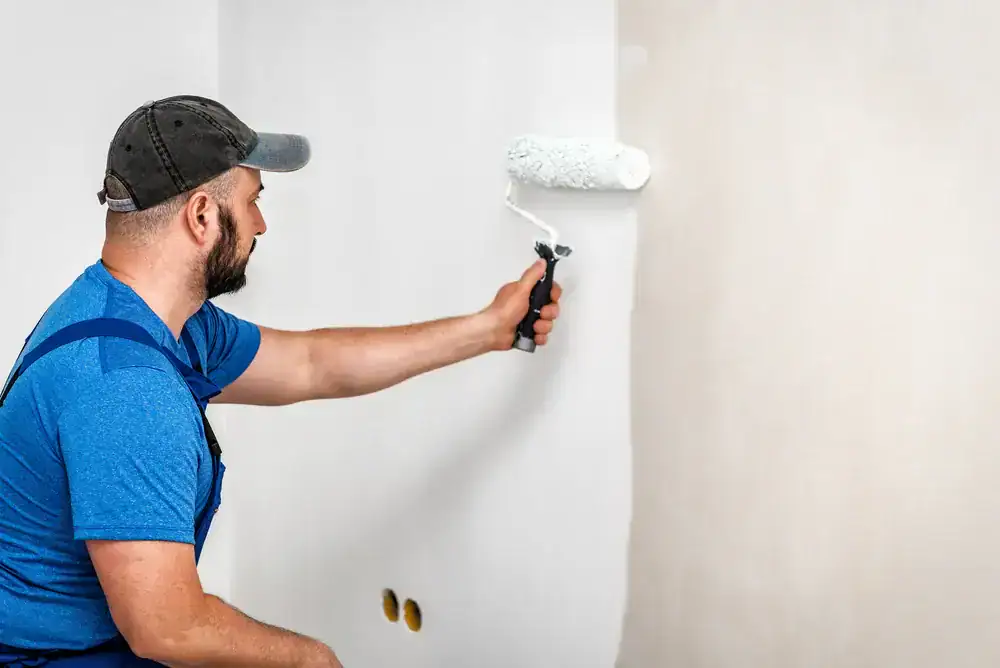
The reason most epoxy floors fail isn’t the product — it’s what didn’t happen before the product was applied. Skipping proper surface preparation is the single most common cause of peeling, bubbling, and delamination, and it’s especially costly in a climate like New Haven’s where freeze-thaw cycles will find every weakness in a poorly bonded coating within a season or two.
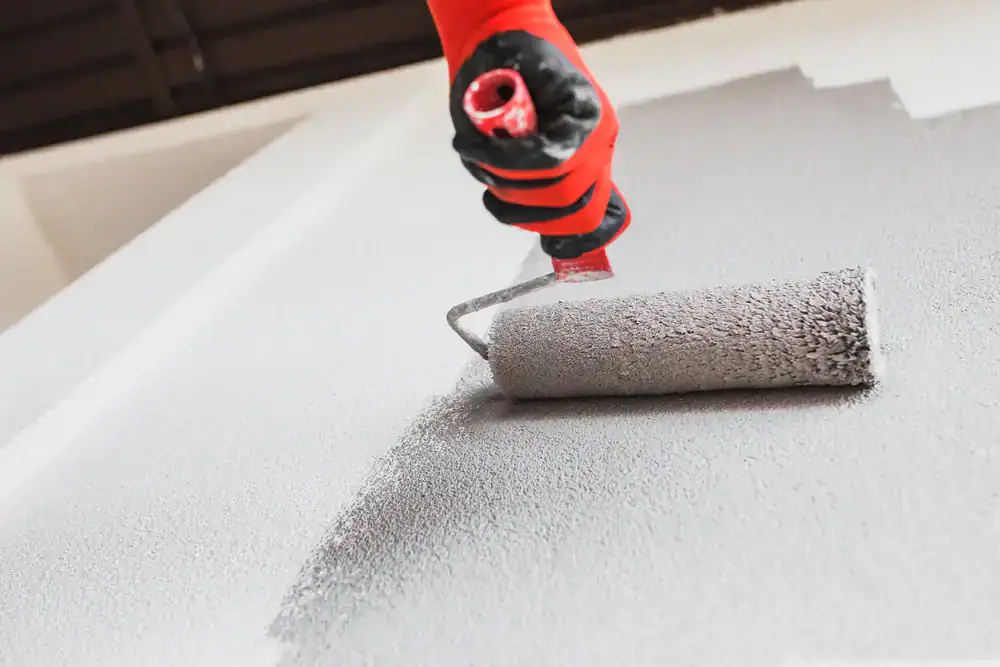
The process starts with mechanical surface preparation — diamond grinding the concrete to open the pores and create a profile that epoxy can actually bond to. This isn’t optional, and it’s not interchangeable with acid washing. After grinding, any cracks or low spots get repaired so they don’t telegraph through the finished surface. Then comes a moisture check. Eastern Macomb County sits close enough to the Great Lakes system that moisture vapor transmission through slabs is a real factor — and applying epoxy over a slab with an active moisture issue is a guaranteed failure. That step gets done before anything else goes on the floor.
From there, it’s primer, base coat, and a protective topcoat — a complete multi-layer system, not a single-coat spray job dressed up as professional work. The whole process is typically completed in one to two days depending on the size and condition of the space, and the floor is ready for light foot traffic within 24 hours. For commercial applications in New Haven, we coordinate scheduling around your operational hours to minimize downtime.
Ready to get started?
There’s a real difference between consumer epoxy products and the commercial-grade systems we use — and in New Haven’s climate, that difference shows up fast. Consumer kits use water-based formulations that bond poorly to Michigan concrete and typically start failing within one to three winters. The two-part, commercial-grade epoxy floor paint we use on every job is formulated to flex with the concrete through thermal expansion and contraction, which is exactly what your slab is doing from November through April every year.
For residential garage floors in New Haven — whether you’re in Pembrooke South, Decora Park, or an older home near the village center — our standard package includes full surface grinding, crack repair, primer, base coat, and a durable topcoat with slip-resistant options available. For commercial and warehouse clients, the same process scales up with chemical-resistant formulations, higher-build coatings, and finish options suited to the specific demands of your facility. New Haven has roughly 280,000 square feet of industrial building space, and the manufacturing sector here runs real operations that need floors built for real use — not showroom conditions.
We also handle warehouse floor paint, specialty coating services, and commercial epoxy floor coating for businesses across Macomb County. If you need interior or exterior painting alongside your floor work, we handle that in-house too — no need to coordinate multiple contractors for a single property.
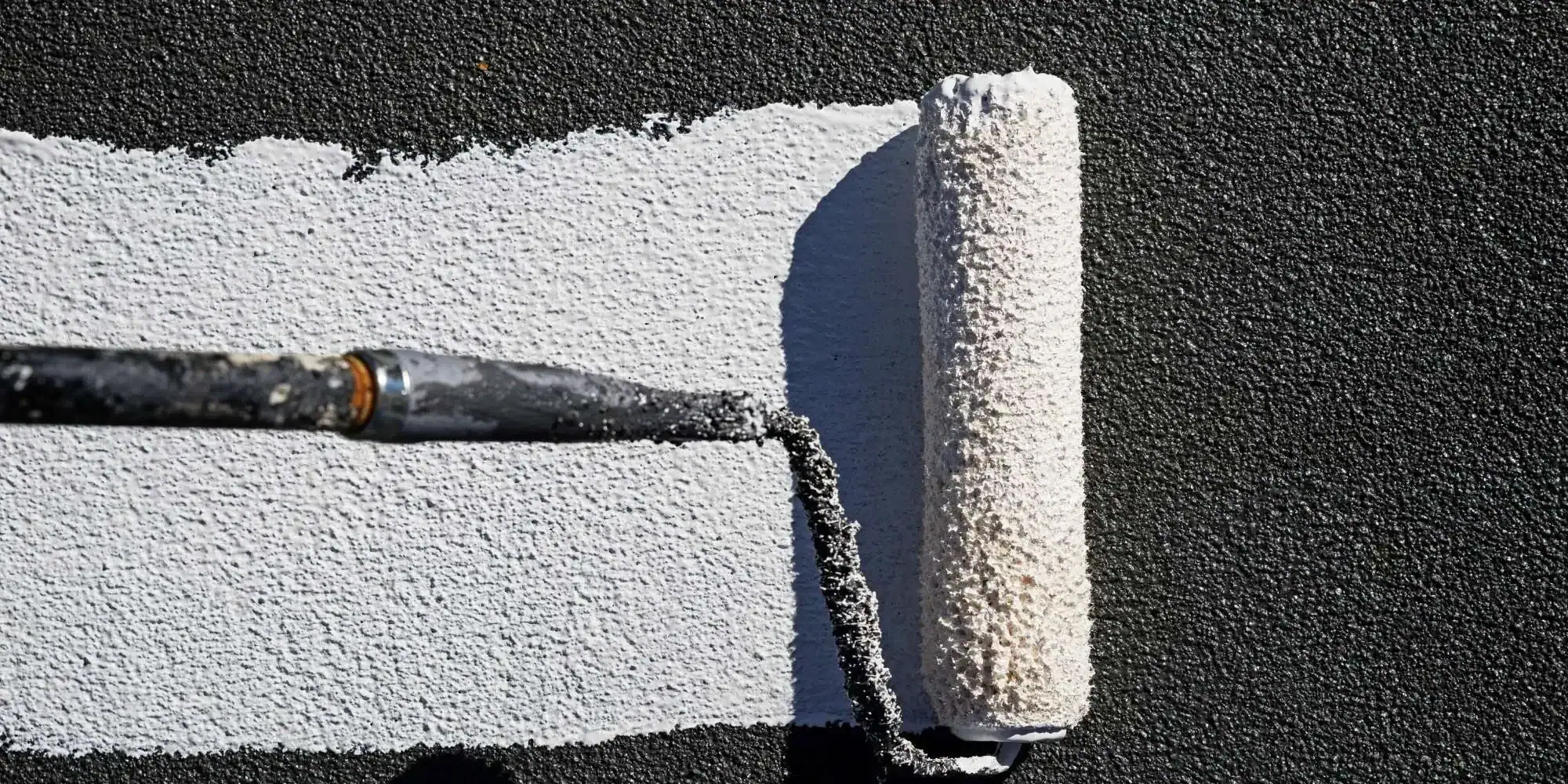
The short answer is surface preparation — or the lack of it. When a contractor skips mechanical grinding and uses acid washing instead, or applies epoxy over concrete that hasn’t been properly cleaned and profiled, the coating sits on top of the surface rather than bonding into it. In a climate like New Haven’s, where temperatures cross the freezing point repeatedly from November through April, that weak bond doesn’t last. The concrete expands and contracts with every freeze-thaw cycle, and a coating that was never truly adhered starts lifting at the edges, then bubbling, then peeling in sheets.
Moisture is the other major factor. Concrete slabs in eastern Macomb County can have active moisture vapor moving through them, especially in spring when ground temperatures are still cold and surface temperatures are rising. If that moisture has nowhere to go, it pushes up against the underside of the coating and causes delamination. A proper installation includes a moisture test before anything goes on the floor — not as a formality, but because skipping it in this area is how you end up redoing the job in eighteen months.
For a standard two-car garage in New Haven — roughly 400 to 500 square feet — you’re typically looking at somewhere in the range of $2,200 to $2,750 for a professionally installed, multi-layer epoxy floor coating system. That range assumes proper surface grinding, crack repair, primer, base coat, and topcoat. If the slab has significant damage from previous Michigan winters or needs more extensive crack repair, the cost can adjust accordingly.
What that range doesn’t include is the cost of doing it twice. A low-bid job that uses a single-coat water-based product over an acid-washed floor might run $800 to $1,200 upfront — but when it starts peeling after the first or second winter, you’re paying to have it stripped and redone. At that point, you’ve spent more than you would have on a quality installation the first time, and you’ve lost a season or two of use. The better framing isn’t “how cheap can I get this done” — it’s “what does it cost to have this done right once.”
Most epoxy systems require concrete temperatures above 50°F for proper curing — which rules out outdoor or unheated garage applications during New Haven winters. From roughly November through March, applying epoxy to a cold slab is a setup for adhesion failure, because the chemical curing process slows significantly below that threshold and stops working correctly at lower temperatures.
That said, if your garage is heated and you can maintain surface temperatures above 50°F, winter installations are possible. The same applies to commercial and industrial spaces with climate control. For most New Haven homeowners, the practical window opens in mid-April and runs through October — with spring and early fall being the busiest booking periods. If you’re in a new build in Pembrooke South or one of the other active communities and you want the floor done before your first winter, scheduling in late summer or early fall is the move. Don’t wait until October and risk running out of weather window.
Epoxy floor paint is a single-component, water-based product you can buy at any hardware store. It goes on like regular paint, it looks decent for a few months, and it typically starts peeling within a year or two — especially in a Michigan climate where the concrete is constantly moving with temperature changes. It’s not a bad product for light-use spaces, but it’s not what most people picture when they ask about epoxy floors.
A full epoxy floor coating system is a two-part, chemically cured product that bonds at a molecular level to properly prepared concrete. It’s significantly thicker, harder, and more resistant to abrasion, chemicals, and moisture than any single-component paint. The installation process is also fundamentally different — it requires surface grinding, moisture testing, and multiple layers applied in sequence. The result is a floor that handles road salt, oil, and daily vehicle traffic without absorbing any of it. For New Haven homeowners dealing with Macomb County winters, the difference between the two products shows up clearly within the first two or three seasons.
Yes — commercial and warehouse floor coating is a core part of what we do, not a side service. New Haven has a significant manufacturing and industrial presence, and facility managers and business owners here need floors that can handle real operational demands: forklifts, chemical exposure, heavy foot traffic, and the same freeze-thaw conditions that affect residential concrete. The commercial-grade epoxy systems we use on these jobs are formulated specifically for those conditions, with higher-build coatings and chemical-resistant options available depending on what the space requires.
The process for commercial applications follows the same preparation standards as residential work — surface grinding, moisture testing, crack repair, primer, and topcoat. We coordinate scheduling around your operational hours where possible to minimize downtime. If you’re running a shop, warehouse, or production facility in the New Haven area and your floor is showing wear, cracking, or surface deterioration, it’s worth getting an assessment before the next Michigan winter compounds the damage further. A free estimate is the starting point — no commitment required.
A properly installed, commercial-grade epoxy floor coating on a well-prepared concrete slab typically lasts anywhere from 10 to 20 years under normal residential use. In a commercial or industrial setting with heavier traffic and chemical exposure, you’re looking at a range closer to 5 to 10 years before a maintenance coat or reapplication makes sense — though that timeline depends heavily on the volume and type of use the floor sees.
In New Haven specifically, longevity comes down to two things: how well the floor was prepared before installation and whether the right product was used for the climate. A coating applied over properly ground concrete with a commercial-grade two-part system will flex with the slab through Michigan’s freeze-thaw cycles without delaminating. One applied over a poorly prepped surface with a consumer-grade product will start showing failure signs within one to three winters. Maintenance matters too — keeping the floor clean and avoiding harsh abrasives will extend the life of the topcoat significantly. If you’re starting fresh in one of New Haven’s newer subdivisions, a quality installation now is genuinely a decade-plus investment.