

Hear from Our Customers

A fresh coat of paint does more for a home than most people give it credit for. On the outside, it is your first line of defense against moisture, and in New Haven, that matters. Winters bring freeze-thaw cycles that work their way into every crack, every gap, and every poorly prepped surface. When the prep is thorough and the right materials are used, you get a finish that stays tight through the cold months instead of peeling by spring.
On the inside, the difference is just as real. Whether you moved into one of the newer builds in the growing subdivisions and want something other than builder-grade beige, or you are refreshing a home you have lived in for years, a clean interior paint job changes how a space feels to be in. Colors that actually reflect how you live. Walls that do not scuff and stain at the first sign of daily life.
Either way, the goal is the same: a result that looks intentional, holds up over time, and does not require a callback six months later. That is what professional painting services in New Haven should deliver — and that is the standard every job we take on is held to.
Legends Construction LLC is a family-owned painting contractor based in Utica — just a short drive down M-19 from New Haven. We are run by two brothers who have been in the painting trade for over ten years. The Legends name is two years old, but the experience behind it is not. Every job we take on in New Haven, in Lenox Township, and across Macomb County is handled with the same standard: thorough prep, quality materials, and a finished product you are genuinely happy with.
Because we are a family operation, the people who give you the estimate are the same people doing the work. There is no crew you have never met showing up at your door. When you call Legends, you get direct communication, real accountability, and a team that has a stake in how the job turns out — because our reputation in this community depends on it.
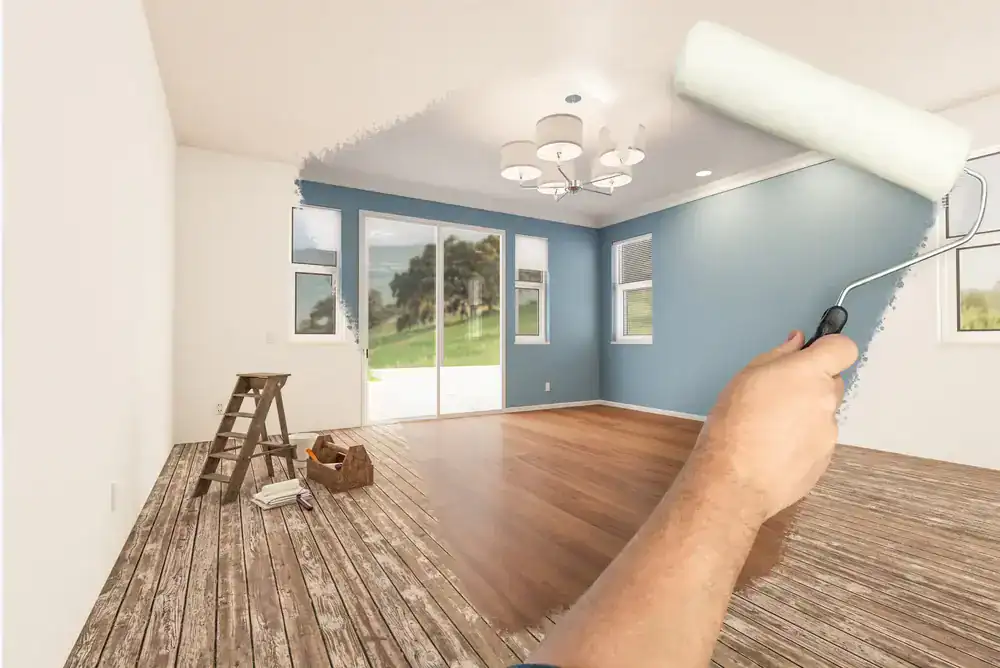
It starts with a free estimate. Someone from Legends comes out, looks at the actual scope of work, and gives you a written number — not a ballpark over the phone, not a range that shifts when the job starts. You know what you are paying before anything is agreed to.
Once the project is scheduled, prep comes first. For exterior work in New Haven, that means cleaning the surface, scraping anything that has already started to fail, sanding where needed, and priming before a single coat of finish paint goes on. Michigan’s climate does not leave room to skip that step. Painting over a compromised surface in a place with real winters just means the problem shows up faster. For interior projects, it means protecting your floors and furniture, taping clean lines, and making sure the space is left cleaner than it was found.
The work itself is done with materials selected for the surface and the conditions — not whatever is cheapest at the supply house. When the job wraps, there is a walkthrough. If something is not right, it gets addressed. The goal is not just to finish — it is to finish in a way that holds up and earns the next call.

Ready to get started?
We handle the full range of painting work for New Haven homeowners and business owners. On the residential side, that includes interior painting for any room in the house, full exterior painting, trim work, ceilings, and garage interiors. For commercial clients in the New Haven area, we take on office spaces, storefronts, and light commercial buildings where a clean, professional finish reflects directly on the business inside.
New Haven’s housing stock covers a wide range — from older homes in the historic village core with wood siding and detailed trim that demands careful prep, to newer Colonial Revival builds in the growing subdivisions where the challenge is often vinyl siding that has faded or interior walls that came straight from the builder. Each surface type requires a different approach, and we have worked across all of them.
One thing worth knowing: contractors working in New Haven are required to register with the Village Building Department, present their state license, and carry liability insurance. We are properly registered and insured, which protects you as the homeowner if anything unexpected happens on the job. It is a small detail that makes a real difference when you are letting someone work in or on your home.

In New Haven, the two best windows for exterior painting are late spring — roughly mid-April through June — and early fall, from September into mid-October. During those stretches, temperatures are consistently above 50 degrees, humidity is manageable, and there is enough daylight to complete full workdays without rushing. Those conditions matter because most exterior paints need a certain temperature range to bond and cure properly. Apply paint in weather that is too cold or too damp, and you are setting yourself up for adhesion failure before the first winter even hits.
The spring window tends to fill up faster because everyone wants to get exterior work done before summer. If you are planning a project for spring in New Haven, reaching out in late winter gives you the best shot at getting the schedule you want. The fall window is shorter — once temperatures drop consistently below 50 in Macomb County, exterior painting stops being practical. If you miss fall, interior work is a smart way to use the winter months productively while you plan for exterior projects the following spring.
For most homes in the New Haven area, interior painting runs somewhere between $1,200 and $3,700 depending on the size of the home, the number of rooms, the condition of the walls, and the materials used. Larger homes with high ceilings, detailed trim, or surfaces that need significant prep work before paint goes on will land toward the higher end. Smaller projects — a few rooms, straightforward walls, good existing surface condition — can come in below that range.
What moves the number more than most people expect is the prep. Walls with old paint that is cracking, patching that needs to be done, or surfaces that have never been properly primed take more time and materials to do right. Cutting corners on prep to lower the price just means the finish does not hold the way it should. When you get an estimate from us, the number reflects the actual scope — what it takes to do the job correctly, not what it takes to get in and out fast.
A properly done exterior paint job in Michigan should last anywhere from seven to ten years on wood surfaces and potentially longer on vinyl or fiber cement siding, assuming the prep was done correctly and quality materials were used. The honest answer is that the lifespan depends more on what happened before the paint went on than on the paint itself. A surface that was thoroughly cleaned, scraped, sanded, and primed before application will hold up through Macomb County winters far better than one that was painted over without that groundwork.
The specific challenge in New Haven is the freeze-thaw cycle. When moisture gets into a surface — whether through a crack in the caulk, a gap in the trim, or paint that was not fully adhered — it expands when it freezes and contracts when it thaws. That movement is what causes paint to blister and peel. An experienced painter who understands this dynamic chooses the right primer, applies the correct number of coats, and times the work to Michigan’s seasonal windows. That is what separates a paint job that lasts from one that starts failing after the first hard winter.
For standard residential painting — interior or exterior — you generally do not need a building permit in New Haven. Paint is considered a cosmetic or maintenance activity rather than structural work, so it falls outside the permit requirement in most cases. That said, if your project involves any structural repairs alongside the painting, such as replacing rotted wood trim or repairing siding before it gets painted, those repairs may trigger a permit depending on the scope.
There is one federal regulation that applies regardless of permits: if your home was built before 1978, any painter working on it is required to follow the EPA’s Renovation, Repair, and Painting Rule, which governs how lead-based paint is handled during work. This applies to a meaningful portion of New Haven’s older housing stock, particularly in the historic village core. Painters who are not EPA Lead-Safe Certified and working on pre-1978 homes are not in compliance with federal law. It is worth asking any contractor you hire whether they follow RRP guidelines — it protects your family and confirms you are working with someone who operates above board.
Yes, vinyl siding can be painted, and when it is done correctly, it holds up well. The key word there is correctly. Vinyl expands and contracts with temperature changes more than wood does, which means standard exterior paint applied without accounting for that movement will crack and peel faster than it should. The right approach uses a paint formulated specifically for vinyl — typically a high-quality 100% acrylic latex — in a color that is the same shade or lighter than the original. Going significantly darker on vinyl siding can cause it to absorb more heat than it was designed to handle, which leads to warping.
In New Haven’s newer subdivisions, a lot of homes have vinyl siding that has been on for ten or fifteen years and is starting to fade, chalk, or just look dated. Painting is a cost-effective way to refresh the exterior without replacing the siding entirely. The result, done right, looks clean and lasts. The surface prep still matters — the siding needs to be washed thoroughly and any chalky residue removed before paint goes on. Skip that step and the adhesion suffers regardless of what paint you use.
The straightforward answer is to ask before you agree to anything — and then verify. In Michigan, painting contractors performing work valued at over $600 are required to hold either a Residential Builders License or a Maintenance and Alteration Contractors License through the state’s Department of Licensing and Regulatory Affairs. You can look up a contractor’s license status directly on the LARA website using their name or license number. It takes about two minutes and tells you whether the license is active and in good standing.
Beyond state licensing, New Haven’s Village Building Department requires contractors working in the village to register locally, present a valid state license and photo ID, and provide proof of liability insurance. That registration requirement exists to protect homeowners. If a contractor is not registered with the village, not carrying insurance, or cannot produce a license number when asked, that is a real red flag — not a technicality. If something goes wrong on an uninsured job, the financial exposure falls on you as the homeowner. We are properly licensed, registered with New Haven’s Building Department, and carry liability insurance on every job. Asking for that documentation before work starts is not being difficult — it is being a smart homeowner.