
Hear from Our Customers
If your garage floor is stained, dusty, or starting to pit and crack, that’s not just wear — that’s what happens when bare concrete meets Michigan winters without any protection. Every time you pull in off River Road from November through March, your tires are dragging road salt directly onto that slab. Salt doesn’t just stain. It works into the pores of the concrete, pulls moisture in, and accelerates the same freeze-thaw cycle that’s already splitting your surface from the inside out.
Living near the St. Clair River adds another layer most people don’t think about. Riverfront environments run higher humidity year-round, and that moisture vapor pushing up through a concrete slab is one of the most common reasons epoxy floors fail — when they’re applied without proper prep. A professionally coated floor seals the surface, stops that cycle, and gives you something that actually cleans up. Oil drips, salt residue, concrete dust migrating into the house — gone.
For the older homes along the riverfront and throughout St. Clair’s historic neighborhoods, this isn’t a luxury upgrade. It’s the fix that should have happened years ago. You get a floor that handles what this area throws at it, looks sharp doing it, and doesn’t need to be redone in two years.
We’re a family-run operation — two brothers who’ve been in the painting and specialty coating trade for over a decade. We’ve been running under the Legends Painting name for about two years, but the hands doing the work have been at this a lot longer than that. When you call, you’re talking to the people who will actually show up and do the job.
Our work speaks for itself — a 4.9-star rating on HomeAdvisor and Angi, earned from real customers in St. Clair and throughout the surrounding area who paid for real results. That kind of rating doesn’t happen by accident. It happens because every job gets the same level of attention, whether it’s a garage floor near Palmer Park or a commercial space along South Carney Drive.
St. Clair is a close-knit community. People talk. A bad job follows a contractor for years in a town this size, and a good one earns referrals for just as long. That reality keeps our standard exactly where it needs to be on every single project.
The most important part of any epoxy floor coating job happens before the coating ever touches the concrete. We diamond grind the surface — not acid wash. Grinding is what mechanically opens the pores of the concrete so the epoxy bonds the way it’s supposed to. Acid washing is faster and cheaper, but it leaves calcium salt residue behind that prevents proper adhesion. That residue is the reason most peeling floors peel. It’s a detail that separates a floor that lasts from one that doesn’t.
After grinding, we inspect the slab for moisture. This step matters especially in St. Clair, where proximity to the river means moisture vapor transmission through concrete is a real and ongoing concern — not a hypothetical. Any cracks or surface damage get repaired before anything else moves forward. Then comes the primer coat, the epoxy base coat, and the protective topcoat. Every layer has a purpose, and none of them get skipped.
Timing matters too. Epoxy floor coating requires concrete and air temperatures above 50°F to cure correctly. In St. Clair, that puts the reliable application window from late April through October, with spring and early fall being the strongest windows. If you’re planning a project, booking before the spring rush gives you the best scheduling flexibility and gets your floor done before another Michigan winter has a chance to do more damage.
Ready to get started?
We handle epoxy floor coating for both residential and commercial clients in St. Clair and throughout St. Clair County. On the residential side, that’s mostly garage floors and basement slabs — the kind of concrete that’s been exposed to Michigan winters for decades without any protection. On the commercial side, it’s restaurants, retail spaces, and light industrial facilities that need a floor built for real daily use, not just something that looks good on day one.
For commercial clients along the South Carney Drive corridor, downtown St. Clair, or in the broader St. Clair County industrial area, we spec the coating system for what the space actually demands. That might mean a chemical-resistant finish for a facility dealing with oils or fluids, a slip-rated surface for a food service environment, or a warehouse floor paint system that can handle forklift traffic without breaking down. Our specialty coating services aren’t a one-size approach — the prep and the product get matched to what the floor actually needs to survive in that environment.
Every project — residential or commercial — goes through the same full-system process: surface grinding, moisture testing, crack repair, primer, base coat, and topcoat. There’s no stripped-down version of that process. The steps that prevent failure aren’t optional, and we don’t treat them that way.
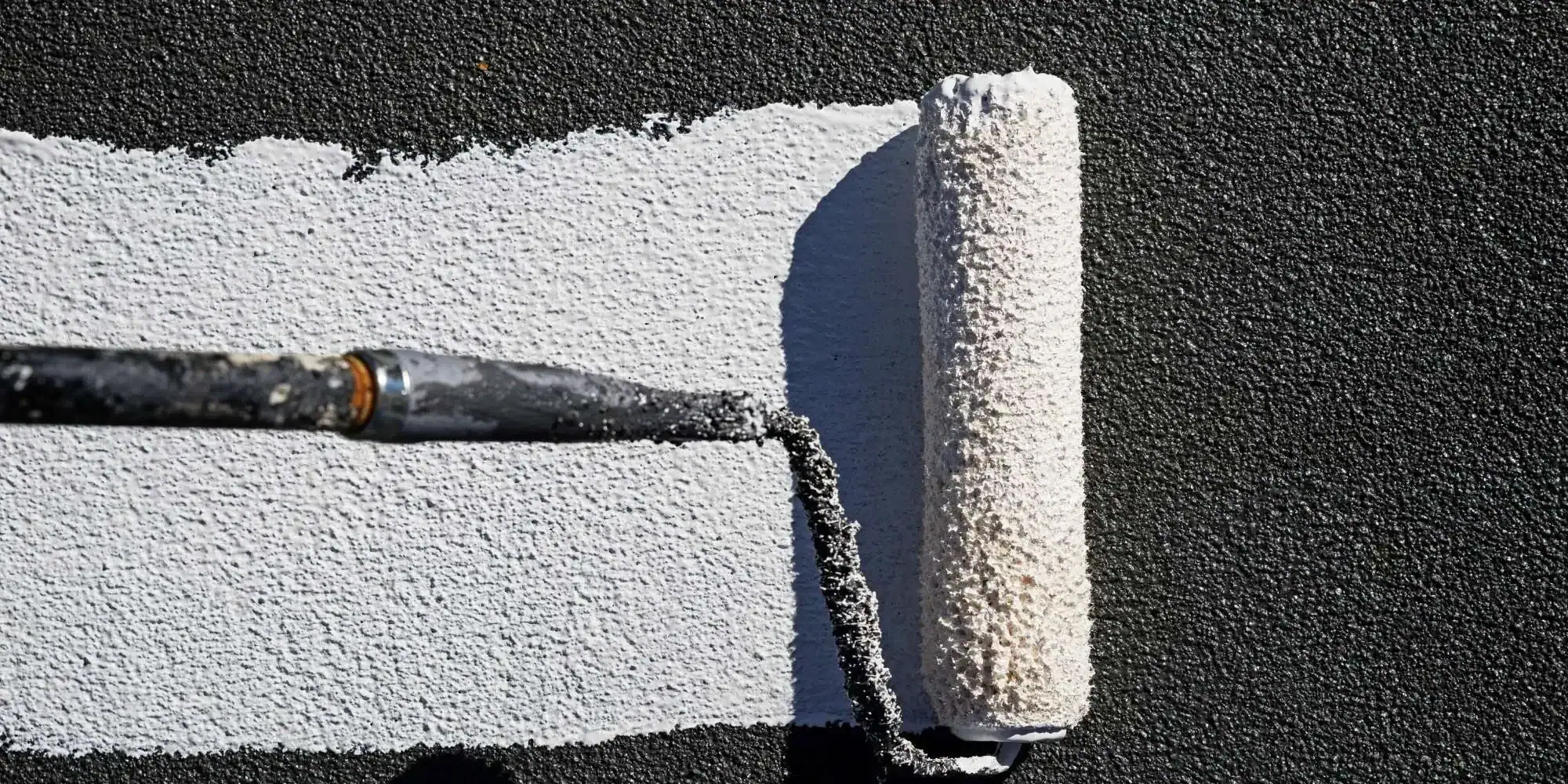
Peeling almost always comes down to surface preparation — specifically, what happened to the concrete before the epoxy went down. The most common cause is acid washing, which many contractors use because it’s quick. The problem is that acid washing leaves a residue on the surface that prevents the epoxy from bonding correctly. It might look fine for a few months, and then the floor starts lifting, usually right around the time road salt and freeze-thaw stress start working on it.
In St. Clair specifically, there’s an added factor: moisture vapor transmission through the slab. The proximity to the St. Clair River keeps ambient humidity elevated, and if a slab isn’t tested for moisture before coating, that vapor pushes up from beneath and breaks the bond over time. We fix this by diamond grinding the surface, testing for moisture, repairing any cracks, and then applying a full multi-layer system — primer, base coat, topcoat. That’s the process we use on every job, and it’s why the floors hold up.
For a standard residential garage in St. Clair, professional epoxy floor coating typically runs in the range of $3 to $8 per square foot, depending on the size of the slab, the condition of the concrete, and whether crack repair or additional prep work is needed. A typical two-car garage comes out somewhere between $2,400 and $3,800 for a complete multi-layer system.
What you’re paying for at the professional level isn’t just the coating material — it’s the prep work that makes the coating last. A hardware store kit might cost a few hundred dollars, but if the surface isn’t properly ground and tested, that kit will peel within a season or two. One properly applied professional coating done right the first time costs less over time than two or three failed DIY attempts. For St. Clair homeowners who’ve invested in maintaining older, historic properties, that math tends to make a lot of sense.
Epoxy floor coating needs concrete and air temperatures above 50°F to cure properly. In St. Clair, that reliably puts the application window from late April through October. Spring — April through June — and early fall — August through October — tend to be the strongest windows, both for temperature stability and for humidity levels along the river corridor.
Winter scheduling for unheated garages isn’t realistic in St. Clair. Temperatures here regularly drop below 18°F from November through March, and applying epoxy in those conditions leads to curing failures that show up as cloudiness, poor adhesion, or premature peeling. If you’re thinking about getting this done, the best move is to book in late winter or early spring so you’re scheduled before the spring rush hits. That way the work gets done before another Michigan winter has a chance to do more damage to an already-stressed slab.
Yes — and this is actually one of the strongest reasons to coat a garage floor in St. Clair rather than leave it bare. M-29, which runs directly through the city as River Road and Riverside Avenue, gets heavy salt treatment from November through March. Every vehicle pulling into a St. Clair garage during that window is carrying salt on its tires, and that salt lands directly on the concrete slab.
Road salt is chemically corrosive to unprotected concrete. It lowers the freezing point of water while simultaneously attacking the surface chemistry of the slab, accelerating the pitting and spalling that makes older St. Clair garage floors look the way they do. A properly applied commercial-grade epoxy floor paint creates a sealed, non-porous barrier between the salt and the concrete. The salt sits on top of the coating instead of working into the slab, and it wipes up instead of eating through the surface. For anyone parking in a St. Clair garage year-round, that protection is what makes the investment worthwhile.
A professionally applied epoxy floor coating, done with proper surface prep and a full multi-layer system, typically lasts 15 to 20 years in a residential garage setting. In a commercial or industrial environment with heavier traffic, the lifespan depends on the specific coating system used and the type of use the floor sees — but a well-spec’d commercial epoxy floor coating should hold up for 10 years or more under normal conditions.
What shortens that lifespan is almost always tied back to the original application. Skipped moisture testing, acid washing instead of grinding, or applying a single-coat product instead of a full primer-base-topcoat system all reduce how long the floor holds up. In St. Clair’s climate — with the freeze-thaw cycling, the river humidity, and the salt exposure — a floor that was applied with shortcuts will show it within a year or two. A floor applied correctly handles those conditions without issue. The difference isn’t in the product alone. It’s in the process that got it there.
Yes. We handle commercial epoxy floor coating and warehouse floor paint for facilities throughout St. Clair County, not just residential garages. The commercial side of the work is spec’d differently than a home garage — the coating system, the surface prep protocol, and the finish type all get matched to what the space actually demands.
For light industrial facilities, manufacturing environments, or any space dealing with vehicle traffic, oils, or chemical exposure, the coating needs to be chemical-resistant and slip-rated. For food service or healthcare environments, the priority is a seamless, non-porous surface that’s easy to sanitize. St. Clair County has a real manufacturing base — facilities tied to the automotive supply chain, healthcare, and industrial operations throughout the area — and those environments need floors that perform under real conditions, not just look good on day one. If you manage a commercial or industrial space in St. Clair County and the floor is overdue for a proper coating system, that’s exactly the kind of project we’re set up to handle.
Every project — residential or commercial — goes through the same full-system process: surface grinding, moisture testing, crack repair, primer, base coat, and topcoat. There’s no stripped-down version of that process. The steps that prevent failure aren’t optional, and we don’t treat them that way.
