
Hear from Our Customers
If your garage floor is bare concrete right now, it’s absorbing everything — engine oil, bilge water, antifreeze, cleaning solvents. Every spill that soaks in is a stain that doesn’t come back out. A professionally coated floor changes that completely. Spills wipe up. The surface stays clean. The concrete underneath stays protected.
For Pearl Beach homeowners, that matters more than it does almost anywhere else in Michigan. You’re storing boats, marine equipment, and seasonal gear in a space that sits close to the North Channel. The ambient humidity alone is higher than what most inland garages deal with. Add road salt tracked in from local roads and the freeze-thaw stress that Michigan winters put on concrete, and an unprotected slab doesn’t just look bad — it deteriorates faster than you’d expect.
The right epoxy floor coating seals the slab against all of it. Chemical resistance, moisture protection, and a surface that holds up through decades of real use. That’s what a properly applied system delivers — not just a floor that looks good on day one, but one that still looks good years from now.
We’ve been operating for about two years, but the experience behind Legends Construction goes back over a decade. The two brothers who built this company spent more than ten years in the painting and coating trade before putting our name on it. That means the learning curve — the mistakes, the product knowledge, the hard lessons about what prep work actually requires — happened long before we showed up at your door.
This is an owner-operated business. When you book with us, the people doing the work are the people who built the company. No subcontractors, no hand-offs, no crew you’ve never met. That kind of direct accountability matters in a tight-knit waterfront community like Pearl Beach, where word travels fast and a bad job doesn’t stay quiet.
We serve the greater Macomb and St. Clair County area, and we understand what waterfront properties along the North Channel actually deal with — the moisture, the marine chemicals, the salt. We’re not guessing at what your floor needs. We’ve seen it.
The most common reason epoxy floors fail — peeling, bubbling, delaminating within a year or two — is almost never the coating itself. It’s what happened before the coating went down. Or more accurately, what didn’t happen. Skipped moisture testing. No mechanical grinding. Coating applied over a contaminated or improperly prepared slab. In Pearl Beach, where concrete near the waterfront often carries elevated moisture vapor, cutting corners on prep isn’t just sloppy — it’s a guarantee the floor won’t hold.
The process starts with diamond grinding the surface. This opens the concrete’s pores so the coating can actually bond, rather than sitting on top of a sealed or contaminated surface. Before any product goes down, we test moisture levels — especially important for garages and storage areas near the North Channel where slab moisture can be higher than what you’d find in an inland home. Any cracks or damaged areas get repaired at this stage, not coated over.
From there, it’s primer, base coat, and a protective topcoat. Each layer serves a specific purpose in the system. The result is a floor that’s sealed against chemical exposure, moisture, and the mechanical stress of real use — not just a surface that looks good until the first Michigan winter.
Ready to get started?
We handle epoxy floor coating for residential garages, boat storage areas, basements, workshops, and commercial spaces throughout Pearl Beach and greater St. Clair County. The same commercial-grade materials and multi-step process apply regardless of the job size — there’s no scaled-down version for smaller residential projects.
For Pearl Beach specifically, the most common application is garage and boat storage floors. These spaces see a level of chemical and moisture exposure that most residential garages don’t. Marine fuel, bilge residue, antifreeze, and cleaning solvents are regular visitors in a community built around boating and waterfront living. The epoxy floor coating systems we use are formulated for chemical resistance — meaning those substances sit on the surface instead of soaking into it.
We also offer commercial epoxy floor coating for business owners, marine operators, and property managers in the Clay Township area. Warehouse floor paint, shop floors, and specialty coating services for high-traffic commercial surfaces all fall within our scope. Pricing for residential garage floors typically runs in the range of $3 to $8 per square foot depending on square footage, surface condition, and the extent of prep work required. If your slab has significant cracking or damage from past flooding — not uncommon in southern St. Clair County after the 2019 high-water events — we address that before any coating goes down.
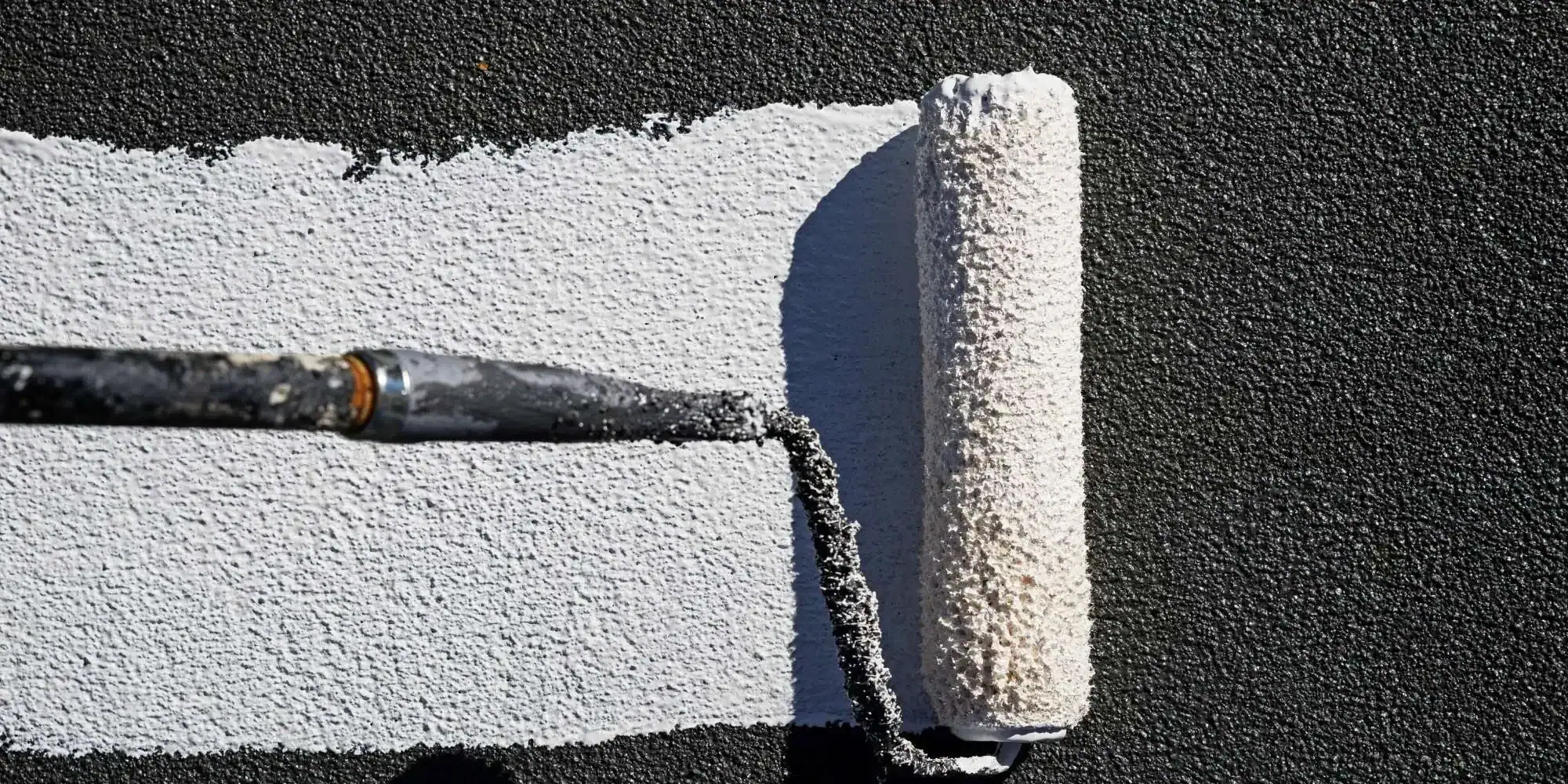
Peeling is almost always a surface preparation failure, not a product failure. When a contractor skips mechanical grinding, doesn’t test for moisture, or applies coating over a contaminated slab, the epoxy never forms a true bond with the concrete. It adheres to the surface layer, and when that layer flexes — from temperature changes, moisture vapor, or just normal use — the coating lifts with it.
In Pearl Beach, this risk is higher than in most Michigan communities. Garages and storage areas near the North Channel carry elevated ambient moisture, and concrete slabs that have been near the waterfront for decades often have moisture vapor transmission rates that will destroy an improperly applied coating within months. The fix is straightforward: diamond grind the surface, test moisture levels before any product goes down, apply a proper primer, and use a commercial-grade system designed for high-moisture environments. That’s the process we follow on every job, and it’s why the floors hold up.
For a standard residential garage floor in Pearl Beach, you’re generally looking at $3 to $8 per square foot for a professionally applied epoxy floor coating system. On a typical two-car garage, that puts the investment somewhere between $1,500 and $4,000 depending on the size of the slab, its current condition, and how much prep work is required before coating can begin.
Slabs with existing cracks, staining from marine chemicals, or damage from past water intrusion — which is not unusual in southern St. Clair County given the 2019 flooding events in the area — will require more prep work, and that affects the final number. What’s worth understanding is what that price actually includes: surface grinding, moisture testing, crack repair, primer, base coat, and protective topcoat. That’s a complete system, not a single coat of paint. The difference in longevity between a properly applied professional system and a hardware store kit is measured in years — sometimes decades.
Yes — but only if the application is done correctly. Moisture is the variable that separates a floor that lasts from one that fails, and it’s the reason that Pearl Beach properties require more careful prep work than most inland Michigan garages. Concrete near the waterfront absorbs and transmits moisture vapor at higher rates than concrete in drier inland environments. If that moisture isn’t accounted for before coating, it will push up through the slab and break the bond between the concrete and the epoxy — typically showing up as bubbling or peeling within the first year.
The solution is moisture testing before any product is applied, followed by a primer specifically designed to seal the slab and create a stable bonding surface. Commercial-grade epoxy systems used by professional contractors are formulated to handle elevated moisture conditions in a way that consumer-grade products simply aren’t. If your garage sits near a canal, a boat well, or the North Channel itself, that’s not a reason to avoid epoxy — it’s a reason to hire someone who knows how to apply it correctly.
Spring is the strongest window for epoxy floor coating in Pearl Beach, and there’s a practical reason for that beyond just weather. Epoxy requires concrete temperatures at or above 50°F to cure properly, which rules out most of November through March in this climate. But in Pearl Beach specifically, spring also lines up with the start of boating season — which is when most homeowners are already thinking about their garage and storage areas. Getting the floor coated before the boats come out means you’re not working around equipment, and you’re starting the season with a clean, protected surface.
Fall is a solid secondary window. Boat owners winterizing equipment and preparing storage areas for the off-season represent a natural demand period, and concrete temperatures in September and October are still well within the range for proper curing. If you’re planning ahead, booking in late winter for a spring installation is the move — the schedule fills up as temperatures rise, and Pearl Beach homeowners tend to move quickly once the season starts.
It does, and commercial applications are actually where epoxy floor coating systems were originally developed. High-traffic floors, warehouse environments, shop floors, and marine-related commercial spaces all benefit from the same properties that make epoxy valuable in a residential garage — chemical resistance, durability, and a sealed surface that’s easy to maintain.
For business owners and commercial property operators in the Clay Township and greater St. Clair County area, commercial epoxy floor coating is a practical investment. Floors in marine shops, storage facilities, and light industrial spaces take more abuse than residential surfaces, and the commercial-grade systems we use are specified for that level of use. The process is the same — surface grinding, moisture testing, crack repair, primer, base coat, topcoat — but the product specifications and coverage requirements are scaled to commercial conditions. If you’re managing a commercial property near Pearl Beach and the floor is showing wear, staining, or deterioration, it’s worth getting an assessment before the damage to the slab itself becomes a larger repair.
A professionally applied epoxy floor coating system, done with proper surface preparation and commercial-grade materials, typically lasts anywhere from 10 to 20 years in a residential garage setting. In Pearl Beach, the real variable isn’t the coating — it’s what the floor is exposed to and whether the application was done correctly in the first place.
Boat storage garages along the North Channel deal with a combination of factors that accelerate wear on unprotected surfaces: marine chemical exposure, elevated humidity, road salt, and Michigan’s freeze-thaw cycles. A properly sealed epoxy floor handles all of those. What shortens the lifespan of any coating is a bad application — specifically, inadequate surface prep that leaves the bond weak from day one. Floors applied over unground, untested, or contaminated concrete will fail in one to three years regardless of the product used. Floors applied correctly, with grinding, moisture testing, and a full multi-layer system, hold up through years of real use in a waterfront environment. That’s the difference between a one-time investment and a recurring headache.