
Hear from Our Customers
Every winter, Marysville homeowners drive home from Busha Highway with road salt ground into their tires. That salt hits the garage floor and starts breaking down the concrete — slowly at first, then all at once. Cracking, pitting, staining. Most people don’t notice how bad it’s gotten until they’re looking at a floor that’s past the point of a quick fix.
Our epoxy floor coating in Marysville puts a sealed barrier between your concrete and everything Michigan sends its way. Salt can’t penetrate it. Oil wipes clean instead of soaking in. The freeze-thaw cycle stops eating away at the surface. For homeowners in established neighborhoods like the Salt Block area — where garage floors have been absorbing decades of Michigan winters — this isn’t a cosmetic upgrade. It’s long-overdue protection.
Living near the St. Clair River also means your concrete deals with humidity levels that inland communities don’t. Moisture vapor works its way through unprotected slabs and causes adhesion failures when epoxy is applied over it without proper prep. We account for that in every installation — and give you a surface that stays bonded, stays clean, and actually lasts.
We’re a family-owned operation — two brothers who spent over a decade in the painting and coating trade before launching Legends Painting. The business is about two years old. The expertise behind it is not. When you hire us, you’re getting people who have already worked through the learning curve on their own time, not yours.
We handle residential garage floors, commercial spaces, and warehouse floor paint applications throughout Macomb County, Oakland County, and St. Clair County — including Marysville and the surrounding Blue Water Area. Whether you’re a homeowner off Gratiot Boulevard looking to protect a garage floor before next winter, or a facility manager along the M-29 corridor needing durable commercial epoxy floor coating, we approach every job the same way: do it right, do it once.
Our 4.9-star rating on HomeAdvisor and Angi didn’t come from marketing. It came from jobs where the work held up and we showed up when we said we would. That’s the standard on every project in Marysville.
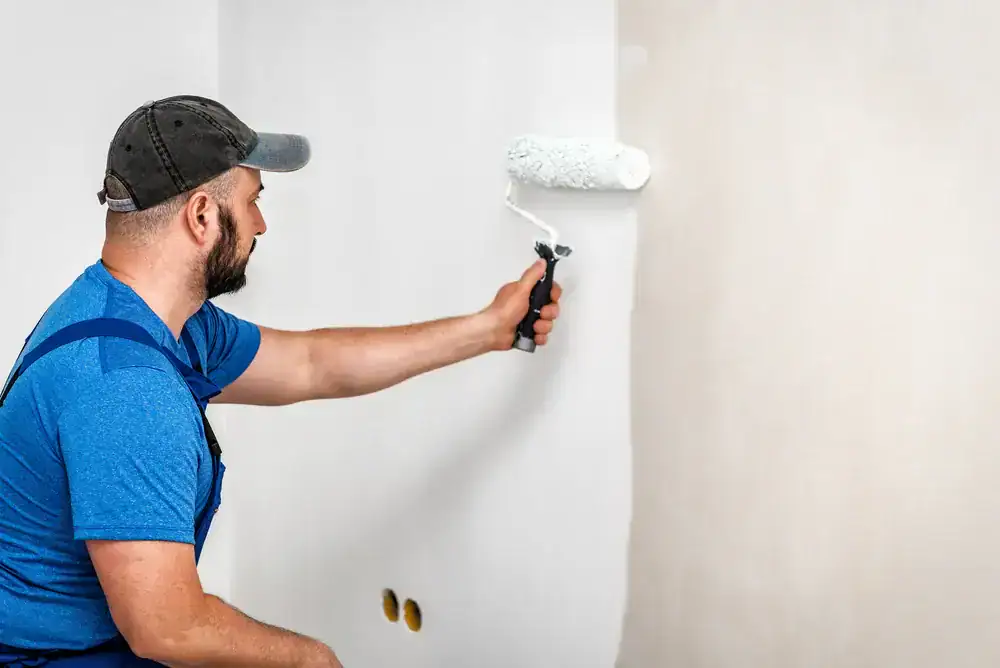
The most common reason epoxy floors fail — in Marysville and everywhere else — is what happens before the first drop of coating ever touches the floor. Most contractors skip or rush surface preparation because it takes time and equipment. The result is a floor that looks fine for a few months and starts peeling by spring.
We start with diamond grinding — not acid washing. Acid washing leaves behind calcium salt residue that blocks adhesion at the molecular level. Grinding opens the concrete pores correctly so the coating bonds the way it’s supposed to. From there, any cracks or surface damage get repaired before anything is applied. In Marysville, where older concrete in neighborhoods like the Salt Block area has often been through years of freeze-thaw cycles without protection, this step matters more than most people expect.
Once the surface is ready, we conduct a moisture assessment — especially important given Marysville’s proximity to the St. Clair River, where vapor transmission through slabs is a real factor. Then we apply primer, base coat, and a protective topcoat in sequence. Light foot traffic is typically safe within 24 hours. Vehicle traffic takes closer to five to seven days. You’ll know exactly what to expect before we start.
Ready to get started?
We handle epoxy floor coating in Marysville across a range of applications. For residential homeowners — whether you’re in a newer build in the Village of Marysville subdivision along Range Road or an older home near Huron Boulevard — we focus on a multi-layer system that protects your slab from road salt, moisture, and daily use. Residential work typically runs $3 to $8 per square foot installed, depending on the size of the space and the condition of the existing concrete.
On the commercial and industrial side, the M-29 corridor in Marysville has real flooring demands. Facilities dealing with forklift traffic, hydraulic fluid, metal shavings, or chemical exposure need more than standard paint. Our commercial epoxy floor coating and warehouse floor paint systems are formulated for that kind of punishment — chemical-resistant, slip-rated, and built to hold up under load. We also offer specialty coating services for environments with specific surface or performance requirements.
Across every project, the same process applies: proper prep, correct product selection for the application, and a finished floor that performs the way it should. No shortcuts on prep. No single-coat spray jobs dressed up as a professional system. If your floor isn’t the right candidate for epoxy — say, the concrete has moisture issues that need to be addressed first — you’ll hear that before any work begins, not after.
A professionally applied epoxy floor coating in Marysville can last 15 to 20 years when the surface prep is done correctly. The key word there is professionally. The coating itself isn’t what fails — it’s the bond between the coating and the concrete. When that bond is compromised by inadequate prep, you’re looking at peeling within the first year or two regardless of how good the product is.
In Marysville specifically, longevity depends on a few local factors. The freeze-thaw cycle here is real, and the road salt coming off M-29 and Gratiot Boulevard accelerates concrete degradation on unprotected floors. A properly ground, primed, and sealed epoxy system handles all of that. The floors that fail early in this area almost always trace back to one of two things: a DIY kit that wasn’t designed for Michigan’s climate, or a contractor who skipped the grinding step to save time.
For a standard residential garage in Marysville, professional epoxy floor coating typically runs between $3 and $8 per square foot installed. A two-car garage — usually in the 400 to 500 square foot range — generally comes out to somewhere between $1,200 and $4,000 depending on the condition of the concrete, the coating system selected, and whether crack repair is needed before application.
That range can feel wide, but the spread exists for a reason. A garage floor in one of Marysville’s older neighborhoods — say, near the Salt Block area — that has been through decades of road salt and freeze-thaw cycles without protection is going to need more prep work than a new slab in the Village of Marysville subdivision. More prep means more time and materials, which affects the final number. We won’t give you an exact cost until we look at the actual floor. What we will give you is a clear breakdown of what’s included — not a low number that leaves out half the process.
If your epoxy floor peeled, the cause is almost certainly surface preparation — specifically, what didn’t happen before the coating was applied. Epoxy needs to bond to open concrete pores. If the surface wasn’t ground properly, or if moisture in the slab wasn’t assessed and accounted for before application, the coating never gets a real bond. It sits on top of the concrete rather than bonding to it, and eventually it lifts.
This is especially relevant in Marysville because the combination of older concrete in established neighborhoods and the elevated humidity near the St. Clair River creates conditions where moisture vapor transmission is a real variable. A contractor who skips the moisture assessment step — or who uses acid washing instead of diamond grinding — is setting the floor up to fail regardless of the product brand. Before any new coating goes down, the old failed material needs to be fully removed, the surface needs to be ground correctly, and moisture levels need to be checked.
For unheated residential garages in Marysville, winter application is generally not practical. Epoxy requires both the concrete surface temperature and the ambient air temperature to be above 50°F for proper curing. From roughly November through March, most unheated garages in Marysville won’t consistently hold those temperatures — and applying epoxy below the minimum temperature threshold leads to curing failures and adhesion problems.
The practical window for residential garage floor epoxy coating in Marysville runs from about April through October, with spring being the most common time homeowners book. After a Michigan winter, people assess the damage — new cracks, salt staining, surface pitting — and decide it’s time to act. Booking in late winter or early March for an April start is a smart move because the spring schedule fills up quickly. For heated commercial and industrial facilities along the M-29 corridor, year-round application is possible since interior temperatures can be controlled. If you’re planning a warehouse floor paint project at a Busha Highway facility, winter downtime during planned production shutdowns is actually a common scheduling window.
Yes — and in many cases it’s not just a good option, it’s a necessary one. Facilities along the Busha Highway corridor in Marysville deal with conditions that bare concrete simply isn’t built to handle long-term. Forklift traffic, hydraulic fluid, metal shavings, chemical spills — unprotected concrete absorbs all of it. Over time, that leads to surface degradation, contamination that can’t be cleaned out, and eventually a floor that needs full replacement rather than just recoating.
Our commercial epoxy floor coating system applied correctly creates a chemical-resistant, slip-rated surface that can handle the daily demands of manufacturing and warehouse environments. The key difference between commercial and residential applications is in the product spec and the thickness of the system — commercial floors typically require a heavier build and specific performance ratings depending on the type of traffic and chemical exposure involved. If you manage a facility in Marysville’s industrial corridor, the conversation starts with what your floor is actually exposed to, and the coating system gets selected from there.
There are a few things that affect whether a concrete slab is ready for epoxy coating, and in Marysville, two of them come up more often than most. The first is moisture. Concrete slabs near the St. Clair River can carry higher moisture vapor levels than slabs in drier inland areas. If that moisture isn’t assessed and addressed before coating, it will eventually push through the epoxy and cause bubbling or delamination. A simple moisture test before any work begins tells you where things stand.
The second is surface condition. Concrete that has been through years of road salt exposure — common in Marysville’s older neighborhoods — often has a compromised surface layer that needs to be ground away before a coating can bond properly. Cracks, spalling, and pitting also need to be repaired before application, not after. If the concrete has structural issues that go deeper than surface damage, epoxy coating may not be the right first step — and we’ll tell you that upfront. A floor assessment before the job starts isn’t just a formality. It’s what separates a floor that lasts from one you’ll be dealing with again in two years.
