
Hear from Our Customers
Most Marysville homeowners don’t realize their fence is losing the battle until it’s already gray, cracked, or soft at the posts. By then, staining alone isn’t enough — you’re looking at repairs or full replacement. Getting ahead of it is the smarter move, and it’s a lot cheaper.
Living near the St. Clair River means your fence deals with moisture levels that inland Michigan towns simply don’t see. The ambient humidity along the riverfront corridor — especially near River Road and Chrysler Beach — pushes into the 77–80% range year-round. That’s not seasonal. That’s a constant pressure on every untreated wood surface on your property.
Then winter hits. Marysville temperatures swing from the low 80s in summer down to the high teens in January. Every freeze-thaw cycle forces moisture in and out of unprotected wood, widening cracks and breaking down fibers from the inside. A properly applied penetrating stain seals that moisture out before it can do that damage — and keeps your fence standing through conditions that would destroy an untreated one in just a few seasons.
Legends Painting LLC is a family-owned, owner-operated painting and staining company run by two brothers with over a decade of hands-on experience. The business is about two years old. The skills behind it are not. Every technique, every product decision, every prep call — that comes from ten years of real work, not a training manual.
When you hire us for fence staining in Marysville, you’re not getting a crew dispatched from a call center. You’re getting the people who built this business, showing up to your property in St. Clair County and doing the job ourselves. That personal accountability is rare, and it’s exactly why the work holds up.
Our 4.9-star rating on Angi and HomeAdvisor didn’t come from a marketing push. It came from Marysville homeowners who got what they were promised — a clean job, done right, at a fair price — and took the time to say so publicly.
It starts with a straightforward assessment of your fence — the wood type, its current condition, how much weathering has already occurred, and what the exposure looks like on your specific property. A fence on River Road facing direct river wind needs a different approach than one sitting in a shaded backyard off Huron Boulevard. That context shapes every decision that follows.
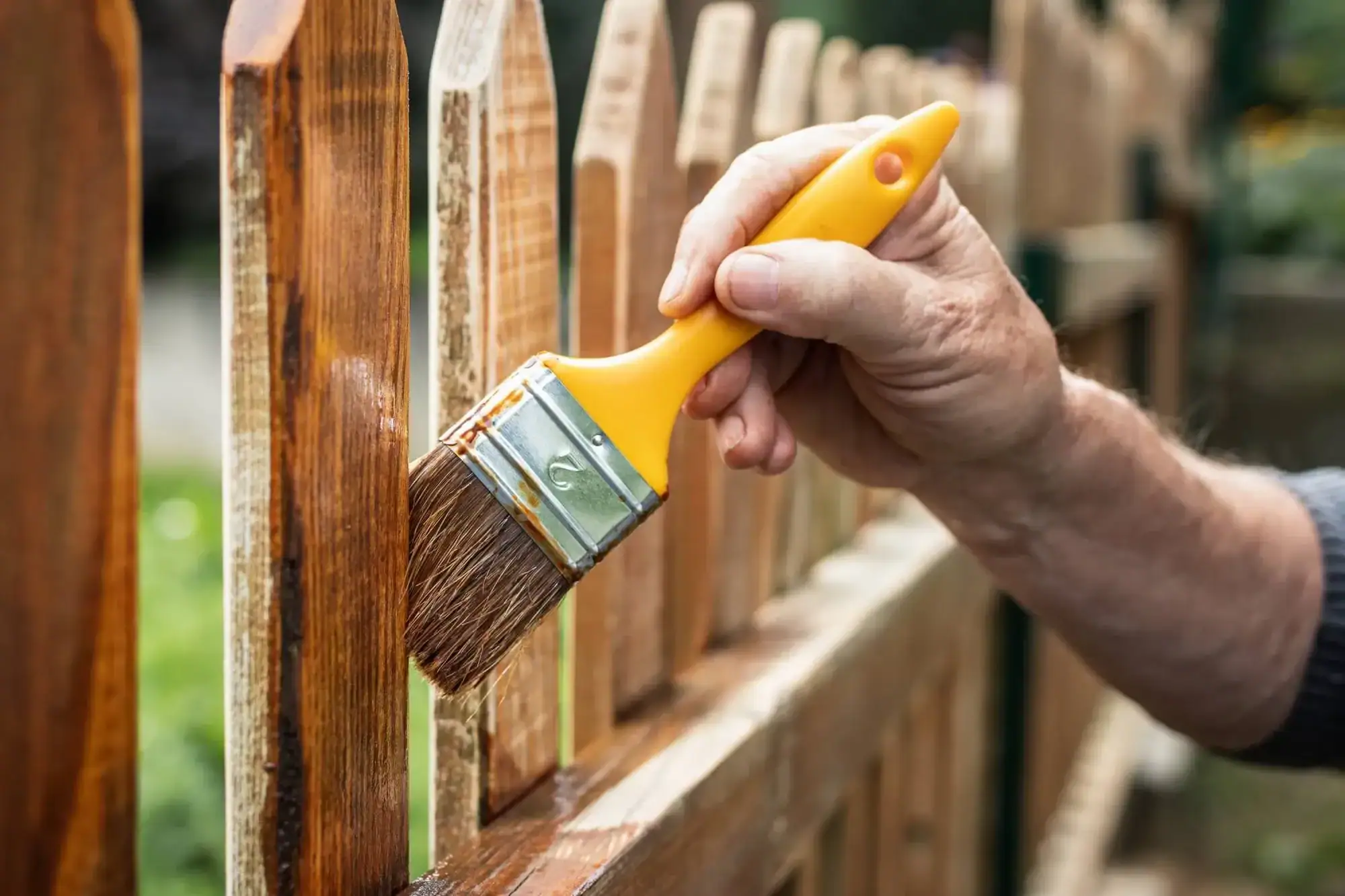
From there, the fence gets cleaned and prepped properly. This is the step most DIY jobs skip or rush, and it’s the reason so many staining jobs fail within a year. Any existing gray oxidation, mildew, or organic buildup — common on Marysville fences given the river humidity — gets treated and neutralized before a single drop of stain goes on. Stain applied over a dirty or compromised surface won’t penetrate. It’ll sit on top, peel, and leave you starting over.
Once the surface is ready and the conditions are right — temperature above 50°F, no rain in the forecast, manageable humidity — the stain goes on. Timing matters here. Marysville’s best staining windows run late April through early June and again from late August through October. That fall window is especially important: sealing the wood before the first freeze is the single most protective thing you can do for a wood fence heading into a Michigan winter. Slots during those windows fill up, so booking early makes a real difference.
Ready to get started?
Fence staining in Marysville isn’t a one-size-fits-all job. The product selection, the prep work, and the application method all shift based on what your fence is made of, how old it is, and where it sits on your property. New pressure-treated lumber needs time to cure — typically two to three months — before it can properly absorb stain. Older wood in the established neighborhoods along Huron Boulevard or in the Salt Block area may need a restoration approach before standard maintenance staining makes sense.
For most residential fences in Marysville, a penetrating semi-transparent or semi-solid stain is the right call. It gets into the wood grain rather than sitting on top, which is what actually creates a moisture barrier. Semi-transparent formulas show off the natural wood character while still building UV and moisture protection. Semi-solid options offer more coverage for fences that have already seen some weathering and need a bit more help. Solid stains are available for fences where the wood grain is too far gone to showcase — they look clean and uniform, but they do behave more like paint and require more upkeep over time.
Fence staining is a maintenance service, not a structural installation, so it doesn’t require a permit through Marysville’s building department. If you’ve already had your fence installed and permitted, you can schedule staining without any additional municipal approvals. What you do need is a contractor who understands the St. Clair County environment — the humidity, the freeze-thaw cycles, and the wind off the river — and selects products and timing accordingly. That’s what we bring to every project in this area.
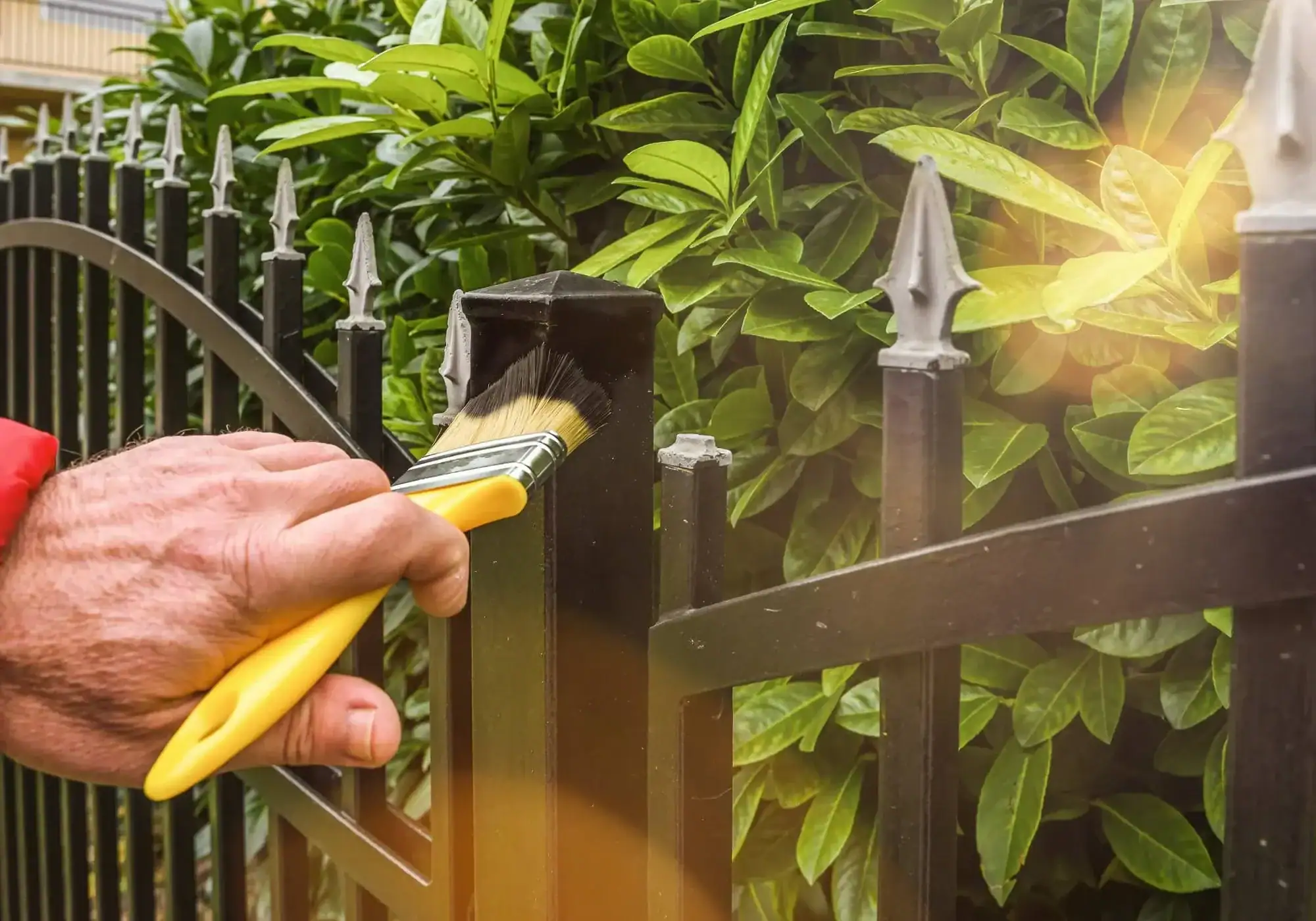
Most wood fences in Michigan need restaining every three to five years, but Marysville is a different conversation. The persistent humidity generated by the St. Clair River — especially for properties along River Road, near Chrysler Beach, or anywhere in the riverfront corridor — accelerates the breakdown of stain coatings faster than you’d see in an inland community. If your fence faces direct river wind or sits in a low-drainage area, plan on checking it every two to three years rather than waiting for the five-year mark.
The easiest way to tell if your fence is due: run your hand along the surface after a light rain. If the water soaks in rather than beading up, the stain is no longer doing its job. You might also notice the wood starting to gray or feel rough to the touch. Catching it at that stage means a cleaning and restaining job. Waiting longer means you’re potentially looking at wood that’s already started to soften — and that changes the scope and the cost significantly.
There are two solid windows for fence staining in Marysville: late April through early June, and late August through October. Both offer the temperature range stain needs to cure properly — consistently above 50°F, with manageable humidity and predictable dry stretches. Summer can work, but you have to be careful. When temperatures push past 85°F and the river humidity spikes, stain dries too fast to penetrate the wood the way it should. That leads to surface-only coverage that peels sooner than it should.
The fall window is arguably the more important one for Marysville homeowners specifically. Getting stain on your fence before the first hard freeze creates the moisture barrier that protects the wood through the entire winter — through every freeze-thaw cycle from November through March. If you missed the spring window and your fence went into last winter without protection, fall is your best shot at preventing another season of damage. Those booking windows fill up, so scheduling a few weeks ahead is always the smarter move.
You can absolutely DIY fence staining — the materials are available at any hardware store in Marysville, and it’s not a technically complicated job on paper. The issue is that most DIY staining jobs fail not because of the stain itself, but because of what happens before it goes on. Surface prep — cleaning, neutralizing mildew and oxidation, letting the wood dry completely — is the part that determines whether the stain lasts two years or six. Most homeowners either skip it or don’t know how to do it correctly for the specific condition their fence is in.
In Marysville, the river humidity adds another layer to that. Organic buildup from moisture and wind off the St. Clair River settles into wood grain and interferes with stain adhesion in ways that aren’t always visible to the naked eye. A professional who knows what to look for — and knows how to neutralize it before applying stain — is going to get you a result that lasts. A failed DIY job that needs stripping and reapplication often ends up costing more than professional work from the start, and it’s a frustrating way to learn that lesson.
For most residential fences in the Marysville area, professional fence staining runs somewhere between $1.00 and $2.50 per square foot, depending on the fence’s size, condition, and the product being used. For a standard 150-linear-foot, six-foot-high fence, that typically lands in the $900 to $2,250 range. Most professional contractors also carry a minimum charge — usually somewhere between $250 and $500 — so smaller sections or shorter runs may hit that floor rather than being calculated purely by square footage.
The condition of the fence affects cost more than most homeowners expect. A fence that’s been maintained and just needs a fresh coat is a straightforward job. A fence that’s been left unprotected through several Marysville winters — grayed out, with some surface cracking or mildew — requires more prep work, and that prep work takes time. It’s also worth keeping the replacement math in mind: a new wood fence in Michigan runs $1,500 to $4,000 or more. A professional staining project every few years is a fraction of that cost and the most direct way to protect what you’ve already paid for.
For most wood fences in Marysville, stain is the better long-term choice — and the reason comes down to how each product handles moisture. Paint sits on top of the wood surface and forms a film. When moisture gets underneath that film — which it will, especially in a river-humidity environment like Marysville — it causes the paint to bubble, crack, and peel. Once that happens, you’re looking at stripping and repainting, which is a more involved job than restaining.
Stain penetrates into the wood grain and becomes part of the surface rather than sitting on top of it. That means moisture can’t get underneath it and lift it the way it does with paint. It also means that when it does eventually wear, it fades gradually rather than peeling — making it much easier to maintain over time. Paint does have its place on fences where the wood is too weathered to stain effectively, or where a homeowner wants a specific solid color that stain can’t achieve. But for a wood fence in good to moderate condition in Marysville’s climate, a quality penetrating stain is going to outlast and outperform paint in almost every scenario.
The honest answer is that most fences homeowners think need replacing actually just need professional restoration staining — and most fences that get stained without proper assessment should have been partially replaced first. Knowing the difference matters, because staining a structurally compromised fence is a waste of money, and replacing a fence that could have been restored is an unnecessary expense.
Here’s a practical way to assess it: press your thumb firmly into the wood at a few different points, especially near the base of the posts where ground moisture concentrates. If the wood feels solid and doesn’t give, you’re likely in staining territory. If it feels soft, spongy, or your thumb leaves an impression, that section has rot — and staining over rot doesn’t fix it. Also look at the posts themselves. Posts are the most vulnerable part of a wood fence in Marysville’s climate because they sit in soil that holds moisture from both rain and river humidity. A fence with solid rails and pickets but compromised posts may need partial replacement at the posts before staining makes sense. We can walk through that assessment with you before any work is quoted — so you’re not guessing, and you’re not overpaying for either option.
