
Hear from Our Customers
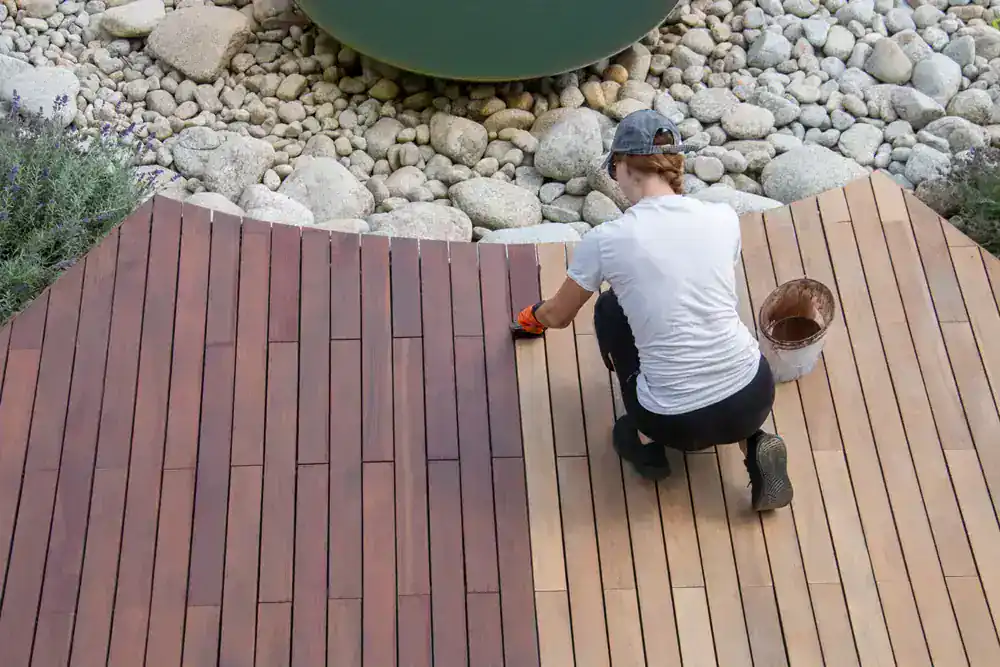
Living near the St. Clair River means your deck is dealing with more than just rain. The river corridor generates ambient moisture year-round — not just during storms — and that steady humidity works its way into untreated wood faster than most homeowners expect. Add Michigan’s freeze-thaw cycle on top of that, and you’re looking at a deck that can go from weathered to structurally compromised within a few winters if it’s not properly protected.
Temperatures in St. Clair swing from around 18°F in winter to the low 80s in summer. When moisture-saturated wood freezes, it expands internally — forcing fibers apart, causing warping, cracking, and cupping. That cycle repeats 30 to 40 times across a Michigan winter. Quality stain application stops moisture from getting into the wood in the first place, which is the only way to actually break that pattern.
Then there’s summer. Riverfront and near-river properties in St. Clair get an extra dose of UV exposure from sunlight bouncing off the water — which accelerates the graying and surface breakdown that signals your deck’s protective layer is gone. The right stain, applied correctly, keeps your deck looking sharp and structurally sound for years — not just one season.
We’re a family-owned operation — two brothers with over ten years of combined painting and exterior finishing experience. When you hire us for deck staining in St. Clair, MI, you’re not getting a franchise crew or a subcontractor who’s never seen your neighborhood. You’re getting the people who actually show up, do the work, and stand behind it.
We serve homeowners throughout St. Clair County, including the river communities along M-29 from Marine City up through Marysville. We know what the conditions are like here — the river humidity, the wind exposure, the freeze-thaw patterns that hit harder near the water than they do inland. That context shapes how we approach every project, from stain selection to surface prep.
Our focus is straightforward: do the job right, use professional-grade materials, and leave you with results you’d actually recommend to a neighbor. In a city of 5,400 people, that reputation matters — and we treat it that way.
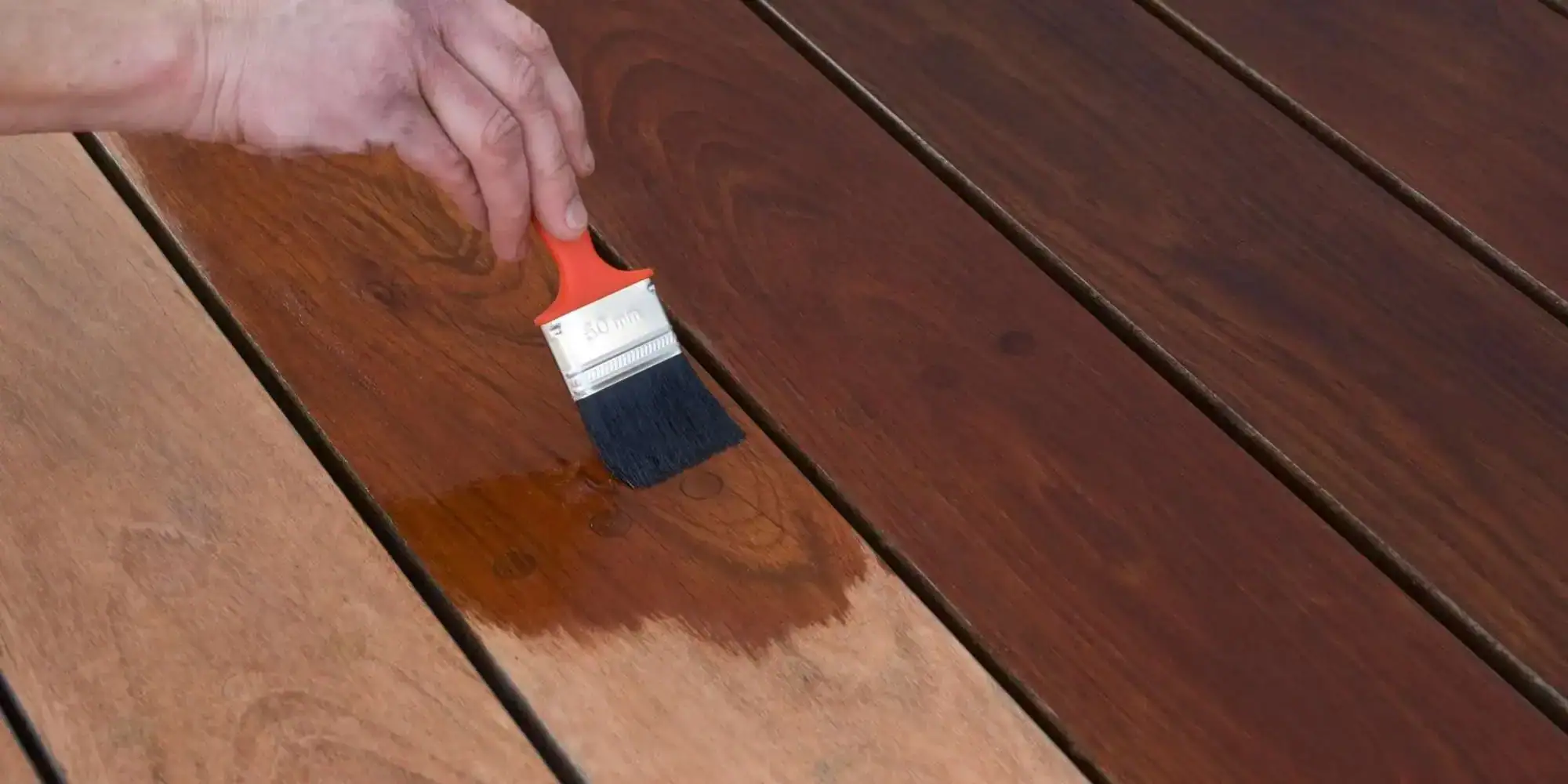
Every deck staining project starts with a thorough surface assessment. We look at the wood condition, any existing finish that’s failing, signs of moisture damage, and what the deck has been exposed to. For homes near the St. Clair River — especially those in areas like River Pointe Estates or along the M-29 corridor — we pay close attention to moisture retention and any early signs of mildew or surface softening that river humidity tends to accelerate.
From there, prep work begins. This is where most DIY jobs and budget contractors cut corners — and it’s exactly where the quality of a finish is won or lost. We clean the surface, strip any failing old finish, sand rough spots, and make sure the wood is properly dried before anything goes on. Skipping this step is why stain peels, bubbles, or fades before the next season. We don’t skip it.
Once the surface is ready, we apply a professional-grade stain selected for your specific wood type, exposure conditions, and the level of protection your deck needs. Michigan’s outdoor staining window runs roughly from late May through early September — about 14 to 16 weeks of reliable conditions. We work within that window carefully, making sure temperature and humidity levels are right before we apply, so the finish cures properly and lasts. Staining alone doesn’t require a permit in St. Clair, but if any structural repairs come up during the process, we’ll flag them so you can confirm with the city’s building department before that work begins.

Ready to get started?
Deck staining in St. Clair, MI isn’t a one-size-fits-all job — and we don’t treat it like one. The stain type matters. Oil-based penetrating stains are often the right call for older, more porous wood that needs deep moisture protection. Water-based formulas work well for newer decks where flexibility and faster recoat times are a priority. Semi-transparent stains let the wood grain show while still providing UV and moisture resistance. Solid stains offer maximum coverage and are the better choice when a deck’s surface has significant weathering or discoloration. We walk you through the options and make a recommendation based on what your specific deck actually needs — not what’s easiest to apply.
Every job includes professional-grade materials with UV inhibitors rated for Michigan’s climate — the kind of products that we use on our own properties. These aren’t big-box store products. The difference shows in how long the finish holds.
For St. Clair homeowners with higher-value riverfront or near-river properties, protecting your deck is protecting a significant part of your home’s appeal and resale value. Deck board replacement runs $15 to $30 per square foot installed. A full rebuild can run $15,000 or more. Professional staining every two to three years — which is the right interval for decks exposed to St. Clair’s river climate — costs a fraction of that and keeps the structure sound for decades.
For most Michigan homes, a deck staining interval of every three to five years is reasonable. But if your home is near the St. Clair River — or anywhere along the M-29 corridor where river humidity is a constant factor — that interval should be closer to every two to three years. The elevated moisture in the river corridor works its way into wood more aggressively than it does in inland communities, and it does it year-round, not just during rain events.
The best way to know when your deck actually needs attention is to do a simple water test. Pour a small amount of water onto the surface. If it beads up, the existing finish is still doing its job. If it soaks in and darkens the wood within a minute or two, the protection is gone and moisture is getting in. At that point, you’re better off acting sooner rather than waiting for the next scheduled interval — especially heading into a Michigan winter.
Staining and painting are both valid options, but they work differently and serve different purposes. Stain — particularly a penetrating stain — soaks into the wood fibers rather than sitting on top of them. That means it protects from within, allows the wood to breathe, and doesn’t peel or chip the way a surface film can. It’s generally the better choice for decks because it handles the expansion and contraction that comes with Michigan’s temperature swings without cracking or lifting.
Paint creates a solid film on top of the wood. It offers more color variety and can cover significant surface damage or discoloration. The tradeoff is that once a deck is painted, it needs to stay painted — and if moisture gets underneath a painted surface, it has nowhere to go, which can accelerate rot. For most St. Clair homeowners, a quality semi-transparent or solid stain is the right call. If your deck has heavy weathering or you want a specific color that stain can’t achieve, solid stain is often a better middle ground than paint — it covers well without trapping moisture the way a paint film does.
A straightforward deck staining project in the St. Clair area typically runs around $850 for a standard-sized deck in decent condition. If the deck needs more involved prep — stripping a failing old finish, cleaning significant mildew or algae growth, or addressing surface damage before staining — the total can range from $1,500 to $3,000 depending on the size of the deck and the extent of the work involved.
The biggest cost variables are deck size, wood condition, and stain type. A deck that’s been well-maintained and just needs a fresh coat costs less than one that’s been neglected for several seasons and needs to be stripped back before anything new goes on. For riverfront and near-river properties in St. Clair, where humidity accelerates surface degradation, decks that go too long between maintenance cycles often end up in that higher range because the prep work is more involved. Getting on a consistent two-to-three-year maintenance schedule keeps the cost lower over time than letting the deck deteriorate between jobs.
You can stain a deck yourself — the question is whether the result will hold up and actually protect the wood, or just look decent for one season before it starts peeling or fading. The biggest challenge with DIY deck staining isn’t the application itself. It’s the prep work. Getting the surface clean enough, dry enough, and free of failing old finish is labor-intensive and easy to underdo. If the prep isn’t right, even a quality stain won’t bond properly and won’t last.
In St. Clair’s river climate, that margin for error is smaller than it is in drier inland areas. The ambient humidity means wood can retain more moisture than it appears to on the surface, and applying stain over wood that isn’t fully dried is one of the most common reasons finishes fail prematurely. A professional deck staining contractor brings the right equipment to clean and prep the surface properly, knows how to read the conditions before applying, and uses professional-grade materials that aren’t available at a hardware store. For a deck on a higher-value property along the river, the cost of a professional job is usually well worth it compared to redoing it in a year or two.
For Michigan’s climate — and especially for St. Clair, where freeze-thaw cycles are compounded by river humidity — a penetrating oil-based or alkyd-based stain with water repellency and UV inhibitors tends to perform best. These formulas soak into the wood rather than forming a surface film, which means they flex with the wood as it expands and contracts through temperature swings. That flexibility is critical in a climate where temperatures can drop from the 80s in summer to near zero in winter.
Semi-transparent penetrating stains are a strong choice for decks in good condition — they protect the wood while still letting the grain show through. For decks with more surface damage or significant weathering, a solid penetrating stain gives better coverage without the peeling risk that comes with a paint-like film. The stain brand and product line also matter — professional-grade formulas from manufacturers like Cabot, TWP, or Armstrong Clark are formulated to handle the moisture and UV conditions that consumer-grade products aren’t built for. We make stain recommendations based on your specific wood type and what the deck has been through, not just what’s easiest to apply.
Deck staining itself — as a maintenance and finishing service — does not require a permit in St. Clair, MI. It’s treated the same way as exterior painting: routine upkeep that falls outside the city’s building permit requirements. So if you’re calling us for a standard staining job, there’s no permit process to worry about and no delays waiting on approvals.
Where permits do come into play is if structural repairs are needed alongside the staining work — replacing damaged or rotted boards, repairing joists, or making changes to the deck’s structure. If we find anything like that during our surface assessment, we’ll point it out clearly so you can check with the City of St. Clair’s building department before that specific work begins. Michigan state law does require that contractors performing work valued over $600 hold a valid state license — a Residential Builder or Maintenance and Alteration Contractor license. Legends Construction LLC meets that requirement, which means you have a licensed, accountable contractor on your project, not someone working without credentials. It’s a straightforward protection for you as a homeowner, and it’s one worth asking about before hiring anyone for exterior work in St. Clair County.