
Summary:
You’ve probably heard the term thrown around — maybe from a contractor, maybe while researching options for your metal railings or kitchen cabinets. But most of what’s out there about electrostatic painting reads like it was written for a factory manager, not a homeowner in Sterling Heights, MI trying to figure out whether it applies to their front staircase.
It does apply. More often than people think. Here’s a clear, honest breakdown of what electrostatic painting is, how the process works, what it’s actually good for, and when a related technique — professional spray finishing — is the better call for surfaces like your kitchen cabinets.
Electrostatic painting is a spray application method that uses an electrical charge to bond paint directly to a metal surface. The spray gun gives the paint particles a positive electrical charge as they leave the nozzle. The metal surface being painted is grounded, which gives it a negative charge. Opposites attract — so the paint is literally pulled toward the surface rather than just sprayed at it.
The practical result of that is significant. Paint wraps around curves, spindles, and recessed areas that a brush or roller would miss entirely. Very little paint ends up in the air or on the floor. According to U.S. EPA data, electrostatic painting achieves transfer efficiency between 50% and 90%, compared to 25% to 50% for conventional spray methods. Some professional applications push that figure even higher — up to 98% of the paint leaving the nozzle ends up on the surface.
That’s not just an efficiency stat. It means a cleaner job site, a more even finish, and a coat that adheres more uniformly than anything applied by hand.
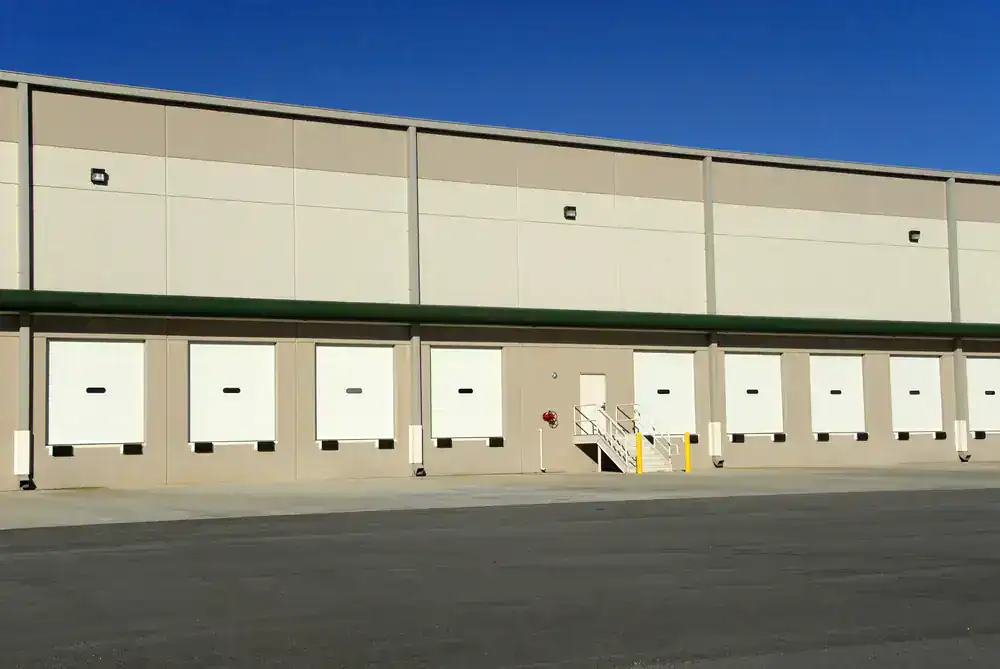
This is where a lot of people get tripped up — and where a lot of contractor pages either mislead or just stay vague. Electrostatic painting works on conductive surfaces. In practice, that means metal. Wrought iron railings, steel fences, metal doors and door frames, office furniture, lockers, filing cabinets, metal fixtures, and industrial equipment are all fair game. If it’s metal and it can be grounded, electrostatic painting is a viable option.
Wood, drywall, and composite materials don’t conduct electricity the way metal does, so the electrostatic charge doesn’t work the same way on those surfaces. That doesn’t mean you can’t get a professional spray finish on wood cabinets or trim — it just means a different technique applies, which we’ll get to in a moment.
One of the more practical advantages of electrostatic painting is that we can do it on-site. You don’t have to dismantle your staircase railing and haul it to a shop. We bring the equipment to your worksite, paint the surface in place, and the finish is typically dry to the touch within about two hours. Full cure takes 12 to 24 hours. For a Macomb County business that can’t afford to shut down operations for days, or a homeowner who doesn’t want their front entry torn apart for a week, that matters.
It’s also worth clearing up a common point of confusion: electrostatic painting and powder coating are not the same thing. Powder coating uses dry powder applied electrostatically and then baked in an oven — which means it cannot be done on-site and requires the object to be transported to a facility. Electrostatic painting uses liquid paint and can happen anywhere. The underlying principle is similar; the process and practical application are quite different.
In Macomb County, the case for electrostatic painting on exterior metal surfaces is stronger than it might be in a milder climate. The region sees 30 to 40 freeze-thaw cycles in a typical winter. That repeated expansion and contraction of metal is hard on paint — it cracks, chips, and peels faster than most people expect. Add in the road salt that blankets the area from November through March and the humidity that comes with being close to Lake St. Clair, and you have a genuinely corrosive environment for exposed metal. A properly applied electrostatic coat, with the right formulation for the conditions, holds up to that in a way that a brushed-on coat simply doesn’t.
The honest answer is: when your surface is metal, when you want a smooth and durable finish without disassembly, and when you’re dealing with complex shapes that are difficult to coat evenly by hand.
Wrought iron railings are the clearest example. The spindles, curves, and tight angles that make them look good are exactly what makes them difficult to paint well. A brush leaves uneven coverage, drips in the recesses, and missed spots on the back sides of spindles. Electrostatic painting wraps around all of it — at least 95% of the paint from the nozzle is attracted to the metal surface, including the parts you can’t easily see or reach. The result looks factory-applied because, in a real sense, the physics are doing work that a brush physically cannot.
Metal fences, garage doors, steel entry doors, commercial lockers, and metal office furniture all fall into the same category. If you’re a facility manager at one of the manufacturing or office parks in Warren, MI or Shelby Township, MI and you’ve got a building full of aging metal furniture or a set of interior railings that look like they haven’t been touched in a decade, electrostatic painting is worth a serious conversation. The work gets done on-site, the disruption is minimal, and the finish lasts.
Where electrostatic painting is not the right call: non-metal surfaces, situations where the object genuinely cannot be safely grounded, or cases where the paint formulation isn’t suited to the specific metal or environment. We’ll tell you upfront if your project doesn’t fit the process — that kind of honesty matters more than saying yes to everything.
Want live answers?
Connect with a Legends Painting expert for fast, friendly support.
Kitchen cabinets come up in nearly every conversation about spray painting — and for good reason. The finish you see on professionally painted cabinets, the kind that looks smooth and factory-applied with no brush marks or roller texture, comes from a spray gun, not a brush. But it’s not electrostatic painting. Wood doesn’t conduct electricity the way metal does, so the charge-based process doesn’t apply. What does apply is professional HVLP or airless spray finishing, which achieves a comparable quality of result through different mechanics.
The outcome homeowners are after is the same: a smooth, even, durable finish that makes the cabinets look like they just came off a manufacturer’s line. Whether that’s electrostatic on metal or spray finishing on wood, the principle is the same — a spray-applied finish simply outperforms anything applied by hand when it comes to smoothness and consistency.

For a lot of Macomb County homeowners, this is the real question. The county has a large stock of homes built between the 1960s and the 1990s — ranch homes, colonials, split-levels throughout Sterling Heights, MI, Clinton Township, MI, Chesterfield, MI, and everywhere in between. A lot of those homes have original kitchens. The cabinets are structurally fine. The boxes are solid. But the color is dated, the finish is worn, and the whole kitchen feels like it’s stuck in another decade.
Full cabinet replacement in Michigan runs $15,000 to $40,000 or more depending on the scope. Professional spray finishing delivers roughly 80% of that visual impact — a fresh color, a smooth finish, a kitchen that looks genuinely updated — at a fraction of the cost. The cabinets look new because the finish looks new. That’s what people are actually paying for when they replace cabinets: the appearance of a fresh start. Spray finishing gets you there without the demolition, the lead times, and the five-figure price tag.
The process matters too. Professional cabinet spray finishing isn’t just pointing a gun at your cabinet doors. It starts with removing the hardware, cleaning and degreasing every surface thoroughly, applying a primer formulated specifically for cabinet adhesion, and then spraying multiple thin coats of cabinet-grade paint. Each coat is applied deliberately, with proper dry time between them. The finish that results is smooth, hard, and consistent in a way that brush or roller work — even careful, patient brush work — can’t replicate. The physics of how a spray gun atomizes paint is just different from how a brush lays it on.
For homeowners who’ve tried painting their own cabinets and ended up with brush marks, drips, or a finish that started peeling within a year, the gap between DIY and professional spray finishing is significant. It’s not about effort — it’s about equipment, prep, and paint selection.
This is one of the most common questions we hear, and the short answer is: yes, in most cases — but not by skipping prep entirely. The longer answer is worth understanding if you’re trying to figure out whether professional cabinet painting is a realistic option for your kitchen.
Sanding has traditionally been the way painters create a surface that paint can grip. The mechanical abrasion opens up the surface and gives the primer something to bond to. The reason painting cabinets without sanding became a thing is that bonding primers — primers specifically engineered for slick or hard surfaces — can create that same adhesion chemically rather than mechanically. When the right bonding primer is applied to a properly cleaned and degreased surface, it grips the way a sanded surface would. The paint applied over it behaves accordingly.
What this means in practice: our approach to painting cabinets without sanding still involves real prep work. Every cabinet surface gets cleaned and degreased thoroughly — grease, cooking residue, and oils are the enemy of adhesion, and kitchens accumulate them in ways that aren’t always visible. The bonding primer goes on carefully and is allowed to cure properly before any topcoat is applied. Then the spray finishing happens in thin, even coats with appropriate dry time between each one. Nothing about this is a shortcut. It’s a different path to the same destination — a durable, well-adhered finish — that avoids the dust, the labor, and the time involved in sanding 30 or 40 cabinet doors by hand.
Where sanding still makes sense is on surfaces with existing paint that’s peeling, chipping, or poorly adhered. You can’t primer over a failing finish and expect it to hold. In those cases, the failing paint needs to come off first, and that typically means some degree of mechanical prep. We assess the existing surface condition before recommending an approach — and if the surface calls for sanding, that’s what should happen. The goal is a finish that lasts, not a finish that was faster to apply.
Electrostatic painting, professional spray finishing, cabinet refinishing without sanding — these aren’t complicated concepts once someone explains them plainly. The challenge most homeowners and business owners in Macomb County run into is finding a contractor who actually knows the difference, will give them a straight answer about which approach fits their project, and will do the work right the first time.
That’s what we’ve been doing for over 10 years. We work across Macomb County — Sterling Heights, MI, Warren, MI, Clinton Township, MI, Shelby Township, MI, Chesterfield, MI, and more than 60 cities in the area — handling everything from metal railing refinishing and commercial fixture repainting to full cabinet spray finishing for residential kitchens. We’re a family-owned operation, fully licensed and insured, and we give free quotes with a response within 24 to 48 hours.
If you have a project in mind — metal surfaces, cabinets, or anything in between — reach out to Legends Painting and let’s figure out the right approach together.
Article details:
Continue learning: