Summary:
You’ve picked the color. Now you’re staring at a wall of paint cans wondering what “eggshell” actually means and whether it matters. It does—more than most people realize.
The finish you choose determines how durable your paint job is, how well it holds up to moisture and cleaning, and whether every bump and imperfection on your wall ends up on full display. Get it right and a paint job lasts a decade. Get it wrong and you’re redoing it in a few years, wondering what went wrong. This guide walks you through each finish type, where it belongs, and where it absolutely doesn’t—including the cabinet question that trips up almost everyone.
There are five interior paint finish types, and they’re organized by sheen—how much light the surface reflects once dry. More sheen means more enamel in the paint, which makes it harder, more washable, and more durable. It also means more unforgiving. The higher the sheen, the more clearly it shows every imperfection underneath.
Flat and matte finishes sit at one end of the spectrum. They absorb light rather than reflect it, which makes them excellent at hiding wall texture, small cracks, and surface irregularities. They’re the most forgiving finish to look at—but the least forgiving when someone tries to wipe them down. On the other end, high-gloss is nearly indestructible and wipes clean like a countertop, but it reflects so much light that it highlights every flaw in the surface beneath it.
Eggshell, satin, and semi-gloss live in the middle, and that’s where most of your home’s walls will land.
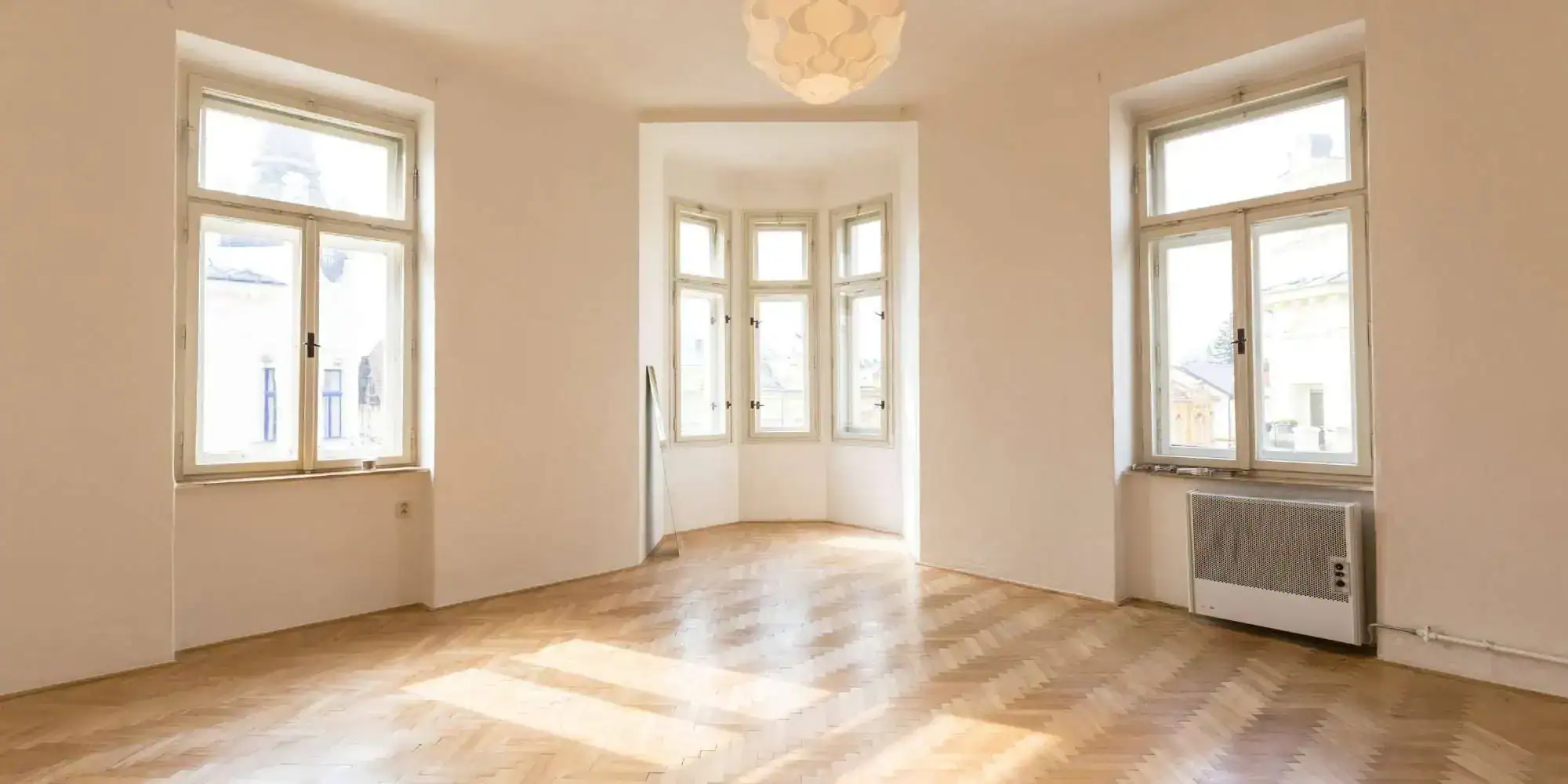
Flat and matte finishes are best reserved for ceilings and low-traffic adult spaces—a formal dining room, a media room, a master bedroom that doesn’t double as a playroom. They hide imperfections better than any other finish, which is genuinely useful on a ceiling where texture irregularities catch the light. But if anyone ever tries to clean a flat-painted wall with a damp cloth, the paint dulls or wipes away. That’s not a flaw in the product—it’s just not designed for that.
Eggshell is the workhorse of most residential interiors. It has a soft, low-luster sheen that reads as warm and inviting on a wall, handles occasional cleaning, and resists the kind of moisture that causes flat paint to fail. For most living rooms, dining rooms, and adult bedrooms, eggshell is the right call. We recommend eggshell specifically for Macomb County homes because the humid summers here create enough ambient moisture that flat paint on interior walls can show water marks or develop early mildew, especially in rooms that don’t get great airflow. Eggshell handles that without looking like a commercial space.
Satin has a pearl-like sheen that’s noticeably more reflective than eggshell but still soft enough to use on large wall surfaces. It cleans easily, resists scrubbing, and holds up in high-traffic areas—hallways, kids’ rooms, laundry rooms, and kitchens where you want something tougher than eggshell but not as stark as semi-gloss. A lot of homeowners describe satin as the “sweet spot” finish, and for good reason. It gives you durability without the clinical look of a glossier wall.
Semi-gloss is where you go for moisture-heavy rooms and surfaces that take real punishment. Bathroom walls, kitchen walls, and any room where mildew is a genuine concern—semi-gloss resists it. It’s also the standard for trim, window frames, and doors throughout the home. The sheen level is high enough that it highlights imperfections on a large flat wall, which is why we don’t recommend it for living room or bedroom walls even though it cleans beautifully.
High-gloss belongs on cabinets, furniture, and trim—not on interior walls. It’s as durable as paint gets and wipes clean almost effortlessly, but using it on a large wall surface is one of the most common DIY mistakes we see. It amplifies every seam, patch, and texture variation. Touch-ups become nearly impossible because the sheen level is so consistent that any repainted spot reads as a different color in certain light. If you’ve ever seen a room where the walls look almost wet and every imperfection is visible, that’s usually high-gloss applied somewhere it shouldn’t have been.
Flat and matte finishes hide imperfections better than any other option—that’s the trade-off at the low end of the sheen spectrum. Because they absorb light instead of reflecting it, surface texture and minor wall flaws become much less visible. This is why flat paint is almost universally used on ceilings, where any texture or patching work would otherwise catch the light and draw the eye.
For walls, eggshell is the practical answer for most homeowners who want some imperfection-hiding benefit without giving up cleanability entirely. It’s not as forgiving as flat, but the low sheen still diffuses light enough that minor dings and texture variations don’t announce themselves the way they would under satin or semi-gloss.
The finish choice only matters as much as the prep work underneath it. A semi-gloss finish applied over unrepaired drywall, unfilled nail holes, and unsanded seams will look worse than flat paint applied over a properly prepared wall. The sheen amplifies whatever is there—good or bad. This is why we spend as much time on surface preparation as we do on the actual painting. Detailed drywall repair, gap caulking, and thorough sanding before a single drop of paint is applied—that’s what makes a finish look the way it’s supposed to. Skipping prep and choosing a lower-sheen finish to compensate is a short-term fix that doesn’t hold up.
If you’re working with older walls in a Warren ranch or a St. Clair Shores colonial that have years of patching and repainting behind them, this matters even more. The older the housing stock, the more prep work the surface typically needs before any finish—high or low sheen—will look right.
Want live answers?
Connect with a Legends Painting expert for fast, friendly support.
Cabinet painting is where finish selection has the highest stakes—and where the most costly mistakes happen. Cabinets aren’t walls. They open and close hundreds of times a week, they get touched constantly, they’re exposed to heat, grease, and steam in the kitchen, and they need to be wiped down regularly. Standard wall paint, even in a higher sheen, isn’t formulated for that kind of punishment.
The paint type matters here just as much as the finish. For most other interior surfaces, a quality acrylic latex in the right sheen is the right answer. For cabinets, the professional standard has shifted toward hybrid alkyd enamel—sometimes called waterborne alkyd—which combines the hardness and durability of traditional oil-based paint with the easier cleanup and lower odor of latex. Brands like Sherwin-Williams Emerald Urethane Trim Enamel and Benjamin Moore Advance were specifically engineered for this application, and they perform noticeably better than standard wall paint on a cabinet surface.
For kitchen cabinets specifically, satin or semi-gloss finish in a cabinet-grade enamel or hybrid alkyd formula is the professional recommendation—and there’s a practical reason for both parts of that answer.
Satin finish on cabinets offers enough sheen to be durable and cleanable without reflecting so much light that every fingerprint and smudge is constantly visible. Testing consistently shows that satin leaves fewer visible fingerprints than semi-gloss on a cabinet surface, which matters in a kitchen where hands are on those doors all day. Semi-gloss is also a solid choice if you want a slightly more polished look and you’re committed to wiping them down regularly—it cleans extremely well and resists grease effectively. What you want to avoid is anything below satin: eggshell and flat finishes simply don’t hold up to kitchen use. They’ll show wear quickly and won’t clean without the paint degrading.
The formula matters just as much as the finish level. Standard acrylic latex wall paint—even in semi-gloss—doesn’t cure to the same hardness as a cabinet-grade enamel. Cabinets need a paint that cures hard enough to resist chipping when a door closes, scratching when dishes brush against them, and moisture from a steaming pot on the stove nearby. Hybrid alkyd paints cure harder than standard latex and don’t yellow the way traditional oil-based paints do over time, which makes them the right tool for the job.
One more thing worth knowing: primer is not optional on cabinets, even if you’re using a paint-and-primer-in-one product. On bare wood, previously painted surfaces, or any surface with staining, a dedicated primer coat is necessary for proper adhesion. Skipping it is one of the main reasons cabinet paint jobs fail within the first year—the topcoat doesn’t bond properly, and chipping starts at the edges where stress is highest.
White kitchen cabinets remain one of the most popular choices in Macomb County homes, and they also generate more confusion than almost any other paint decision. The challenge is that white isn’t one color—it’s hundreds of them, and they behave very differently depending on your kitchen’s natural light, your flooring, your hardware, and the direction your windows face.
White paints have undertones. Some read warm—slightly yellow or cream—and some read cool, with blue or gray undertones. In Michigan, where natural light is predominantly gray and overcast for a significant portion of the year, stark cool whites can look flat or even slightly blue on a cabinet surface. Warm whites—creamy, slightly ivory tones—tend to feel more inviting in the kind of diffused, indirect light that kitchens in Macomb County get through most of fall, winter, and early spring. That said, if your kitchen gets strong direct southern or western sun in the afternoon, a warm white can shift toward yellow, and a softer neutral white might read better.
This is where a physical sample painted on your actual cabinet surface—not a tiny chip held up to the wall—makes a real difference. Colors look different in different spaces, under different light sources, and next to different materials. What looks perfect in a showroom can look completely wrong in your kitchen, and the only way to know for certain is to see it in place.
Beyond color, the finish and formula rules for white cabinets are the same as any other cabinet color—satin or semi-gloss in a cabinet-grade enamel or hybrid alkyd. White paint actually makes finish selection more consequential, not less, because white shows fingerprints, grease, and any yellowing more visibly than a darker color would. A durable, hard-curing formula isn’t just a nice-to-have on white cabinets—it’s the difference between cabinets that stay bright and clean-looking for years and ones that start looking dingy within months of the job being done.
The finish decision isn’t complicated once you understand what each type is actually designed to do. Flat and matte for low-traffic surfaces and ceilings. Eggshell for most living spaces—especially in Michigan, where humidity makes moisture resistance a real consideration. Satin for high-traffic rooms and surfaces that need regular cleaning. Semi-gloss for bathrooms, trim, and doors. And for cabinets, a cabinet-grade enamel or hybrid alkyd in satin or semi-gloss, with proper prep and primer underneath.
Getting it right the first time means you’re not repainting in three years. It means your kitchen cabinets still look sharp after thousands of open-and-close cycles. It means the finish you chose actually performs the way you expected it to.
If you’re working through a painting project in Macomb County and want a second opinion before committing to a finish, or if you’d rather hand the whole thing off to someone who’s been doing this for over a decade, we at Legends Painting offer free quotes with a callback within 24 to 48 hours. We serve 60-plus cities across the county and bring the same quality standards to every project—whether it’s a single room or a full cabinet repaint.
Article details:
Continue learning: