
Summary:
Most homeowners in Macomb County and Oakland County don’t think much about choosing a painting contractor — until they’ve already made a mistake. Maybe the paint started peeling six months after the job. Maybe the crew left without doing a final walkthrough. Maybe the estimate looked great on paper and ballooned by the time the invoice arrived.
This guide exists because those situations are avoidable. You don’t need to be an expert in paint or construction to make a smart hiring decision. You just need to know what questions to ask and what answers should raise a flag. By the end of this, you’ll know exactly what to look for — and what to walk away from.
There’s no shortage of painters operating across Macomb and Oakland Counties. The challenge isn’t finding one — it’s knowing which ones are worth your time and money. A few things separate a contractor who will deliver a lasting result from one who will leave you repainting in two years.
Start with experience, but be specific about what that means. The number of years a company has been incorporated tells you less than you might think. What matters is how long the people doing the actual work have been painting — and whether they can show you results from jobs similar to yours.

Here’s something the industry doesn’t talk about enough: a brand-new company can be run by painters with a decade of hands-on experience, while a company that’s been around for twenty years might cycle through inexperienced crews season after season. The name on the truck doesn’t tell you who’s actually holding the brush.
When we started Legends Painting, we weren’t starting from scratch. Between us, we brought over ten years of field experience — real projects, real surfaces, real Michigan winters. We know what happens when primer gets skipped on weathered wood. We know which paints hold up against the freeze-thaw cycles that hit Macomb County every February. That knowledge doesn’t come from a business license. It comes from doing the work.
So when you’re evaluating contractors, ask directly: How long have you personally been painting? Can I see photos of recent jobs in my area? Do you have references from work done in the last six months? A contractor who’s confident in their work will answer those questions without hesitation.
Insurance is another critical piece. General liability and workers’ compensation aren’t optional — they’re what protect you if something goes wrong on your property. Oakland County specifically requires a contractor license bond, and for good reason. If a contractor can’t hand you a certificate of insurance before the job starts, that’s not a minor detail to overlook.
Written estimates matter too. We provide a documented scope of work that outlines what surfaces are being painted, how many coats, what brand of paint, what prep is included, and what the timeline looks like. If someone hands you a number on a napkin or gives you a verbal quote over the phone, that’s a sign of how the rest of the job will go.
Southeast Michigan is one of the more demanding environments for exterior paint in the country. You’ve got cold winters with hard freezes, significant humidity from Lake St. Clair and the broader Great Lakes system, hot summers, and UV exposure that fades cheaper coatings within a season or two. A paint job that would hold up fine in Phoenix or Atlanta can fail in Sterling Heights or Milford within eighteen months if the wrong products are used or the timing is off.
The optimal window for exterior painting in Macomb and Oakland Counties runs roughly from late spring through early fall — think May through October. Temperatures need to stay between 50°F and 95°F for paint to adhere and cure properly. When contractors push work outside that window, especially into cooler, wetter conditions, moisture gets trapped in the paint film. That moisture expands and contracts with the freeze-thaw cycle, and by the time spring comes around, you’re looking at bubbling, peeling, and cracking.
This is why the cheapest bid isn’t always the best deal. A contractor who’s willing to rush the job or paint in marginal conditions to keep their schedule moving is passing the risk on to you. The savings you see upfront don’t account for the cost of stripping and repainting a surface that failed prematurely.
When you’re talking to contractors, ask them specifically about their paint selection process for Michigan exteriors. Do they choose products rated for freeze-thaw resistance? Do they check humidity levels before starting? Do they factor in the age and condition of your current surface before recommending a product? These aren’t trick questions — a contractor with real Michigan experience will have real answers. One who hasn’t thought about it will give you a vague response about using “high-quality paint,” which tells you nothing.
Milford in particular has a mix of older homes with architectural detail that requires careful prep and product selection. Historic trim, wood siding, and weathered surfaces need more attention than a newer vinyl-clad build, and a contractor who treats every job the same way isn’t doing right by your home.
Want live answers?
Connect with a Legends Painting expert for fast, friendly support.
Most of the confusion around hiring a painting contractor comes down to not knowing what’s normal. What should an estimate include? How do you know if a price is fair? What happens if you’re not happy with the result? These are reasonable questions, and the fact that most contractor websites don’t answer them directly is a problem.
Let’s go through the ones we hear most often, with honest answers.
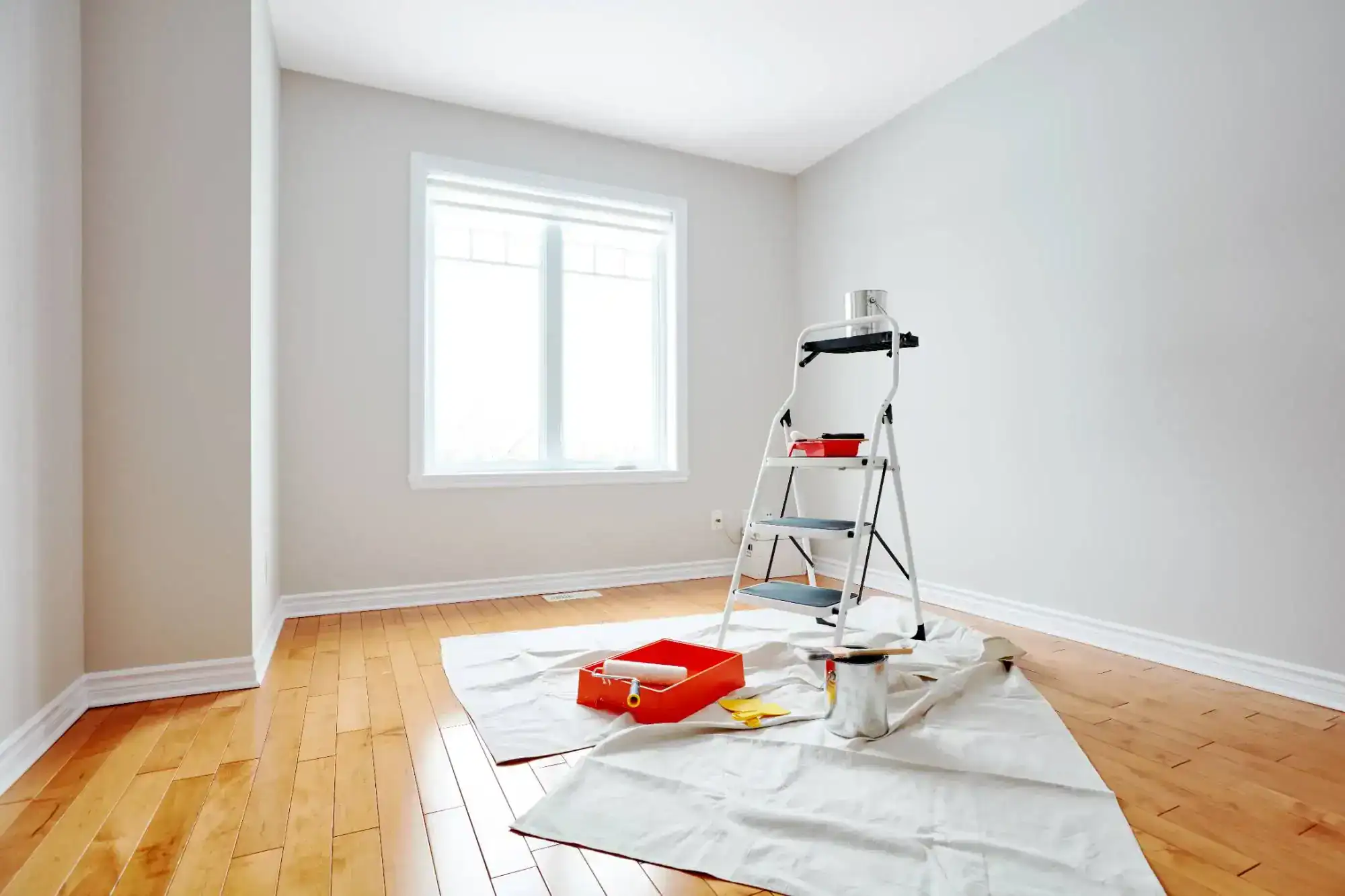
A professional estimate isn’t just a number. It’s a document that outlines exactly what you’re paying for, and it’s the main thing that protects you if there’s a dispute later. At minimum, a written estimate should cover the specific surfaces being painted, the prep work involved — cleaning, sanding, filling holes, priming — the number of coats being applied, the brand and type of paint being used, the projected timeline, and what cleanup looks like when the job is done.
If an estimate doesn’t mention surface preparation, that’s a red flag. Prep is the single biggest factor in how long a paint job lasts. Paint applied over dirty, cracked, or improperly primed surfaces will fail regardless of how good the paint itself is. Any contractor who skips that step or treats it as optional is cutting corners in the most consequential way possible.
You should also ask about the final walkthrough. We walk through the finished job with every client before we consider it complete. That’s the moment to flag anything that doesn’t look right — and we address it then, not later.
One thing that comes up a lot in Macomb County specifically: homeowners get three or four estimates that are wildly different and don’t know how to compare them. Often the difference isn’t the quality of the paint — it’s whether prep work is included, how many coats are being applied, and whether the contractor is carrying proper insurance. A low bid that excludes prep and uses a single coat of paint isn’t the same job as a higher bid that includes full surface preparation and two finish coats. You’re not comparing apples to apples, and the only way to know that is to read the estimates carefully and ask questions.
We’re always happy to walk through our estimates line by line with anyone who wants to understand what they’re getting. That kind of transparency isn’t common in this industry, but it should be.
Epoxy coatings come up more often now, especially for garage floors, basement floors, and utility spaces. The honest answer is yes — epoxy is a fundamentally different product from standard interior or exterior paint, and applying it correctly requires a different process entirely.
With standard paint, prep involves cleaning and priming. With epoxy, the concrete surface typically needs to be ground or acid-etched to open up the pores and allow the coating to bond properly. If that step is skipped or done poorly, the epoxy will delaminate — it’ll peel up in sheets, often within a year. The application conditions matter too: temperature, humidity, and the moisture content of the concrete all affect how the coating cures.
This is why hiring a general painter to do an epoxy floor isn’t always a great idea. It’s not that a skilled painter can’t learn the process — it’s that epoxy work requires specific preparation knowledge that not every painter has. When you’re asking contractors about epoxy coating work, ask them directly how they prep the concrete, what products they use, and whether they’ve done similar jobs recently. If they can’t walk you through the prep process in detail, that’s worth knowing before you hand over a deposit.
For homeowners in Oakland County and Macomb County who are finishing garages or updating basement spaces, epoxy flooring has become a popular upgrade — and done right, it holds up exceptionally well. Done wrong, it’s an expensive mess to fix. The difference almost always comes down to surface preparation and product selection, which is the same principle that applies to every other type of painting work.
We handle epoxy coating projects alongside our standard interior and exterior work, and we approach them with the same prep-first philosophy. The surface has to be right before anything else happens. That’s not unique to epoxy — it’s just how painting should be done.
Choosing a painting contractor in Macomb County or Oakland County comes down to a few things that don’t change regardless of the job: verified experience, transparent estimates, proper insurance, and a clear process that starts with preparation. The contractors who deliver lasting results aren’t necessarily the ones with the longest company history or the flashiest website — they’re the ones who can explain exactly what they’re going to do and why.
If you’re in Milford, Sterling Heights, Rochester Hills, or anywhere else across these two counties, you deserve a straight answer to every question you ask before signing anything. A good contractor won’t make you feel like you’re asking too much.
Legends Painting is a family-run operation with over ten years of painting experience, and we’d be glad to walk you through what a professional estimate looks like for your specific project — no pressure, no vague numbers. Reach out when you’re ready, and we’ll take it from there.
Article details:
Continue learning: