
Summary:
A high ceiling in a two-story foyer or open great room is one of the best features a home can have. It makes a space feel bigger, more custom, more finished. But when that ceiling needs paint — whether it’s the original builder coat finally showing its age or a water stain that’s been staring you down for two years — the job is a different animal than rolling out a standard bedroom.
Most people figure they just need a longer pole. That assumption is where things go sideways. Here’s what high ceiling painting actually involves, what equipment the job demands, and where the real technical challenges live.
At nine feet, ceiling painting is manageable for a capable DIYer with the right prep and patience. Once you cross twelve feet — and especially once you’re looking at the vaulted ceilings and two-story open layouts common in newer Macomb County homes — the job changes in three meaningful ways: the equipment requirements escalate, the physical demands increase significantly, and the margin for error on your finish gets smaller, not larger.
Light hits a high ceiling at a low angle. That means every roller mark, every lap line, every missed spot near the crown molding is visible in a way it simply wouldn’t be on a standard ceiling. The stakes for doing it right are higher, and the ability to fix mistakes on the fly — when you’re working at sixteen or eighteen feet — is much more limited.
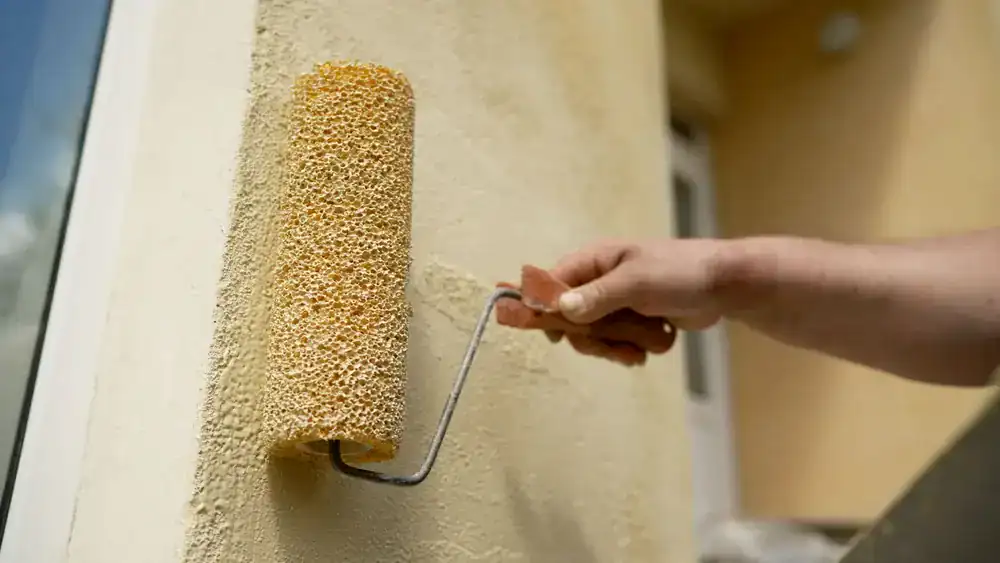
This is where most guides stop at “get an extension pole” and move on. That’s fine advice for a ten-foot ceiling. For anything above that, the equipment conversation gets more specific.
Extension poles with roller frames are useful up to a point — typically around twelve to fourteen feet, depending on the room configuration and your ability to maintain consistent pressure and control from the floor. Past that threshold, you’re not painting well anymore; you’re just reaching. The finish suffers because you lose the ability to feel the surface, maintain even pressure, or see what you’re doing clearly.
For ceilings in the fourteen-to-twenty-foot range — think the great rooms and cathedral ceilings common in Macomb Township and Washington Township’s newer builds — rolling scaffolding or pump jacks become the practical solution. They give you a stable, elevated platform to work from, which means better control, better visibility, and a dramatically safer working environment.
Scaffolding also allows you to move across the ceiling in organized sections rather than repositioning a ladder every few feet, which is both faster and more consistent. Aerial work platforms — the kind you might see on commercial jobs — are another option for very large or very tall surfaces, though they’re less common in residential settings and require enough clearance to maneuver safely inside a home.
One piece of equipment that rarely gets mentioned: proper drop cloth coverage for the entire floor and any furniture that can’t be moved. Overhead work means drips and overspray travel farther than you’d expect, and on a high ceiling job, the area underneath is fully exposed for longer. Hardwood floors and finished millwork need real protection, not a single sheet draped loosely over a couch.
Over 164,000 people are injured and more than 300 die from ladder-related accidents every year in the United States. Working at height on a painting job is a physical task that requires the right equipment, the right setup, and genuine attention to stability throughout. A ladder that shifts two inches at ground level becomes a serious problem at sixteen feet.
Cutting in — the precise brushwork done at the ceiling-wall junction before you roll — is the part of any ceiling job where skill shows most clearly. On a standard ceiling, it’s a controlled, repeatable motion. On a high ceiling, it’s a different challenge entirely.
At sixteen to twenty feet, your arm angle changes, your visibility of the line decreases, and fatigue sets in faster than it does at a comfortable working height. The result, when someone isn’t experienced with it, is a wavy line, paint on the crown molding, or a junction that looks clean from the floor but falls apart under close inspection.
Professionals use angled sash brushes for cutting in — the angle allows better control when working overhead at an awkward reach. Painter’s tape along crown molding is standard practice, but tape alone doesn’t guarantee a clean line; it still requires a steady hand and the right brush technique to keep paint from bleeding underneath.
On high ceilings, that technique is applied under conditions that make it harder: more physical strain, less direct sightline, and less ability to quickly correct a mistake before it dries. Cutting in at height is a separate mobilization from rolling. You can’t cut in a two-story ceiling from the floor with a brush on a pole — not cleanly. That means setting up your elevated platform, cutting in a section, repositioning, cutting the next section, and so on before you ever pick up a roller. On a large vaulted ceiling or an open foyer, that process takes time.
Benjamin Moore’s own guidance puts it plainly: for walls or ceilings above ten feet, the best advice is to hire a professional contractor. That’s not a sales pitch — it’s the product manufacturer acknowledging that the job involves safety considerations and specialty tools that go beyond what most homeowners have or are comfortable with.
Want live answers?
Connect with a Legends Painting expert for fast, friendly support.
The prep work on a high ceiling is where a lot of jobs quietly go wrong — not because the paint is bad, but because the surface wasn’t ready for it. Newer homes across Macomb County often have original builder-grade paint on their ceilings: applied fast, applied thin, and now several years old. Older homes in Warren, Sterling Heights, and Clinton Township may have water stains, hairline cracks, or textured surfaces that need to be addressed before any finish coat goes on.
Doing that prep work at height is a two-stage process. You set up your platform, patch and prime, let it dry, come back up, sand if needed, and then apply your finish coats. That’s more time and more labor than a standard ceiling — and it’s the step that separates a paint job that looks great for five years from one that starts peeling or showing imperfections within eighteen months.
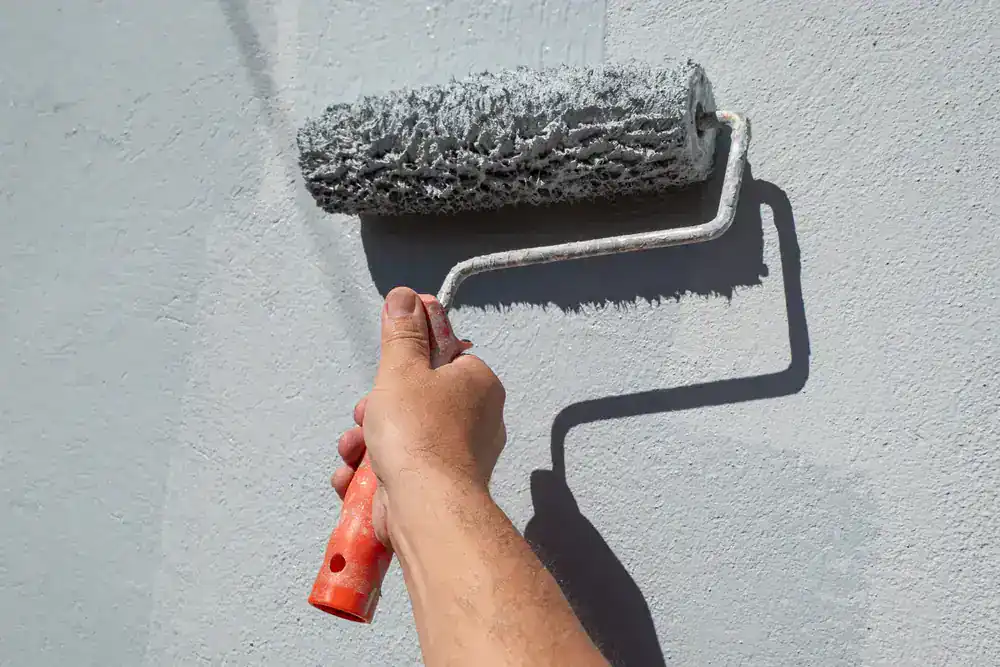
Primer on a ceiling isn’t optional — it’s the foundation the finish coat depends on. On a high ceiling that hasn’t been painted in years, or one that’s going from a dark tint back to white, skipping primer means your finish coat is working harder than it should, often requiring an additional coat just to achieve even coverage.
For ceilings with water stains — a common issue in Macomb County homes where roof flashing or ice dams have caused past leaks — a stain-blocking primer is the right call before any finish paint goes on. Without it, that stain will bleed through the new coat within weeks, sometimes days.
New drywall is another situation where primer is non-negotiable. The surface is porous and will absorb finish paint unevenly, resulting in a blotchy, inconsistent appearance — especially visible on a high ceiling where light rakes across the surface. A PVA drywall primer seals the surface and gives the finish coat something consistent to adhere to.
The application itself at height follows the same principle as the finish coat: work in organized sections, maintain a wet edge to avoid lap lines, and don’t rush. Primer drying time matters too — applying finish over primer that hasn’t fully cured is a shortcut that shows up in the final result.
For most residential high ceilings — the vaulted great rooms, two-story foyers, and cathedral ceilings that are common across Macomb Township and Shelby Township — flat or matte ceiling paint is the standard choice. It minimizes the appearance of surface imperfections and provides the clean, even look most homeowners are after.
But flat ceiling paint isn’t always the right answer. In commercial spaces, near HVAC vents where moisture and air movement are factors, or on specialty surfaces like exposed wood beams, metal deck ceilings, or architectural ceiling features that need to hold up to cleaning, high performance enamel is the professional’s choice. Products like Sherwin-Williams Emerald Urethane Trim Enamel offer a harder, more durable finish that resists scuffing, moisture, and surface wear in ways that standard ceiling paint simply doesn’t.
The tradeoff is that higher-sheen products amplify surface imperfections — which means the prep work has to be cleaner, the application has to be more controlled, and the surface has to be in good condition before the first coat goes on. On a high ceiling, that raises the bar on every step of the process.
For commercial clients across Macomb County, enamel products are often specified for spaces where the ceiling needs to hold up over time and be maintainable. Warehouses, medical offices, retail environments, and commercial kitchens all have ceiling surface requirements that go beyond what a standard residential paint system is designed for. Understanding which product is right for a given surface is part of what separates a contractor who knows their materials from one who uses the same product on every job regardless of context.
The right paint choice also depends on the substrate. Drywall, plaster, wood, and metal each have different preparation and priming requirements before any finish product — enamel or otherwise — goes on. Getting that sequence right is straightforward when you know what you’re working with, and it’s the kind of thing that becomes obvious in the final result.
The homes being built across Macomb County right now — in Macomb Township, Washington Township, Shelby Township — are full of the architectural features that make high ceiling painting a specialty: open great rooms, two-story foyers, vaulted ceilings that run twenty feet at the peak. These aren’t jobs for a contractor who shows up with a stepladder and figures it out as they go.
When you’re evaluating painters for a high ceiling job, ask practical questions. Do they own scaffolding or do they improvise? Can they explain their prep process? Do they understand what primer is appropriate for your specific surface? A contractor who can answer those questions clearly — without hesitation — has done this before.
We’ve been doing this kind of work across Macomb County for over ten years, and we know what these jobs actually involve. If you have a high ceiling that needs attention, Legends Painting offers free detailed estimates within 24 hours. Reach out and we’ll take a look.
Article details:
Continue learning: