Summary:
Think of paint as a shield. Without it, wood absorbs moisture, cracks under UV exposure, and becomes a buffet for insects. Michigan’s climate accelerates this damage. Your fence goes from soaking wet in April to baking in July to frozen in January. That cycle destroys untreated wood faster than most Richmond homeowners expect.
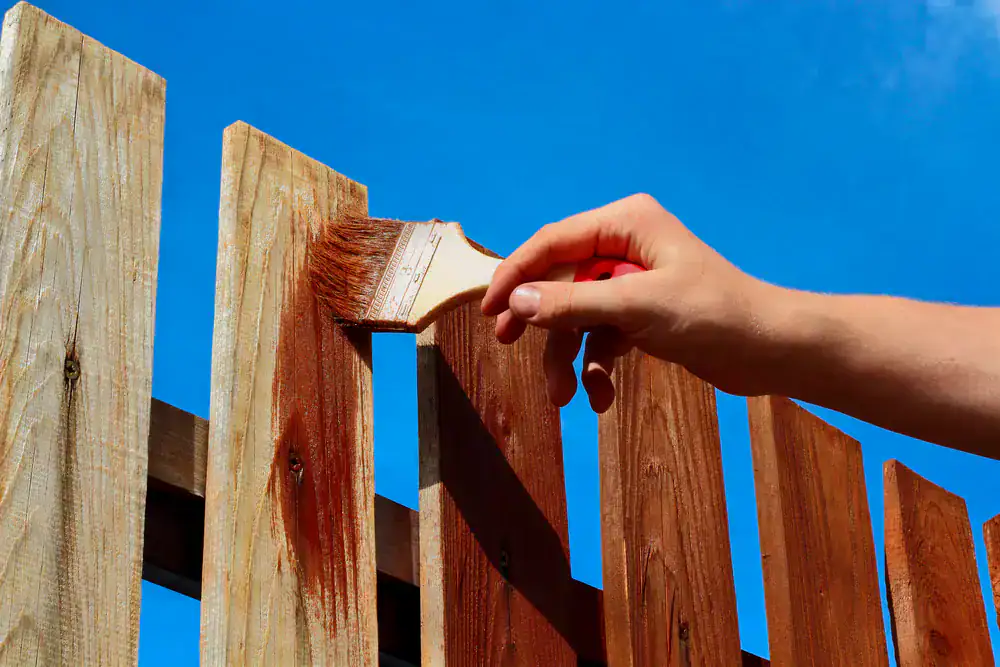
Paint creates a barrier. It keeps moisture out, which is the biggest threat to wood longevity. When water penetrates, rot follows. Then you’re replacing boards or entire sections instead of just refreshing the finish. Quality fence painting also blocks UV rays that fade and weaken wood fibers over time.
The ROI is straightforward. Painting costs a few hundred dollars if you handle it yourself, or a couple thousand for professional work on a typical fence. Replacement costs several thousand more. Maintaining what you already have makes financial sense, especially when your fence still has good structural integrity.
Michigan weather is relentless on outdoor wood. Your fence endures humid summers that promote mildew growth, frigid winters that cause wood to contract, and everything in between. Without protection, wood deteriorates quickly. Paint specifically formulated for exterior use handles these challenges.
Acrylic latex paint works best for Richmond’s temperature swings. It’s flexible enough to expand and contract with the wood as temperatures change. Oil-based paints, while durable in some climates, tend to crack when faced with moisture and dramatic temperature shifts. That flexibility matters when your fence goes from 20 degrees in February to 85 degrees in July.
The paint also prevents water penetration. Wood naturally absorbs moisture from rain, humidity, and even morning dew. Once the moisture content rises above 28%, rot-causing fungi activate. Paint keeps that moisture on the surface where it can evaporate instead of soaking in. This is especially critical in Macomb County, where spring and fall bring consistent rain.
UV protection is another benefit people overlook. Direct sunlight breaks down wood fibers and causes graying and surface damage. Quality exterior paint includes UV inhibitors that reflect these harmful rays. Your fence maintains its structural integrity and appearance instead of turning gray and brittle.
Temperature extremes also cause unpainted wood to warp and split. As wood absorbs moisture, it swells. When it dries out, it shrinks. This constant movement creates stress that leads to cracks and splits. Paint stabilizes the wood’s moisture content, reducing this expansion and contraction cycle. The result is a fence that stays straighter and stronger for years.
When applied correctly, paint can extend your fence’s functional life by a decade or more. A well-maintained wood fence typically lasts 10 to 20 years depending on the wood type and climate exposure. Without paint, that number drops significantly. You’re looking at visible deterioration in just a few years, especially on the side that faces prevailing weather patterns.
A freshly painted fence changes how your entire property looks. It’s one of the first things people notice when they drive by or pull into your driveway. That matters whether you’re planning to sell or just want to enjoy coming home to a well-maintained property.
Real estate professionals consistently point to landscaping and exterior features as major curb appeal factors. Studies show that landscaping improvements, including fencing, can increase property value by up to 10%. More importantly, these upgrades show a return on investment that exceeds many interior renovations. Buyers notice homes that look cared for, and a crisp, clean fence signals that maintenance hasn’t been neglected.
The psychological impact is real. When potential buyers see a worn, peeling fence, they start wondering what else has been neglected. They’re already mentally calculating replacement costs before they even walk through the front door. A well-maintained fence does the opposite—it suggests the home has been properly cared for, reducing buyer concerns and potentially leading to quicker sales at better prices.
Even if you’re not selling, curb appeal affects your daily experience. There’s satisfaction in pulling up to a home that looks sharp. Your neighbors notice too. A well-kept property contributes to the overall appearance of the neighborhood, which benefits everyone’s property values in Richmond.
The color choice also plays a role. A fresh coat in a color that complements your home’s exterior creates visual cohesion. Whether you go with classic white for a traditional look, gray for modern appeal, or a natural wood tone with stain, the right choice ties your outdoor space together. This coordination makes your property feel more intentional and well-designed rather than haphazard.
Maintenance also signals to appraisers that the property has been invested in. During a home sale, the appraiser evaluates every visible element, including fencing. A fence in good condition adds value. One that’s deteriorating subtracts from it. The difference in appraised value can be several thousand dollars, which directly impacts what buyers are willing to pay and what lenders are willing to loan.
Want live answers?
Connect with a Legends Painting expert for fast, friendly support.
Preparation determines whether your paint job lasts seven years or seven months. Most failures happen because someone skipped the prep work and went straight to painting. You can use the most expensive paint available, but if it’s going onto a dirty, damaged surface, it won’t stick properly.
Start by evaluating your fence’s current condition. Walk the entire length and look for loose boards, protruding nails, cracks, or rot. These issues need fixing before any paint touches the wood. Tighten loose boards, replace rotted sections, and countersink any nails or screws that stick out. Wood filler works for small cracks and holes.
Cleaning comes next. Your fence has accumulated dirt, pollen, mildew, and possibly old flaking paint. A pressure washer handles this efficiently, but use it carefully. Too much pressure can gouge the wood or force water deep into the grain where it takes forever to dry. Work with the wood grain, not against it, and keep the nozzle moving.
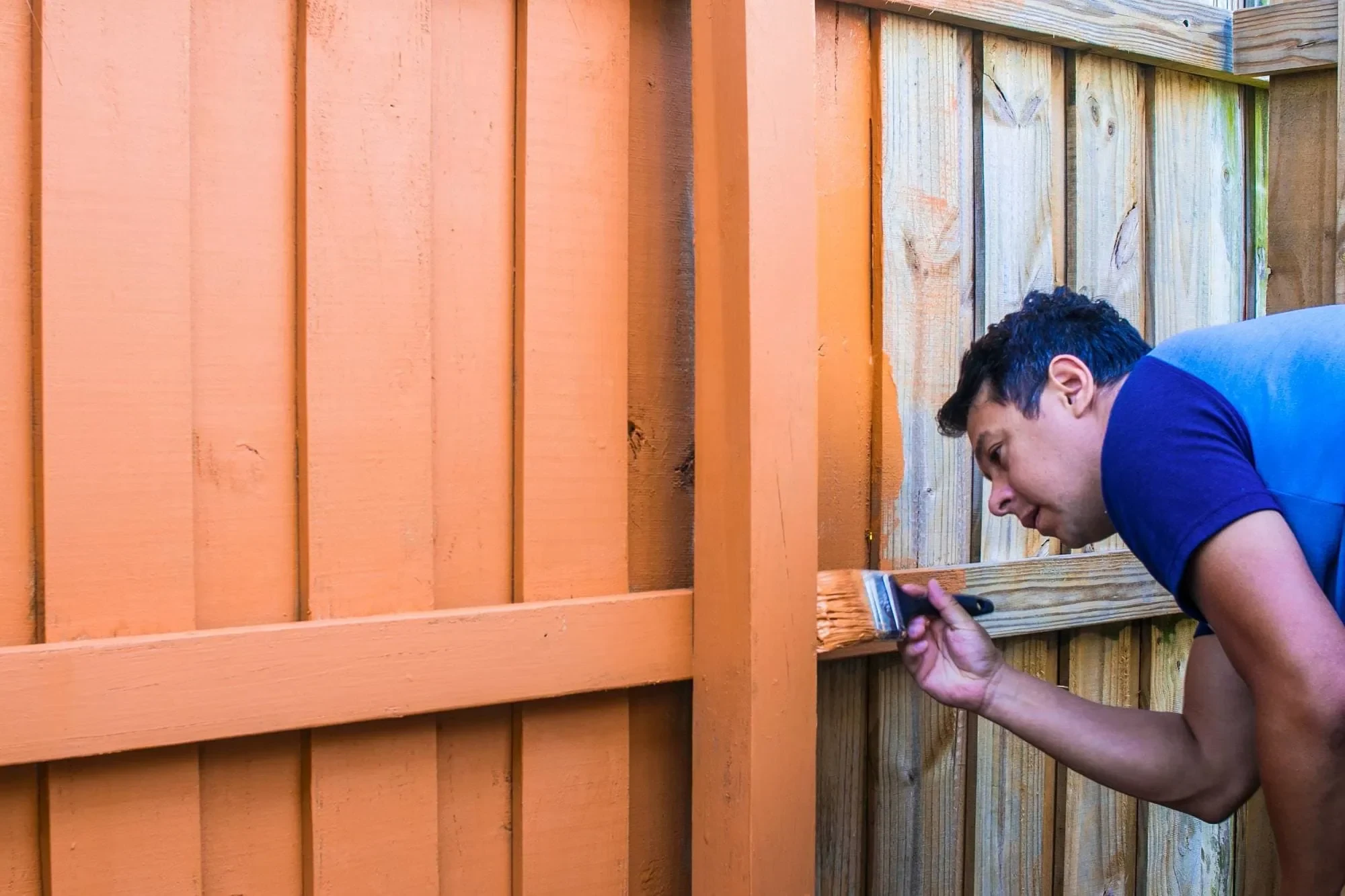
We spend about 60% of our project time on prep work. That ratio exists for a reason. Paint only adheres to clean, smooth, properly prepared surfaces. Cut corners here and you’ll watch your paint peel off in sheets within a year or two.
After pressure washing, let the fence dry completely. This isn’t optional. Paint won’t adhere to damp wood, and moisture trapped under paint leads to bubbling and peeling. In Michigan’s humid climate, this can take 24 to 48 hours or longer. If you pressure washed on Saturday, don’t plan to paint until Monday at the earliest. You can test moisture levels by sprinkling water on the wood—if it beads up, you’re good. If it soaks in immediately, the wood is still too wet.
Sanding smooths the surface and removes any remaining loose paint or rough spots. Use medium-grit sandpaper (120 to 150 grit) and work with the grain. This creates tiny grooves that give the paint something to grip. You don’t need to sand down to bare wood unless you’re dealing with heavy peeling, but you do need to feather the edges where old paint meets bare wood so there’s no visible line.
Old paint requires special attention. If your fence was previously painted and that paint is failing, you need to remove the loose material. Scraping works for small areas. For larger sections with heavy peeling, a paint stripper or more aggressive sanding might be necessary. The goal is to create a stable surface. Paint applied over loose, flaking paint will fail quickly because it’s only as strong as what’s underneath it.
Priming is often overlooked but crucial, especially on bare wood or when making drastic color changes. Primer seals the wood, prevents tannin bleed-through (those brown stains that can show through light-colored paint), and improves paint adhesion. On bare wood, primer is non-negotiable. It soaks into the wood fibers and creates a bonding surface for the topcoat. Skipping this step means your paint sits on the surface without proper grip, leading to premature failure.
Some woods, particularly cedar and redwood, contain tannins that can bleed through paint and cause discoloration. A quality primer blocks these tannins. If you’ve ever seen brown streaks appear through white paint a few months after painting, that’s tannin bleed. The right primer prevents this problem entirely.
Not all exterior paints perform equally in Michigan’s climate. The wrong choice means you’re repainting in two years instead of seven. Acrylic latex paint is your best option for wood fences in this region. It’s flexible, handles temperature fluctuations without cracking, and cleans up with water.
Oil-based paints were once the gold standard for exterior wood, but they have drawbacks in climates with high moisture and temperature swings. They take longer to dry, require mineral spirits for cleanup, and tend to become brittle over time. When moisture and temperature changes cause wood to expand and contract, oil-based paint is more likely to crack. Those cracks let moisture in, defeating the entire purpose of painting.
Acrylic latex paint moves with the wood. As temperatures shift and wood naturally expands and contracts, the paint flexes rather than cracks. This flexibility is critical in Richmond where your fence might experience a 60-degree temperature swing from night to day in spring or fall. The paint also allows some moisture vapor to escape from the wood, preventing the trapped moisture issues that lead to paint failure.
Look for paint specifically labeled for exterior use with UV protection and mildew resistance. These aren’t just marketing terms—they indicate formulations designed to handle the challenges outdoor wood faces. UV inhibitors prevent sun damage and color fading. Mildew-resistant additives discourage the fungal growth that thrives in humid conditions.
The sheen level matters too. Flat or matte finishes hide imperfections better but can be harder to clean and may not shed water as effectively. Semi-gloss or satin finishes are more durable and easier to maintain, though they show surface imperfections more readily. For fences, satin is often the sweet spot—durable enough to last but not so glossy that every flaw shows.
Quality makes a difference you can measure in years. Premium exterior paint costs more upfront but contains better resins, more pigment, and superior additives. These paints provide better coverage (often requiring fewer coats), resist fading longer, and maintain flexibility better over time. The difference between budget paint and quality paint might be $20 per gallon, but that translates to years of additional protection and potentially one less repainting cycle over the fence’s life.
You’ve done the work or hired someone to do it right. Now the question is how to make those results last as long as possible. A painted fence isn’t maintenance-free, but it doesn’t require much attention if you stay ahead of small problems.
Inspect your fence twice a year, ideally in spring and fall. Look for areas where paint is cracking, peeling, or showing wear. Catching these spots early means a quick touch-up instead of a full repaint. Pay special attention to horizontal surfaces like post caps and rails where water can pool, and to areas that get direct afternoon sun.
Clean your fence annually with mild soap and water. This removes dirt, pollen, and organic matter that can trap moisture against the paint. A soft brush and garden hose work fine—no need for pressure washing unless you’re dealing with significant mildew buildup. This simple maintenance prevents buildup that degrades paint over time and keeps your fence looking fresh between paint cycles.
Keep vegetation trimmed back from the fence. Bushes, vines, and even grass touching the fence trap moisture and prevent air circulation. This creates the perfect environment for mildew and rot. Maintain a few inches of clearance and your fence will dry faster after rain, reducing moisture-related problems.
When you do need to repaint, the process is much easier the second time if the first application was done correctly. You’re typically just cleaning and applying a fresh topcoat rather than dealing with extensive prep work. Most quality paint jobs need refreshing every 5 to 7 years in Michigan’s climate. If you’re repainting more often than that, something went wrong with the preparation, product selection, or application the first time.
If you’re considering professional help, we’ve been handling fence painting projects in Richmond and throughout Macomb County for years. The difference between DIY and professional work often comes down to experience with Michigan’s specific challenges and access to commercial-grade equipment that makes prep work more thorough and application more consistent. Either way, understanding what goes into a quality fence painting job helps you make the right decision for your property and budget.
Article details:
Continue learning: