Summary:
You picked a color you loved. The painter showed up, the walls got covered, and everything looked great — for about a year. Then the scuffs started showing up in the hallway. The bathroom paint began peeling at the edges. The kitchen walls turned into a map of every meal that ever got cooked near them.
This isn’t bad luck. It’s almost always a material selection problem — the wrong finish for the room, the wrong paint for the surface, or a coverage rate that looked fine on paper but left the walls undercoated in practice. Understanding how sheen and coverage actually work is the fastest way to make sure your next paint job lasts the way it should.
Walk into any paint aisle and you’ll see the same lineup: flat, matte, eggshell, satin, semi-gloss, high-gloss. Most people treat these as aesthetic choices — shiny versus not shiny. But sheen level is really a durability and maintenance decision that determines how your walls hold up to daily life.
The higher the sheen, the more washable the surface. The lower the sheen, the better it hides imperfections in the wall itself. Neither extreme is right for every room, and matching the finish to the space is one of the most important calls we make before a brush ever touches a wall.
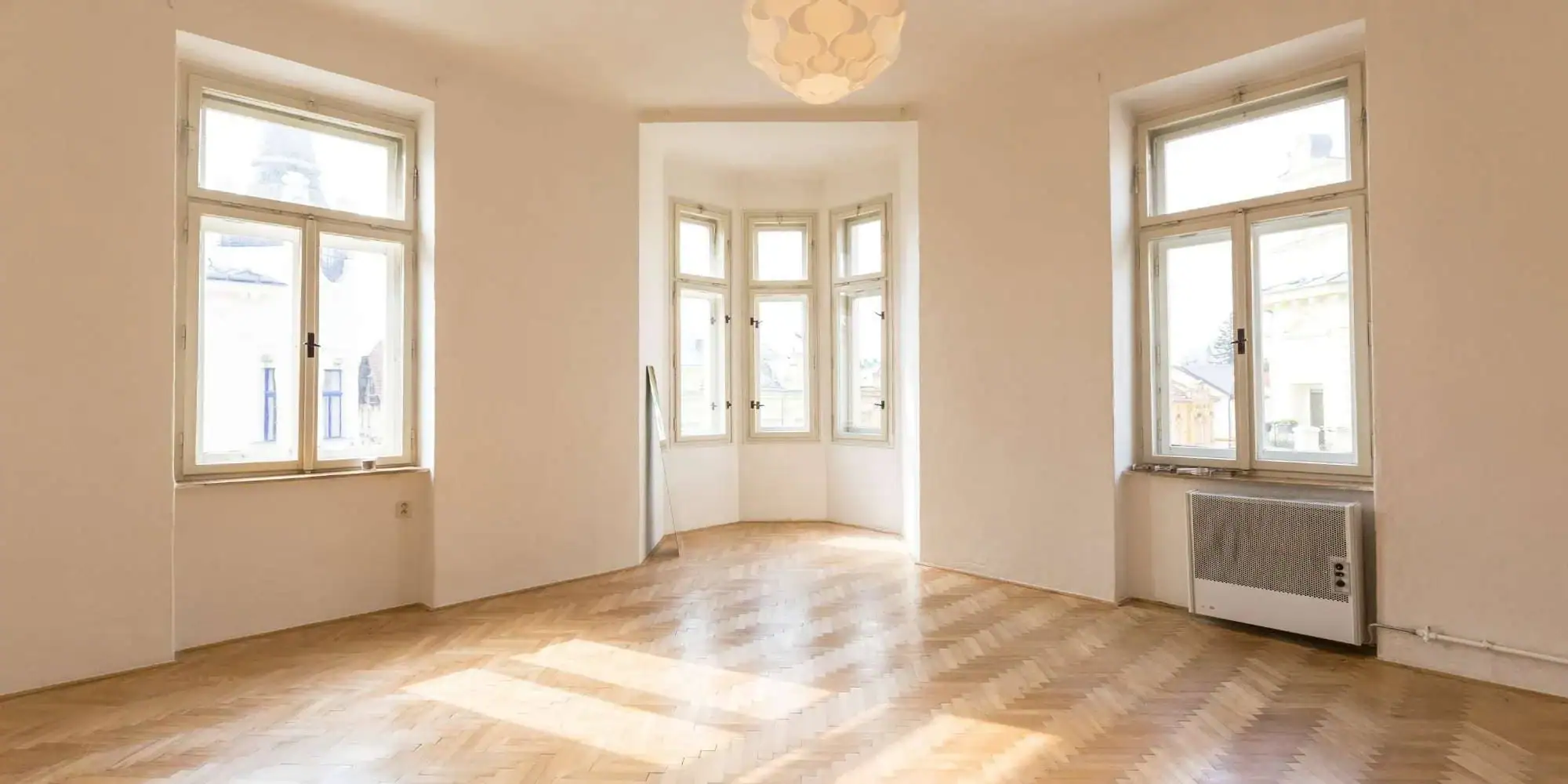
Flat and matte finishes absorb light rather than reflecting it, which is why they’re so good at hiding uneven surfaces, old texture, or minor drywall repairs. In a low-traffic bedroom or a formal dining room that doesn’t see much action, flat paint is a perfectly reasonable choice. The problem is that flat paint is nearly impossible to clean. A damp cloth can leave a mark as visible as the smudge you were trying to remove.
Eggshell is the most widely used interior finish for good reason. It has just enough sheen to wipe down without looking shiny, and it hides surface imperfections better than satin or semi-gloss. For living rooms, bedrooms, and most general wall surfaces in a family home, eggshell hits the right balance. It’s not fragile like flat, and it doesn’t draw attention to wall texture the way a glossier finish would.
Satin steps up the washability without crossing into obviously shiny territory. It’s the right call for hallways, kids’ rooms, family rooms — anywhere that sees consistent foot traffic and the occasional scuff from a backpack or a shoulder brushing the wall. If you have kids or pets, satin is probably doing more work for you than any other finish on this list.
Semi-gloss is where things get more specific. It’s moisture-resistant, easy to clean, and holds up well in high-humidity spaces — which makes it the right choice for kitchens, bathrooms, laundry rooms, and trim throughout the house. Michigan’s humidity swings — humid summers followed by dry, heated winters — will test eggshell paint’s limits faster than you’d expect in a bathroom. Semi-gloss is also the standard for trim, doors, and cabinetry because it’s durable enough to take the repeated contact those surfaces get.
High-gloss is reserved for specific applications: trim details, furniture, cabinets where you want a hard, almost lacquer-like finish. On walls, it tends to highlight every imperfection — nail pops, seams, texture variations — which is why we use it sparingly.
Glossier finishes reflect more light, which makes colors appear slightly brighter and more saturated than they look on a flat swatch. A deep navy that looks rich and moody in matte can look almost electric in semi-gloss. A warm white that reads as soft and neutral in eggshell can look stark and clinical in high-gloss under strong lighting.
This is one of the reasons testing a paint sample on the actual wall — in the actual room, under the actual lighting — matters so much before committing to a full coat. The store swatch under fluorescent lighting tells you almost nothing about how the color will read in your living room at 7pm with lamps on. The finish you choose changes that equation further.
There’s also an interaction between sheen and wall texture that most people don’t think about until it’s too late. Smooth, freshly skimmed drywall can carry a satin or semi-gloss finish without issue. Older plaster walls — which are common in homes built across Macomb County, MI in the 1950s and 1960s — tend to have more surface variation, and a high sheen will make every ridge and hollow more visible. On those walls, a lower sheen does double duty: it looks better and hides the history of the wall underneath.
The fix isn’t complicated, but it requires knowing what you’re working with before you choose a product. That’s the kind of call that comes from experience with real walls in real homes, not from reading the back of a paint can.
Want live answers?
Connect with a Legends Painting expert for fast, friendly support.
Every gallon of interior paint lists a coverage estimate on the label — typically somewhere around 400 square feet. That number is real, but it assumes conditions that almost no actual room has: a perfectly smooth surface, already primed, with no significant color change from what’s underneath.
In practice, coverage on textured walls, porous surfaces, or surfaces going from a dark color to a lighter one drops to somewhere between 250 and 300 square feet per gallon. That gap matters. It’s the difference between buying enough paint and showing up short halfway through a room.
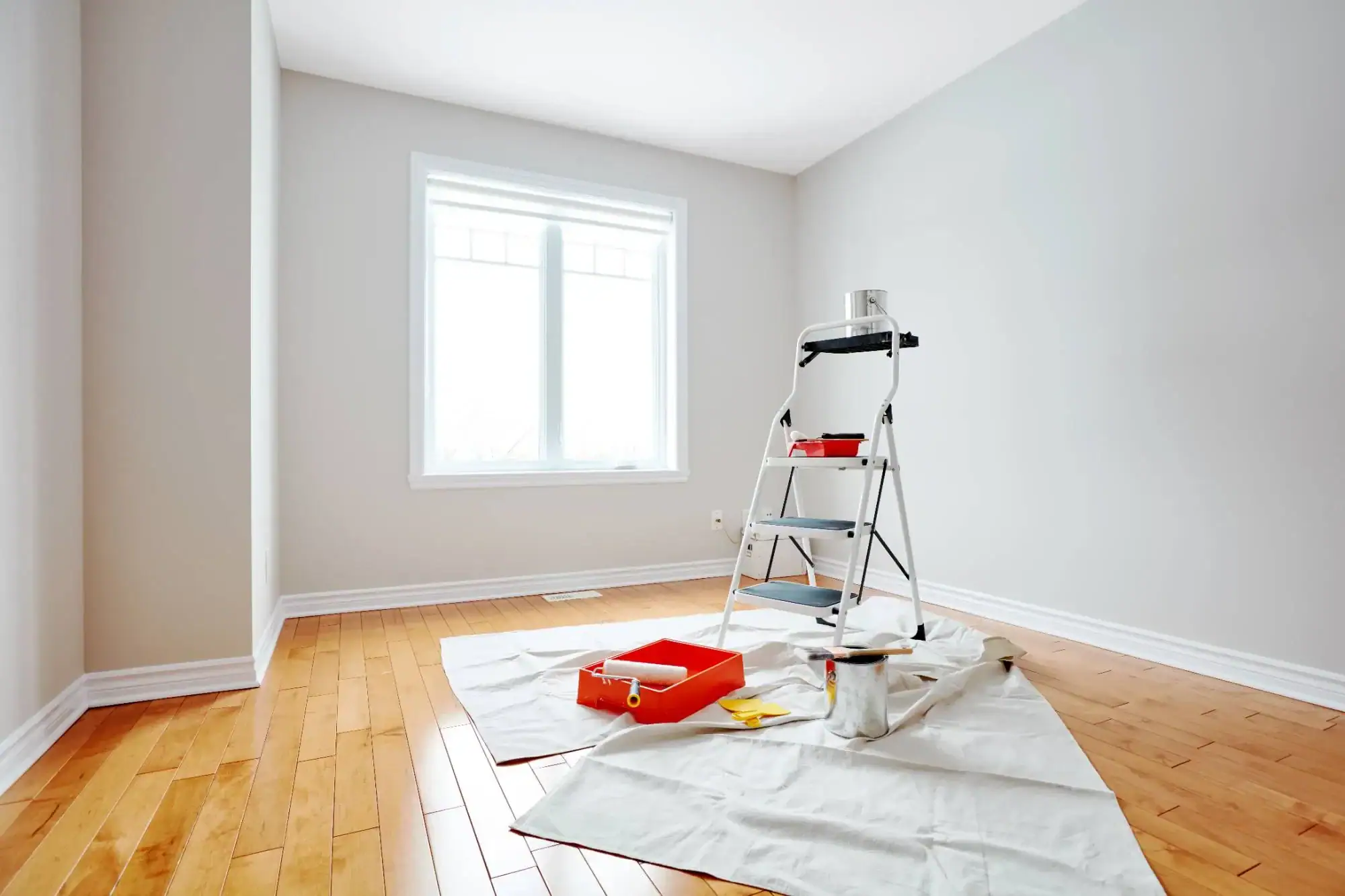
Paint quality comes down to a few things: the amount of pigment per unit of volume, the quality of the binder that holds the paint film together, and the overall solids content. Budget paints cut costs by reducing pigment load and using lower-grade binders. The result is a paint that spreads easily and covers the wall, but doesn’t hide the previous color as well, doesn’t hold up to cleaning as well, and tends to fade or chalk faster than a premium product.
The practical consequence is that cheap paint often requires a third coat to do what quality paint does in two. When you factor in the extra material, the extra labor time, and the likelihood that you’ll be repainting sooner, the “savings” disappear quickly. A quality paint job done with the right materials should last eight to ten years in living areas and five to seven years in high-traffic or high-moisture spaces. If yours is looking rough at three years, the paint quality — or the lack of a proper primer coat — is usually the reason.
Premium paints with higher solids content also cover slightly less area per gallon than budget options, but they hide color and build a more durable film in fewer coats. For a standard 12-by-12 room with 8-foot ceilings, you’re looking at roughly 342 square feet of net wall area after accounting for windows and doors. At real-world coverage rates, that’s about two gallons for two coats — which is the professional standard, not an upsell.
Primer is a related conversation. Self-priming paints have improved significantly, and in many situations they perform well without a separate primer coat. But on new drywall, heavily patched surfaces, surfaces with staining, or any dramatic color change, a dedicated primer is still the right call. Skipping it is the most common shortcut that leads to paint adhesion problems and premature failure.
A significant portion of the housing stock across Macomb County, MI — in communities like Sterling Heights, Shelby Township, Utica, and St. Clair Shores — was built between the 1950s and the 1970s. These homes have their own set of characteristics that affect how paint performs and what products make sense.
Plaster walls, which are common in homes from that era, are more porous than modern drywall. They absorb more paint, which reduces real-world coverage and makes primer selection more important. They also have more surface texture and variation, which means a lower sheen tends to look better and hide more. If you’re painting a 1960s ranch in Shelby Township and you’re using the same approach you’d use on a new build, you’re going to get a different result than you expected.
Michigan’s climate adds another layer. The state’s wide seasonal humidity range — genuinely humid summers and dry, heated winters — causes walls to expand and contract in ways that accelerate paint failure in older homes. Moisture-resistant formulas for kitchens and bathrooms aren’t optional here; they’re doing real work against real conditions. A paint that performs fine in a more temperate climate may start peeling at the bathroom ceiling within a few years in a Macomb County, MI home that runs the heat hard all winter.
There’s also the question of homes built before 1978, which is a meaningful portion of Macomb County’s housing stock. Work on those homes requires contractors to be certified for lead-based paint handling under Michigan DHHS requirements — it’s a legal requirement, not a recommendation. It affects how prep work is done and what materials are used. When you’re hiring a painter for an older home, asking about lead certification is a reasonable and important question.
These aren’t obscure concerns. They’re the everyday reality of painting homes in this part of Michigan, and they’re the kind of thing that a painter with ten-plus years of experience in this market has already worked through on dozens of jobs.
The best interior paint for your walls is the one that matches the room’s traffic level, moisture exposure, and surface condition — not just the color you like. Sheen determines washability and durability. Coverage rates on the label assume ideal conditions that most real rooms don’t have. Paint quality affects how long the job holds up and how many coats it actually takes to get there.
Getting these decisions right isn’t complicated once you know what to look for. But it does require knowing what you’re working with — the age of the walls, the conditions in the room, what’s underneath the current paint, and what the space is going to be asked to handle day to day.
We’ve been making these calls on real homes across Macomb County, MI for over ten years — matching the right materials to the right surfaces so the result lasts the way it should. Reach out for a free quote and we’ll get back to you within 24 to 48 hours.
Article details:
Continue learning: