Summary:
You’ve decided your home needs a refresh. Maybe it’s been a few years since anything changed, or maybe the holidays are coming and you’re tired of looking at the same walls. Either way, you’re searching for interior designers near Macomb County—and you’re quickly realizing that most of the names that come up are based in Oakland County, not your area. That gap is real, and it’s worth understanding before you start making calls. This guide covers how to find the right designer for a Macomb County home, what credentials actually matter, and what happens after the design plan is done.
The Metro Detroit design market is heavily concentrated in Birmingham, Bloomfield Hills, and Troy. That’s not a problem—most designers who operate out of those communities regularly take projects across Macomb County and Oakland County both. What it does mean is that “near me” in a Macomb County search often returns results for firms that are 20 to 30 minutes away, and you’ll want to confirm service area before getting too far into conversations.
Aggregator platforms like Houzz and Yelp are the most common starting point, and they surface local options reasonably well. The more useful filter isn’t location alone, though—it’s portfolio fit. A designer whose past work looks nothing like what you want isn’t a good match regardless of how close their office is.
Michigan does not have mandatory state licensing for interior designers. That’s worth knowing because it means anyone can call themselves an interior designer without formal education or certification. The absence of state regulation doesn’t mean credentials don’t matter—it actually means they matter more, because there’s no baseline requirement protecting you as a consumer.
The credential worth asking about is NCIDQ Certification, which stands for the National Council for Interior Design Qualification. It’s the recognized professional standard in the field and requires a combination of accredited education and at least two years of supervised work experience before a candidate can sit for the exam. Designers who hold it have cleared a meaningful bar. Membership in organizations like ASID (American Society of Interior Designers) is another voluntary signal that a designer is invested in their professional development.
For a homeowner in Macomb County, this matters practically. When you’re spending anywhere from $1,000 to $10,000 or more on design fees—a realistic range for a residential project—you want confidence that the person guiding your decisions has the background to back it up. Asking “are you NCIDQ certified?” is a completely reasonable question, and any qualified designer will answer it without hesitation.
Beyond credentials, look at how they communicate in the early stages. Do they respond promptly? Do they ask good questions about your space, your lifestyle, and your budget? Do they provide a clear scope of work before any money changes hands? Issues with communication and project management are among the most common complaints homeowners raise after a design project goes sideways—and those problems usually show up in the first few interactions, not after the contract is signed.
One more thing to check: their familiarity with the local market. A designer who regularly works in Macomb County, Sterling Heights, or Shelby Township will have existing relationships with local contractors and suppliers. That network matters when it comes time to execute the plan.
This comes up constantly, and it’s worth a straight answer. An interior designer typically holds formal education in design—often a bachelor’s or associate degree from an accredited program—and may hold NCIDQ certification. Their scope of work can include structural considerations, space planning, and coordination across multiple trades. They’re equipped to handle a full renovation project from concept through completion.
An interior decorator focuses primarily on aesthetics: furniture selection, color palettes, textiles, accessories, and the overall feel of a space. Decorators don’t typically work on structural elements or coordinate contractors, but for many homeowners, that’s exactly the scope of help they need.
Neither is inherently better. The right choice depends on what your project actually requires. If you’re reconfiguring a floor plan, adding built-ins, or managing a significant renovation, a designer’s full-service capabilities are worth the investment. If you have a well-functioning space that just needs a visual overhaul—new colors, updated furniture, a cohesive look—a decorator can deliver that at a lower cost and with a faster timeline.
In the Metro Detroit market, many firms offer both, and some offer a consultation-only model that lets you get professional guidance for a single session without committing to a full engagement. That entry point can be genuinely useful if you’re not sure what level of help you need. The $500-and-up consultation model is under-communicated in this industry, but it exists and it’s worth asking about.
What both designers and decorators have in common is that their work ultimately lands on your walls, your floors, and your surfaces. The design plan is only as good as the execution—and that’s where the contractor relationships they bring (or don’t bring) make a real difference.
Want live answers?
Connect with a Legends Painting expert for fast, friendly support.
Here’s the part that doesn’t get talked about enough. A designer can hand you a beautiful color palette, a detailed mood board, and a room-by-room plan. But the moment a painter walks in and starts working, all of that planning is either honored or it isn’t.
Paint is the most visible element of any interior refresh. It’s also the most common place where the gap between design intent and finished result shows up—wrong finish, mismatched color, uneven application, missed prep work. Getting the design right and then cutting corners on execution is one of the more frustrating outcomes a homeowner can experience.

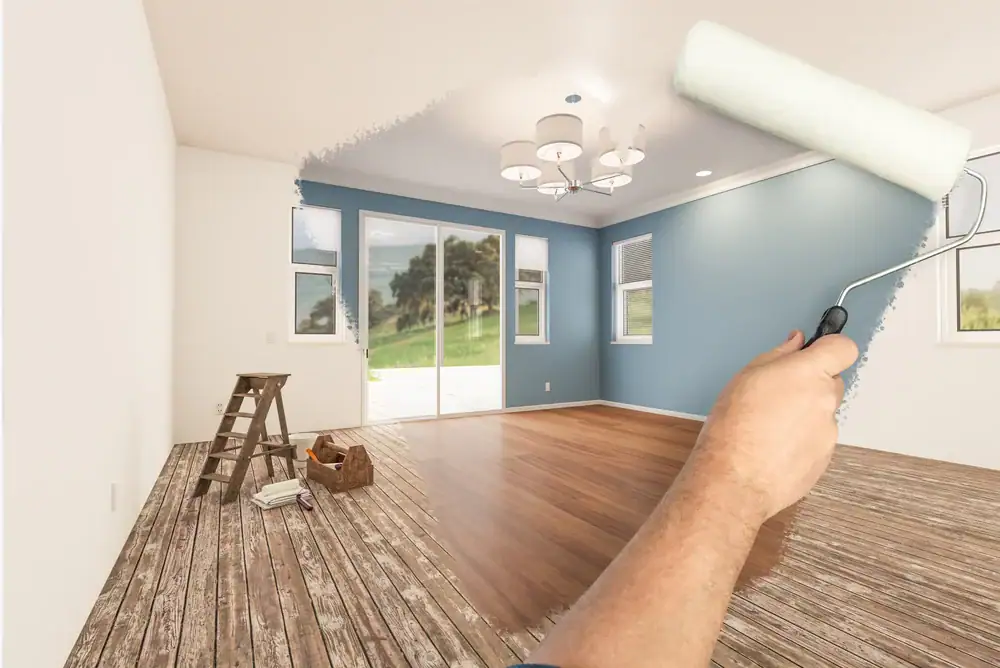
A color consultation with a qualified painting contractor is different from what most people expect. It’s not just someone handing you a fan deck and wishing you luck. Done properly, it involves reviewing your space, understanding your lighting conditions, looking at your existing furniture and finishes, and working through actual paint samples in the room where they’ll be used—not just under store lighting.
We offer color consultation that includes physical samples and digital previews, which addresses the single biggest fear most homeowners have about paint: committing to a color and living with regret. Seeing a color digitally rendered in your actual space before a drop of paint goes on the wall changes the decision-making process entirely. It removes the guesswork and the anxiety that comes with it.
This matters especially in Macomb County. Natural light in our area shifts significantly across seasons—a color that reads warm and inviting in October can feel flat and cold by February. An experienced painter who works in this market understands that and factors it into color recommendations. That’s not a generic quality claim—it’s a practical reality of painting in a climate with real seasonal variation.
For homeowners who already have a designer’s color plan, a consultation helps bridge the gap between the design document and the painted wall. Finish selection, sheen levels, primer choices for different wall conditions—these are execution decisions that a good painting contractor handles in coordination with the design intent, not in spite of it.
The scope of a professional interior painting project goes well beyond putting color on walls. Surface preparation is where the quality of the finished result is actually determined—and it’s also where less careful contractors cut corners. Proper prep includes patching and repairing wall damage, caulking gaps around trim and fixtures, priming where needed, and protecting floors and furniture before a brush touches anything.
At Legends Painting, surface preparation is included as a standard part of every interior project, along with wall repairs, caulking, trim work, and thorough cleanup when the job is done. There’s no version of a quality paint job that skips those steps—and if a contractor’s quote seems unusually low, it’s often because those steps aren’t in it.
Macomb County’s housing stock includes a significant number of homes built between the 1960s and 1990s that are now on their second or third major interior renovation. Older walls often have layers of paint, minor damage from years of use, and surfaces that need real attention before new paint goes on. That’s not a problem—it’s just part of working in an established residential market, and it’s something we know well after more than ten years of painting homes across Macomb and Oakland Counties.
Scheduling is also worth thinking about, especially if you’re working toward a holiday timeline. We offer flexible scheduling including evenings and weekends, which matters when you’re trying to get a project finished before Thanksgiving or Christmas without turning your household upside down for two weeks. We also provide free online quotes with a callback within 24 to 48 hours—so you’re not waiting a week just to find out if a project is feasible. First responders and seniors receive a 10% discount, which is something we’re glad to offer in a county that’s home to Selfridge Air National Guard Base and a large community of people who’ve spent their careers in service.
The search for interior designers near Macomb County is really a two-part process—finding the right creative partner to develop the vision, and finding the right contractor to execute it. Most homeowners figure out the first part and then scramble on the second. Getting both right, and getting them to work together, is what actually produces a finished space you’re happy with.
For Macomb County homeowners, the good news is that the Metro Detroit design market is accessible, well-developed, and full of qualified professionals who regularly serve this area. Ask about credentials, look at portfolios carefully, and treat early communication as a preview of how the whole project will go.
When you’re ready to talk about the painting side—color consultation, surface prep, scheduling, or a free quote—Legends Painting is here. We’ve been working in homes across Macomb and Oakland Counties for over ten years, and we’re straightforward about what a project involves and what it will take to do it right.
Article details:
Continue learning: