Summary:
You’ve probably spent more time than you’d like scrolling through kitchen photos, saving some, second-guessing others. Antique white looks warm and classic in one photo. Greige looks sophisticated and calm in the next. Then someone mentions black cabinets and suddenly you’re starting over.
The honest answer is that all three can work — but not in every kitchen, and not for every homeowner. The right choice depends on what you’re starting with, what you’re keeping, and how you actually use your space. We’ve walked hundreds of Macomb County homeowners through this exact decision, and we’ve learned what works and what doesn’t in homes across the area. This guide walks you through each color clearly so you can stop circling and start deciding.
Antique white has been a dominant kitchen cabinet color for decades, and it’s not going anywhere. Around one in three American homeowners say they’ve chosen or would choose white for their kitchen cabinets, and antique white sits at the warm end of that spectrum — softer than bright white, more forgiving, and easier to live with over time.
What keeps it relevant isn’t nostalgia. It’s adaptability. Because antique white is a warm neutral, you can swap out hardware, change your backsplash, or repaint your walls without the cabinets suddenly looking wrong. The color doesn’t lock you in. That matters more than most people realize when they’re making a decision that could last ten or fifteen years.
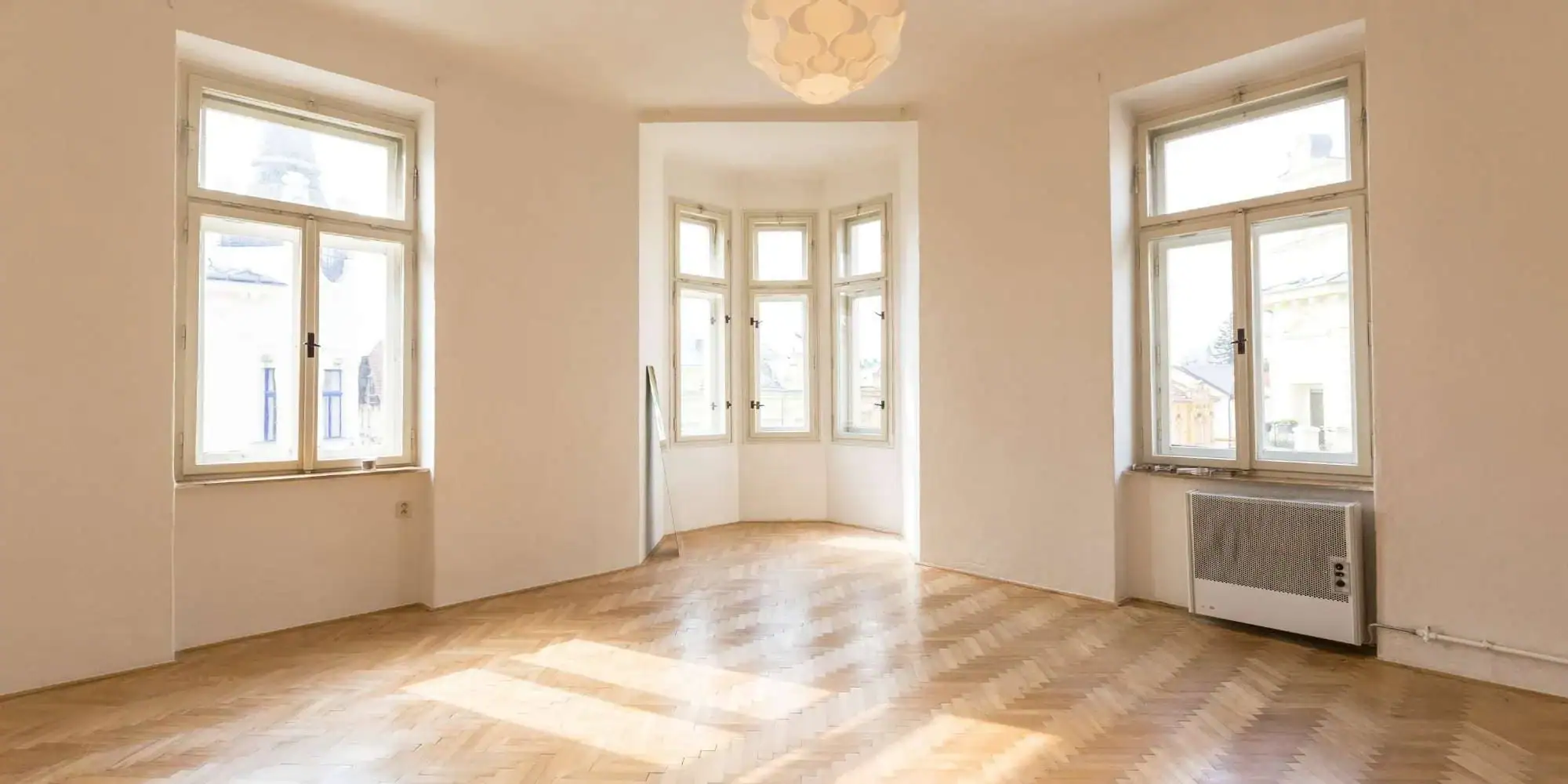
Pure white and antique white look nothing alike once they’re on your cabinets. Pure white is bright, clean, and cool — it reads almost clinical in certain lighting. Antique white has cream or yellow undertones that soften the whole room.
Under the warm overhead lighting most kitchens have, antique white feels inviting. Pure white under the same light can feel harsh or flat.
There’s also a practical side to this. Antique white’s warm undertone does a better job of masking fingerprints and everyday kitchen grime than stark white does. If you cook regularly or have kids, that’s worth factoring in. Bright white shows everything. Antique white is more forgiving.
The tradeoff is compatibility. Antique white works beautifully with warm-toned countertops — think butcher block, cream-veined marble, warm granite, or tan-toned quartz. It pairs naturally with oil-rubbed bronze or brass hardware, and it complements wood floors and warm-toned backsplash tile. Where it can struggle is against cool-toned finishes. If your countertops are a cool gray quartz, or your flooring runs blue-gray, antique white can look slightly off — like two warm-and-cool tones competing rather than complementing each other.
A lot of Macomb County homes were built between the 1970s and 1990s, and many of them have original oak or honey-stained cabinets that are structurally sound but visually dated. Those kitchens often have warm-toned floors, warm-toned countertops, and layouts that suit a traditional or transitional style. Antique white tends to be a natural fit in those spaces — it updates the kitchen dramatically without fighting everything else in the room.
One thing worth knowing: if you’re considering antique white near a stove or range, the paint quality and application method matter. Lower-quality finishes can yellow over time with heat and grease exposure. A professionally applied furniture-grade enamel, properly prepped and spray-applied, holds up far better than a brush-rolled coat of standard wall paint. The color choice is the easy part — the finish is what determines whether it still looks good in year five.
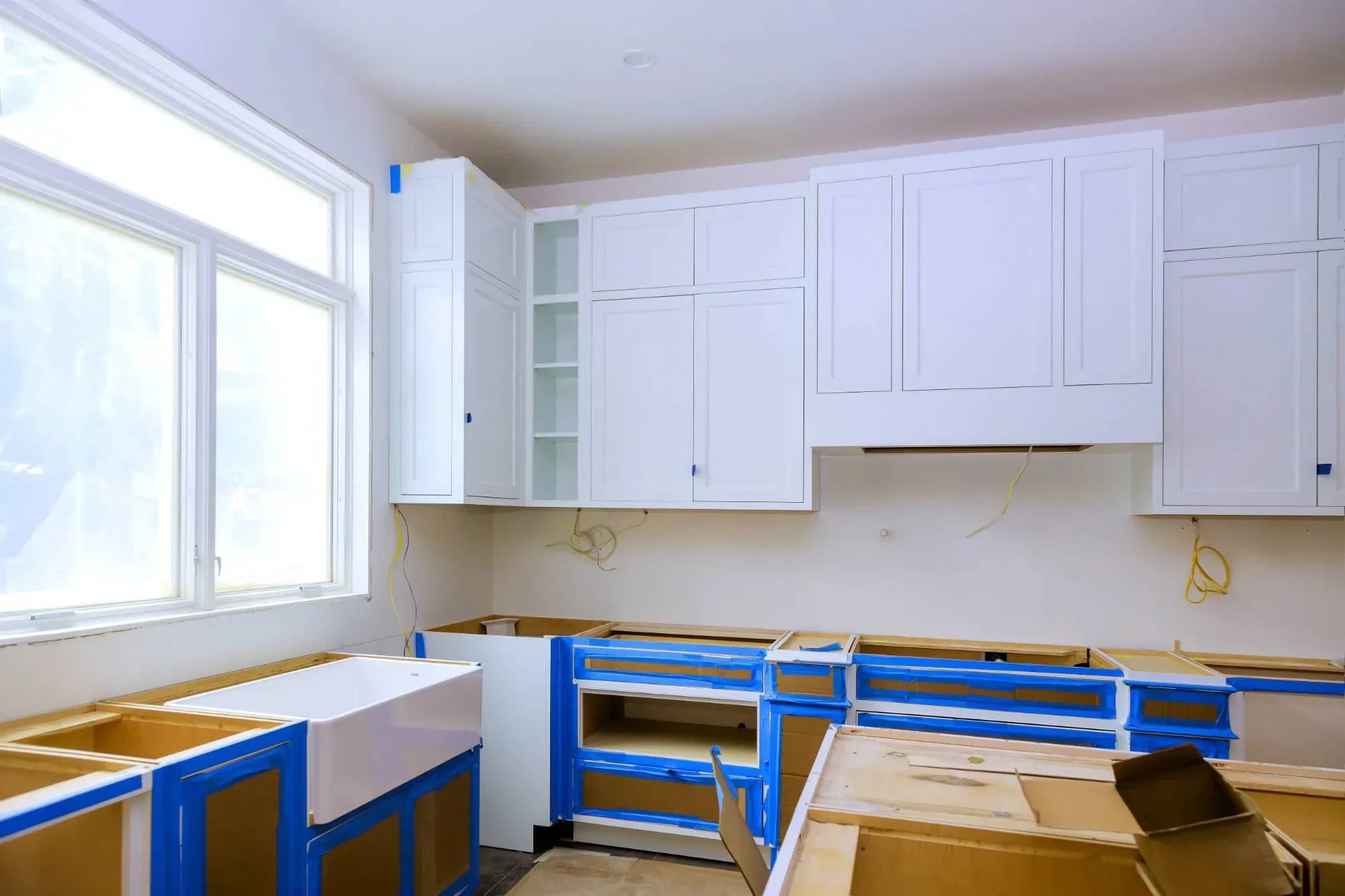
This is where a lot of homeowners get surprised — not by the color, but by the process. Professional cabinet painting isn’t just running a brush over the existing finish. Done right, it’s a multi-step process that determines whether your cabinets look factory-finished or DIY’d.
The first step is always preparation. Cabinet doors and drawer fronts are removed and labeled so everything goes back exactly where it came from. The surfaces are degreased — kitchen cabinets accumulate grease and residue over years of cooking, and if that layer isn’t removed, paint won’t bond properly. After degreasing, the surfaces are sanded to give the new finish something to grip. Then a bonding primer goes on before any color coat touches the wood.
The actual painting of cabinet doors is done with a spray application, not a brush or roller. That’s the detail that separates a professional result from most DIY attempts. Spray application produces an even, smooth finish with no brush marks or roller texture — the kind of finish that looks like it came out of a factory, not a home project. It’s also faster and more consistent across multiple doors and frames.
After the color coats are applied and cured, everything gets reassembled and inspected. Cure time matters — paint that looks dry to the touch can still be soft underneath, and reassembling too early leads to marks and impressions that are hard to fix.
If you’re in an older Macomb County home — particularly in areas like Warren, Roseville, or St. Clair Shores where a lot of the housing stock predates 1978 — there’s an additional consideration. Homes built before 1978 may contain lead-based paint, and Michigan law requires contractors working with those materials to hold certification from the Michigan Department of Health and Human Services. It’s not optional, and it’s worth asking any painter you hire whether they’re certified before work begins.
The reason this process detail matters for a color decision is simple: the color you choose only looks as good as the finish it’s applied on. Antique white with visible brush marks and poor adhesion looks worse than a perfectly executed greige. Choosing the right color and the right contractor are two parts of the same decision.
Want live answers?
Connect with a Legends Painting expert for fast, friendly support.
Greige is exactly what it sounds like — a blend of gray and beige. It sits in the space between warm and cool, which is precisely why it works in so many different kitchens. If antique white feels too traditional and gray feels too cold, greige is usually the answer.
What makes greige particularly useful is how it responds to light. In natural daylight it reads warmer, pulling toward the beige end. Under artificial light in the evening it shifts cooler, taking on more of the gray. That flexibility means it adapts to different times of day and different lighting setups in a way that a fixed warm or cool color can’t. For kitchens where the lighting changes significantly from morning to night, greige tends to look consistently good rather than inconsistently off.
The clearest way to think about this comparison is in terms of what you’re working with and what feeling you want the kitchen to have.
Antique white is the better choice if your kitchen has warm-toned finishes throughout — warm wood floors, cream or tan countertops, warm-toned backsplash tile — and you want a bright, open feel. It’s also the stronger option if you’re in a traditional or farmhouse-style home where a warmer, lighter cabinet reads as natural rather than forced. Antique white opens up a space visually and makes smaller kitchens feel larger.
Greige tends to work better when you want something with a little more depth and sophistication. It suits transitional and contemporary kitchens well, and it’s more forgiving when your existing finishes are a mix of warm and cool tones. If your countertops are a cool-leaning quartz, for example, antique white might feel slightly mismatched while greige bridges the gap. Greige also reads as more current than antique white in spaces with modern hardware and clean-lined cabinetry.
Both colors hold their value well at resale. Real estate professionals consistently recommend neutral cabinet colors for maximum buyer appeal, and both antique white and greige fall squarely in that category. If you’re in Macomb County and thinking about selling in the next few years, either color is a safe and smart choice.
Where homeowners sometimes go wrong with greige is choosing a version that skews too cool — a blue-gray greige rather than a beige-forward greige. The cooler versions can feel sterile or dated faster than the warmer ones. If you’re sampling greige options, look for colors with a clear beige base that gray is layered into, not the other way around. Specific paint colors like Benjamin Moore Berkshire Beige, Behr Creamy Mushroom, or Glidden Stonehenge Greige are worth looking at as starting points, though how any color reads in your actual kitchen under your actual lighting is the only test that matters.
One practical note: both antique white and greige show hardware choices clearly. Brass and gold hardware reads warm and traditional against either color. Matte black hardware creates a clean contrast. Brushed nickel sits in the middle. The hardware decision is worth making before you commit to a cabinet color, not after.
Black cabinets have moved well past trend status at this point. They show up in traditional kitchens, modern kitchens, and everything in between. The question isn’t whether black works — it does — but whether it works for your specific kitchen and your specific lifestyle.
The strongest case for black cabinets is contrast. Black lowers against white uppers, or a black island paired with lighter perimeter cabinets, creates a visual dynamic that antique white and greige simply can’t replicate. If your kitchen has good natural light and you want it to feel bold and intentional rather than safe and neutral, black is a legitimate option that holds up well over time.
The practical considerations are real, though. Glossy black shows every fingerprint, every water splash, and every smudge. If you cook frequently, have young kids, or just don’t want to wipe down your cabinets daily, glossy black will frustrate you fast. Matte black is significantly more forgiving — it absorbs light rather than reflecting it, which means surface marks are far less visible. If you’re drawn to dark cabinets, a matte finish is almost always the better long-term choice.
For homeowners who want the drama of black without the full commitment, dark charcoal is worth considering. Sherwin-Williams Iron Ore is one of the most commonly recommended options in this category — it reads as near-black but has gray undertones that soften it slightly and make it more adaptable to different lighting conditions. In a kitchen with warm wood accents or brass hardware, Iron Ore can look richer and more intentional than a flat black.
A lot of the ranch homes and split-levels in Macomb County have kitchens that aren’t large by modern standards. Full black cabinets in a smaller, lower-light kitchen can feel heavy. In those spaces, a partial approach — black island only, or black lowers with antique white or greige uppers — tends to deliver the visual impact without closing the room in. It’s a more flexible strategy than going all-in on one color throughout.
If you’re genuinely torn between all three options, a color consultation with actual samples tested in your kitchen is the most reliable way to decide. Photos online are taken in controlled lighting with professional photography. Your kitchen is different, and the only way to know how a color will actually look is to see it on your actual cabinets, in your actual light.
Antique white is warm, timeless, and works beautifully in Macomb County’s older homes with traditional layouts and warm-toned finishes. Greige is versatile, sophisticated, and bridges the gap when your kitchen has a mix of warm and cool elements. Black makes a strong statement and holds up well when the finish is right and the space can carry it.
None of these is the universally correct answer. The right choice depends on your countertops, your lighting, your hardware, and honestly, what you want to feel when you walk into your kitchen every morning. That’s a decision worth getting right — because a well-executed cabinet color change can completely transform a space without touching a single cabinet box.
If you’re ready to stop guessing and start seeing real options, we at Legends Painting offer color consultations with samples and digital previews so you can make a confident decision before any work begins. We serve homeowners across Macomb County and beyond, and we’d be glad to help you figure out exactly what your kitchen needs.
Article details:
Continue learning: