
Hear from Our Customers
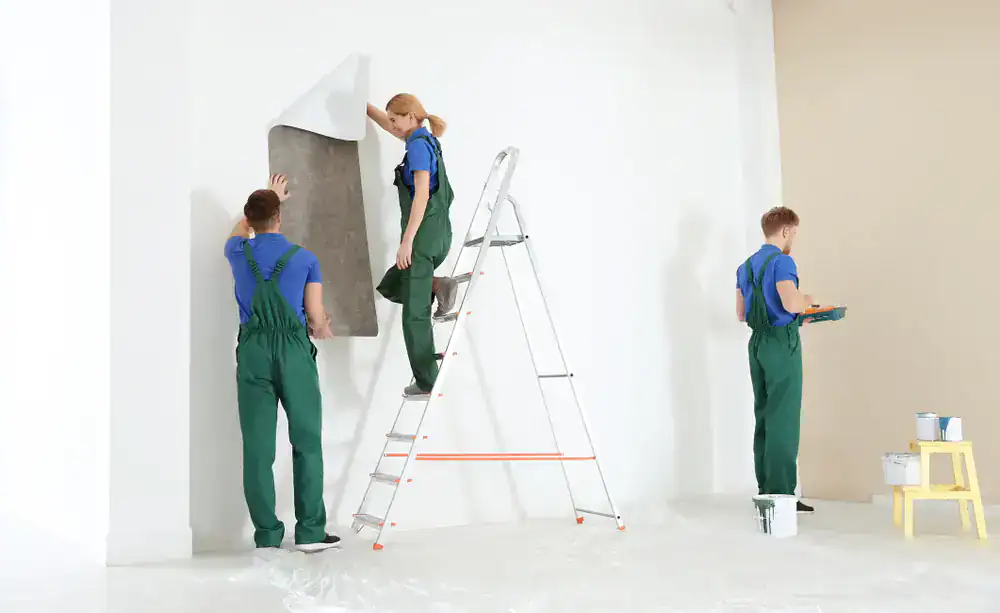
The Gratiot Avenue corridor in New Haven doesn’t slow down, and neither do the businesses along it. When your interior paint starts cracking, yellowing, or peeling at the baseboards, it’s not just an eyesore — it’s a signal to every customer who walks through your door. Commercial interior painting in New Haven, MI done right means that signal never gets sent.
Michigan’s climate is genuinely hard on commercial interiors. The swing from dry, over-heated winters to humid summers causes paint to expand, contract, and fail — especially on walls near HVAC vents, which is one of the most common issues we see in commercial buildings along the Gratiot Corridor. Add in the road salt and grit that gets tracked in off M-19 all winter, and the wear on your lower walls and baseboards compounds fast. The right prep work and the right products stop that cycle before it starts.
What you end up with is an interior that looks clean and professional for years — not one that needs a refresh every 18 months because the prep was rushed or the paint wasn’t rated for commercial use. For a growing community like New Haven, where new businesses are opening and existing ones are competing for the same customers, your space’s appearance is doing more work than you might think.
We are a Macomb County-based painting company owned and operated by two brothers with over 10 years of hands-on painting experience. We’ve been running under our current name for about two years, but the knowledge and the work ethic behind it go back more than a decade of real projects across northeastern Macomb County, including New Haven and the surrounding area.
Being based in Macomb County means we’re not dispatching from a regional call center or sending a rotating crew that’s never seen your building before. We know the commercial building stock in this area — from the older Main Street properties in New Haven’s General Business Downtown District to the newer strip commercial development coming in along 26 Mile Road. That familiarity matters when it comes to prep work, product selection, and getting the job done without surprises.
Every project we take on in New Haven is one we’re willing to put our name on — because in a village this size, reputation travels fast and we intend to keep ours intact.
It starts with a free estimate — a real one, written down, with a clear scope, timeline, and cost. No vague verbal numbers that balloon into something else when the invoice arrives. You’ll know exactly what you’re getting before we schedule anything.
Once the project is confirmed, we work around your operating hours. For most commercial interior painting jobs in New Haven, that means early mornings, evenings, or weekends — whatever keeps your business running without interruption. The Gratiot Corridor businesses we work with can’t afford to hang a “closed” sign for three days, and we don’t ask them to.
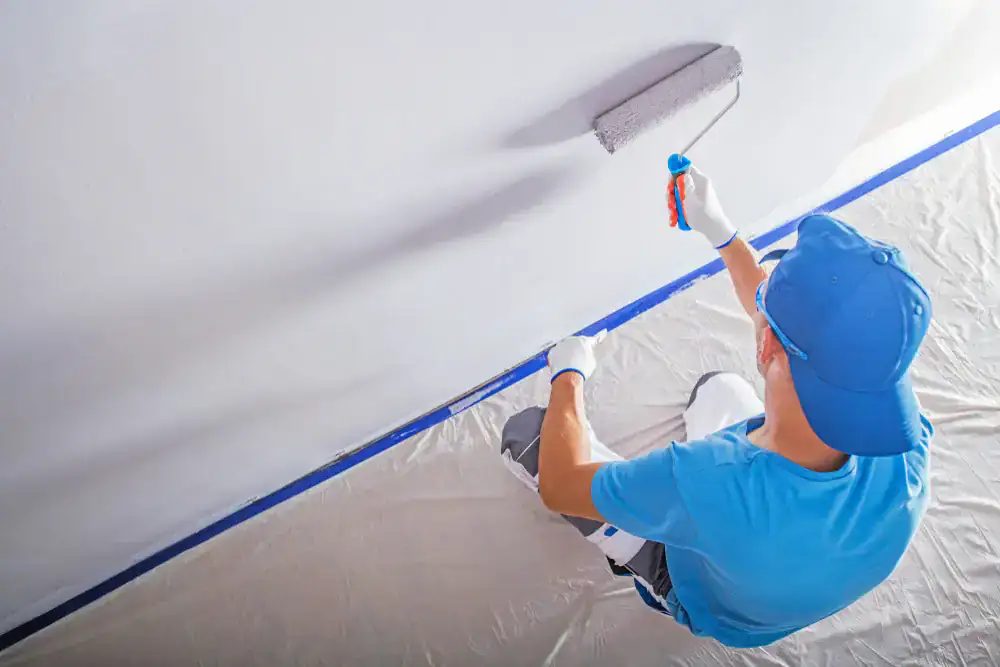
The work itself starts with prep, which is where most of the quality lives. Surfaces get cleaned, patched, and primed before any finish coat goes on. In older commercial buildings along New Haven’s Main Street, that sometimes means more surface work than a newer build — and we account for that upfront, not after the fact. The Village of New Haven Building Department requires contractors to be registered and insured for commercial work, and we meet all of those requirements. When the job is done, the space is clean, protected, and ready for business — not left for you to deal with.
Ready to get started?
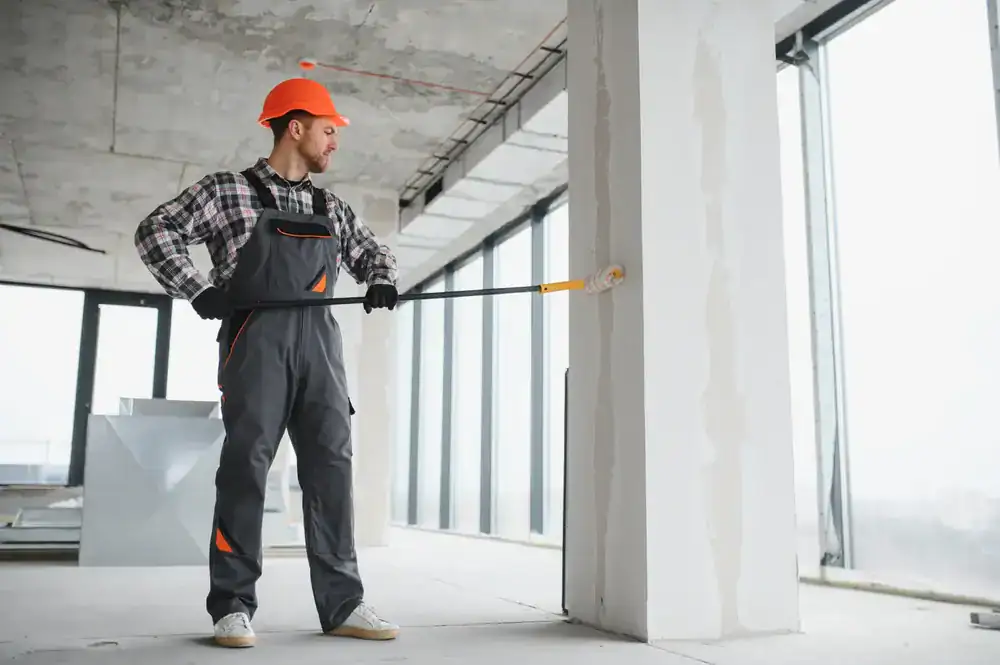
Commercial interiors take a different kind of abuse than residential walls. Foot traffic, cleaning chemicals, scuff marks, moisture from HVAC systems — the paint on a restaurant wall or a medical office hallway needs to handle all of it without breaking down. That’s why we use commercial-grade, washable paints selected specifically for the surface type and the way the space is actually used. We don’t apply the same product to a high-traffic retail floor wall that we’d use in a back office.
For New Haven businesses along the Gratiot Corridor, we handle everything from initial paint packages on new commercial construction — and there’s active new development coming in near the 26 Mile Road and New Haven Road intersection — to full refresh projects on older commercial stock that needs more careful prep before a new coat goes on. We work on hospitality interiors, office spaces, retail environments, and medical offices. The process adapts to the space, not the other way around.
Every job includes surface prep, appropriate priming, commercial-grade finish coats, and full protection of your floors, fixtures, and equipment throughout the process. Low-VOC options are available for spaces where staff will be present during or shortly after the work. The goal every time is a result that looks professional, holds up under daily use, and doesn’t require you to call us back in a year because something failed.
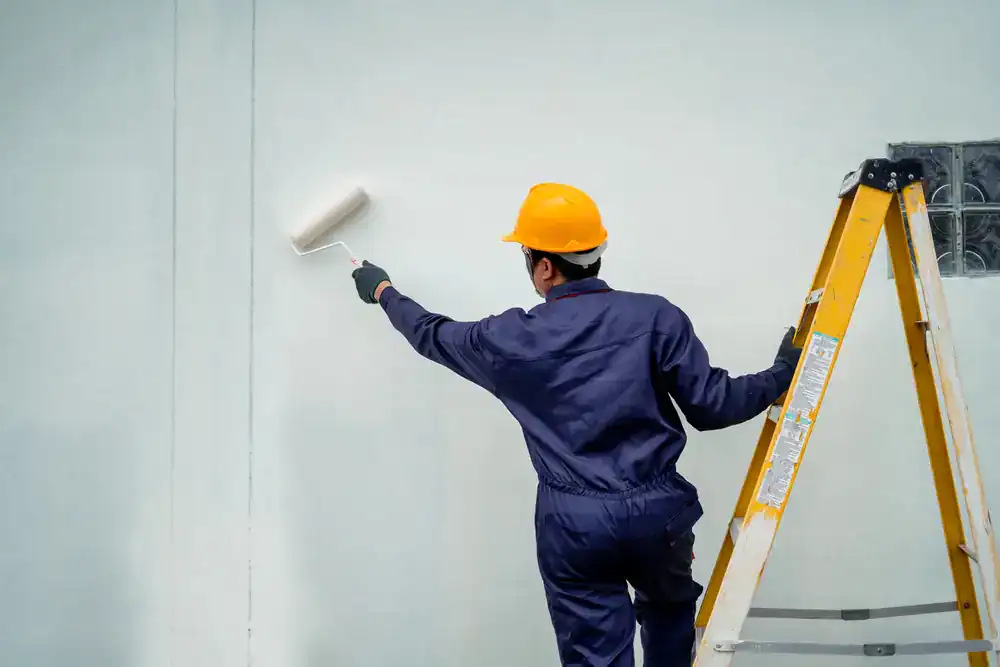
For most commercial interior painting projects in New Haven, MI, disruption is manageable — but it depends entirely on how the job is scheduled and how the contractor approaches it. A painting crew that shows up at 8 a.m. while your customers are walking in is a problem. A crew that works from 6 to 10 p.m. or comes in on a Saturday is a completely different story.
We schedule commercial interior painting jobs around your operating hours by default. For businesses along the Gratiot Corridor — restaurants, retail shops, service businesses — that typically means evening or weekend work. For medical offices or professional spaces where staff are present during the day, we can work in phases, completing one section at a time so the rest of the space stays functional. Your customers and employees barely notice the project is happening.
Timeline depends on the square footage, the condition of the surfaces, and how many coats are needed — but for a typical commercial interior painting project in New Haven, MI, most jobs fall somewhere between one and five days of active work. A small office refresh might be done in a day or two. A larger retail or hospitality space with multiple rooms, high ceilings, or significant prep work will take longer.
The biggest variable is surface condition. Older commercial buildings along New Haven’s Main Street corridor often have more layers of existing paint, more patching needed, and sometimes surface irregularities that require additional prep time before a finish coat can go on. We account for all of that in your written estimate before the job starts, so the timeline we give you is realistic — not a best-case scenario designed to win the bid.
Yes, and it’s one of the more underappreciated factors in commercial painting. Michigan’s seasonal extremes — dry, heated winters followed by humid summers — create a constant expansion and contraction cycle in the walls of commercial buildings. Paint that wasn’t applied over properly prepared surfaces, or that wasn’t rated for the level of humidity fluctuation Michigan produces, will start cracking and peeling faster than you’d expect.
In New Haven specifically, commercial buildings along the Gratiot Corridor also deal with salt and road grit being tracked in off M-19 all winter. That accelerates wear at the base of walls and on baseboards in any high-foot-traffic space. Using the right commercial-grade products — ones designed for washability and durability — combined with proper surface prep is what separates a paint job that lasts seven to ten years from one that looks tired in two. It’s not a sales pitch; it’s just how the math works on material quality and prep time.
In most cases, standard commercial interior painting in New Haven does not require a separate building permit. However, the Village of New Haven Building Department does require contractors performing commercial work to be registered, licensed, and carry proof of liability insurance before starting any job. That’s a contractor-side requirement, not something you as the property owner typically need to pull yourself.
Where it gets more nuanced is with pre-1978 commercial buildings. If your building was constructed before 1978 and the painting work involves disturbing existing paint layers — through scraping, sanding, or surface prep — the EPA’s Renovation, Repair, and Painting Rule may apply. That rule requires certified contractors for work that disturbs lead-based paint in commercial buildings. New Haven has older commercial stock along its Main Street corridor where this is a real consideration. We can walk you through what applies to your specific building during the estimate.
The difference is mostly in the products, the prep, and the scheduling — and all three matter more than most people realize when they’re getting bids. Commercial interiors see far more daily wear than residential walls. A restaurant wall gets scrubbed, bumped, and exposed to grease and moisture in ways a living room wall never does. A medical office hallway gets cleaned with commercial disinfectants on a regular basis. Standard residential paint breaks down quickly in those conditions.
Commercial-grade paints are formulated for washability, higher traffic, and more aggressive cleaning. They’re also available in low-VOC formulations for spaces where staff need to return quickly after painting — which is a real consideration for office interior painting in New Haven, MI where businesses can’t afford extended downtime. The prep process is also typically more involved in commercial spaces, particularly in older buildings, because surface failures are more visible and more costly to fix after the fact.
Every commercial interior painting estimate from us is written, itemized, and provided free of charge. You’ll see the breakdown of labor, materials, and prep work — not a single lump number that leaves you guessing what you’re actually paying for. Pricing for commercial interior painting in New Haven, MI varies based on square footage, surface condition, number of coats, and product selection, but transparency is consistent across every job.
New Haven is a working-class community, and we price accordingly — competitively for the local market, without padding the estimate to see what you’ll accept. That said, we’re not going to underbid a job and then cut corners on prep to make the margin work. The businesses along the Gratiot Corridor that have hired cheap and paid twice know exactly what that experience looks like. Our goal is to be the contractor you call once and keep calling — and that only happens if the price is fair and the work actually holds up.
