Summary:
Most homeowners don’t wake up one morning and decide it’s time to repaint. It’s more of a slow realization — you notice something looks off, you tell yourself you’ll deal with it later, and then later keeps getting pushed back. But in Southeast Michigan, waiting too long isn’t just a cosmetic issue. Between the freeze-thaw cycles, the salt-heavy winters, and the humidity that rolls in every summer, your paint is taking a beating that most people don’t fully account for. Here are five signs that it’s time to stop waiting and call a professional painter — along with what those signs actually mean for your home.
Before getting into the specific signs, it helps to understand why paint fails faster here than in most other parts of the country. Nationally, exterior paint is expected to last somewhere between five and ten years. In Macomb County and Oakland County — Rochester Hills, Sterling Heights, Troy, Shelby Township, Auburn Hills — the realistic window is closer to four to six years.
The reason is the freeze-thaw cycle. Every time moisture gets beneath your paint film and then freezes, it expands. When it thaws, it contracts. Do that enough times over a Michigan winter and you get blistering, cracking, and peeling that has nothing to do with how the paint was applied. It’s just physics. Knowing this changes how you think about the signs below — because what looks like a minor cosmetic issue often has a structural cause underneath it.
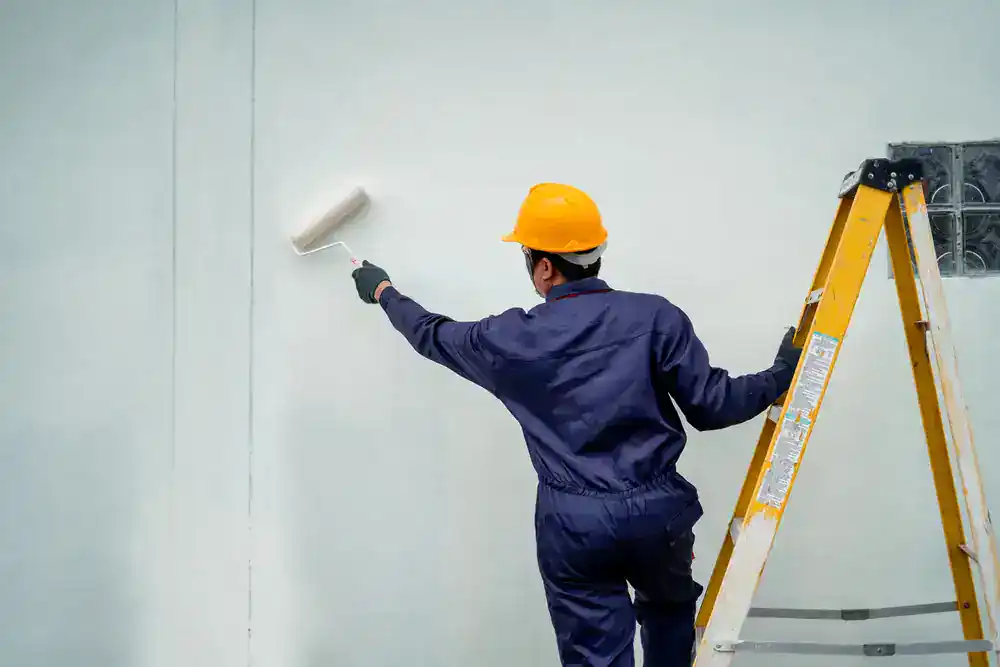
Peeling and bubbling are probably the most obvious signs, and they’re the ones homeowners tend to spot first. But what most people don’t realize is that the peeling itself isn’t the problem — it’s a symptom. The real issue is moisture infiltration, and by the time you can see it from the driveway, it’s already been working on your siding, trim, or substrate for a while.
In Macomb County and Oakland County communities, this shows up most often on south- and west-facing walls, which absorb the most UV exposure during summer and then take the brunt of freeze-thaw stress in winter. You’ll also see it around windows, doors, and anywhere caulking has started to fail — because those are the entry points for water.
The instinct is to scrape the loose paint and touch it up. That can work on a very small, isolated area where moisture isn’t the cause. But if you’re seeing bubbling or peeling across a larger section of your home’s exterior, a touch-up isn’t going to hold. The surface needs to be properly prepared — stripped back, dried out, primed correctly, and repainted with a product formulated for Michigan’s climate conditions. Skipping any of those steps means you’ll be looking at the same problem again in a year or two, which ends up costing more than doing it right the first time.
This is also the point where hiring a professional painter makes the most practical difference. We don’t just cover the problem — we diagnose it, address the underlying cause, and use materials that are actually designed to handle what Michigan winters throw at them.
Chalking is one of those signs that sneaks up on you. Run your hand along your home’s exterior and come away with a powdery residue — that’s oxidized paint pigment breaking down from UV exposure. A small amount of chalking is normal as paint ages, but heavy chalking means the paint film has degraded to the point where it’s no longer protecting the surface underneath.
Fading goes hand in hand with chalking. If your home’s exterior color looks noticeably duller or more washed out than it did a few years ago — especially on south-facing walls — that’s UV damage. It’s not just an aesthetic issue. When the pigment breaks down, the paint’s ability to repel moisture and protect the substrate breaks down with it.
For homeowners in Macomb County and Oakland County, this is worth paying attention to because the real estate market here is active. Homes along the Rochester Road corridor and the established neighborhoods off Adams Road and Crooks Road tend to hold their value well — but curb appeal is a real factor in that equation. A chalky, faded exterior signals deferred maintenance to buyers and appraisers alike, even if everything else about the home is well-kept.
The fix isn’t complicated, but it does require proper prep. Chalking surfaces need to be cleaned and primed before new paint goes on — otherwise the new coat won’t bond properly and you’ll see adhesion failure within a season or two. This is exactly the kind of prep work that separates a paint job that lasts from one that doesn’t.
Want live answers?
Connect with a Legends Painting expert for fast, friendly support.
Exterior paint gets most of the attention, but interior paint has its own set of warning signs that are worth knowing. A professionally applied interior paint job typically lasts seven to ten years, but that timeline shortens in high-traffic areas, rooms with humidity exposure like bathrooms and kitchens, and spaces that see a lot of direct sunlight.
Scuffs, stains, and minor wear are normal. But when you start seeing yellowing on walls that were once white, visible water stains on ceilings, or paint that’s cracking along trim lines and corners, those are signs that something more than a touch-up is needed. Water staining in particular should never be ignored — it almost always points to a moisture source that needs to be addressed before any painting happens.
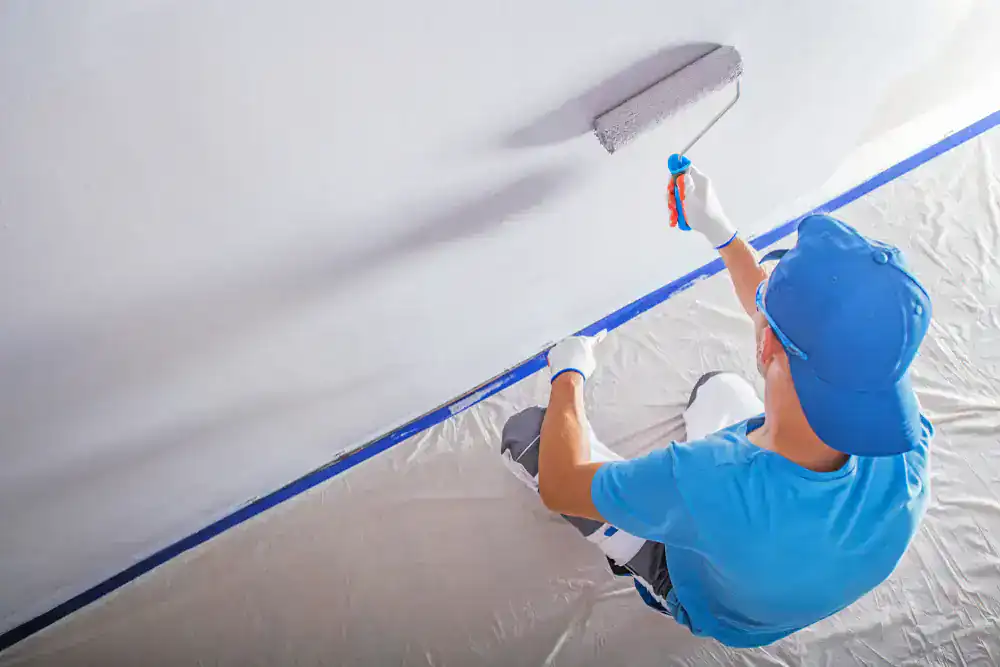
This is one of the most common questions homeowners ask, and the honest answer depends on a few things. Touch-ups work when the damage is truly isolated — a scuff here, a small nick there — and when the existing paint is recent enough that the color still matches. But paint fades over time, and even a perfect color match from the same can will look slightly different on a wall that’s been exposed to light and air for five or more years.
If you’re touching up more than you’re not, it’s usually a sign that the overall finish has aged past the point where spot repairs make sense. At that point, a full repaint of the room is more cost-effective and looks significantly better.
There’s also a practical consideration that comes up a lot in Macomb County homes — renovation cycles. About three-quarters of homeowners who repaint also tackle other home improvement projects at the same time. If you’re updating a kitchen, finishing a basement, or refreshing a living space, that’s a natural window to handle the painting as part of the broader project rather than coming back to it separately.
For interior work, the signs that tip the scale toward hiring a professional painter rather than doing it yourself are usually about scope and quality expectations. A single accent wall is a reasonable DIY project for most people. A full room with high ceilings, detailed trim work, built-ins, or a kitchen with cabinets is a different situation. We remove outlet covers and switch plates rather than painting around them, use drop cloths and protective film that actually protect your floors and furniture, and apply paint in a way that produces a clean, even finish without roller marks or lap lines. Those details are harder to replicate than they look.
This one surprises people, but it belongs on this list — especially in Macomb County and Oakland County, where attached garages are nearly universal and homeowners invest real time and money into those spaces.
If your garage floor is stained, pitted, cracking, or flaking, that’s a sign the concrete surface has been compromised. Road salt tracked in from M-59, I-75, and local roads during Michigan winters is one of the primary culprits. Salt is corrosive, and concrete that’s been repeatedly exposed to it without a protective coating will deteriorate faster than most people expect.
A professional epoxy coating addresses this directly — but there’s an important distinction worth understanding. The DIY epoxy kits available at hardware stores use water-based formulas that bond poorly to concrete and typically begin peeling within one to three years, especially in a climate like ours where the floor temperature swings dramatically between seasons. Professional epoxy systems use solvent-based or 100% solid epoxy with proper surface preparation — acid etching or diamond grinding — that creates a mechanical bond with the concrete itself. The result is a surface that holds up for a decade or more and is significantly easier to clean.
If you’ve already tried a DIY epoxy kit and watched it peel, that’s not a sign that epoxy doesn’t work. It’s a sign that the application method and product quality matter as much as the material itself. We assess your floor’s current condition, prepare the surface correctly, and apply a system that’s actually designed to last in a Michigan garage environment. It’s one of those services that looks like a luxury until you’ve seen the difference between a floor that holds and one that doesn’t.
If any of these five signs sound familiar — peeling or bubbling exterior paint, chalking and fading, interior walls that are past the touch-up stage, or a garage floor that’s seen better winters — you’re not imagining it. Michigan’s climate is genuinely harder on paint than most places, and the signs show up on a shorter timeline than homeowners typically expect.
The good news is that none of these problems are permanent. They’re all fixable with the right preparation, the right materials, and someone who actually knows what they’re doing. That’s what we focus on at Legends Painting — doing the job correctly the first time, so you’re not dealing with the same issue again in eighteen months.
We’ve been in the painting trade for over ten years, and we work across Rochester Hills, Sterling Heights, Troy, Shelby Township, Auburn Hills, and the surrounding Macomb County and Oakland County communities. If you’re ready to get a clear picture of what your home actually needs, reach out to Legends Painting for a free quote — we’ll get back to you within 24 to 48 hours.
Article details:
Continue learning: