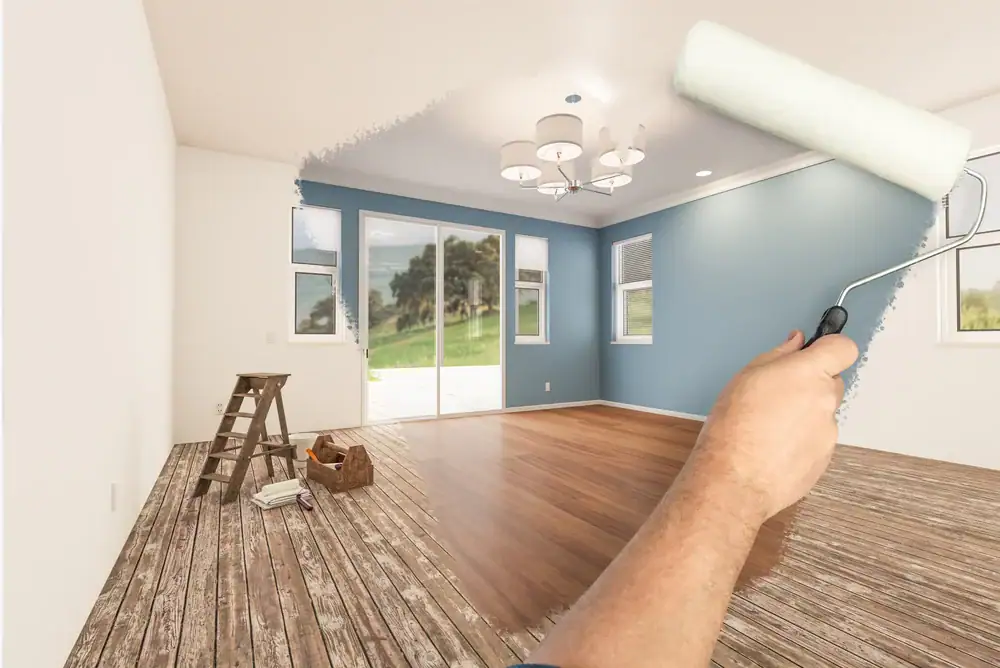
Thinking about painting those tall ceilings yourself? Discover the challenges, safety risks, and specialized techniques that make professional painters worth every penny.
Summary:
That two-story foyer looked stunning when you bought the house. Now it needs fresh paint, and you’re staring up at those 20-foot walls wondering if you can handle it yourself. You’ve painted rooms before, but this feels different. The ladder situation alone has you second-guessing, and you’re not even sure what kind of equipment you’d need. Here’s what you should know about painting high ceilings—the real challenges, the equipment that actually works, and when it makes sense to call in professional painting services instead of risking your safety and your walls.
Painting a standard 8-foot ceiling is manageable for most homeowners. Painting a 15- to 20-foot ceiling is an entirely different project. The physical demands multiply. You’re working overhead for extended periods, which strains your neck, shoulders, and back in ways you don’t anticipate until you’re halfway through.
Safety becomes the primary concern. Over 164,000 people are injured falling from ladders every year in the United States, and more than 300 die from ladder-related accidents. When you’re stretching to reach the far corner of a high ceiling, maintaining three points of contact on your ladder becomes nearly impossible. One wrong shift in weight, and you’re facing a serious fall.
Then there’s the equipment issue. Your standard 6-foot ladder won’t cut it. You need extension ladders, potentially scaffolding, and extension poles that reach 15 to 20 feet. Most homeowners don’t own this equipment, which means renting or buying specialized tools for a single project. Even with the right equipment, maneuvering it safely in your living space takes skill and experience.

Walk into any home improvement store and you’ll find basic painting supplies. Finding the specialized equipment for high-ceiling painting is another matter entirely. You need more than a tall ladder and hope.
Start with extension poles. A quality telescoping pole that extends 15 to 20 feet with a secure locking mechanism is essential. These aren’t the flimsy poles you use for standard ceilings. You need something that won’t flex or wobble when you’re applying pressure from 18 feet below. The pole should have a threaded end that fits standard roller frames and brushes. Cheap poles create more problems than they solve—they bend, slip, and make achieving even coverage nearly impossible.
Ladders present their own challenges. An extension ladder tall enough to reach your ceiling needs to be positioned at the correct angle (about 75 degrees) on level ground. If you’re painting above a staircase, you’ll need a ladder leveler—a device that attaches to the ladder rails and creates an even surface through adjustable legs. Without proper leveling, you’re working on an unstable platform.
Scaffolding or interior lifts offer more stability than ladders for large high-ceiling projects. You can move across the ceiling without constantly climbing up and down. But assembling and moving scaffolding around your room is time-consuming and requires space. Most homeowners don’t have experience setting up scaffolding safely, which creates another risk factor.
Paint rollers for high ceilings need to be larger than standard sizes. An 18-inch roller with a thick, high-pile cover holds more paint and covers more surface area with each pass. You’ll also need multiple paint trays or a large bucket with a grid to reduce constant refilling. Angled brushes (2 to 2.5 inches) are necessary for cutting in edges and corners where rollers can’t reach.
Drop cloths, plastic sheeting, painter’s tape, safety goggles, respirators, and work lights round out the equipment list. You’re looking at several hundred dollars in tools and supplies before you even open a paint can. Professional painters already own this equipment and know how to use it efficiently and safely.
Even with the right equipment, technique separates acceptable results from professional finishes. High ceilings magnify every mistake. What you might get away with on an 8-foot ceiling becomes glaringly obvious when light hits a 20-foot wall.
Roller marks and streaks are the most common issues. These occur from improper technique or inadequate paint application. When you’re working with an extension pole, maintaining consistent pressure is difficult. You might press harder in some areas and lighter in others, creating uneven texture. Overloading your roller with paint leads to drips and splotches. Under-loading it creates thin coverage that shows streaks once it dries.
Lap marks happen when you don’t maintain a wet edge. On high walls, this becomes nearly impossible for one person working alone. By the time you reload your roller and climb back up (or reposition your extension pole), the edge of your previous section has dried. When you roll over it, the overlapping area shows a different sheen or texture. We often work in teams on high ceilings—one person painting high, another painting low—to maintain that wet edge and avoid visible lap marks.
Skipping proper preparation is another costly mistake. High ceilings accumulate dust, cobwebs, and grime that you don’t notice from ground level. Painting over a dirty surface prevents proper paint adhesion. Within months, you’ll see peeling or bubbling. Drywall repairs, sanding, and cleaning must happen before any paint touches the ceiling. From 15 feet up on a ladder while trying to maintain your balance, thorough prep work is challenging and dangerous.
Choosing the wrong paint finish creates problems that show up immediately. Glossy or semi-gloss finishes on high ceilings highlight every imperfection. Light reflects off these surfaces and shows roller marks, uneven texture, and any flaws in the drywall. Flat or matte finishes are recommended for ceilings because they absorb light rather than reflect it, hiding minor imperfections and reducing glare from overhead lighting.
Inadequate lighting during the painting process leads to missed spots and uneven coverage. When you turn off the electricity to remove light fixtures (which you should do), you need bright work lights positioned to illuminate the entire ceiling. Poor lighting means you won’t see problems until the paint dries and natural light reveals every flaw.
Want live answers?
Connect with a Legends Painting expert for fast, friendly support.
Professional painters don’t just own the right equipment. We’ve painted hundreds of high ceilings and developed techniques that deliver consistent results. We know how to position ladders safely, how much pressure to apply with an 18-foot extension pole, and how to maintain wet edges on tall walls.
Speed matters more than you might think. What takes an experienced homeowner an entire weekend (or longer) takes our professional painting crews a day or two. We work efficiently because we’ve done it countless times. We know the sequence—ceiling first, then walls, then trim. We understand how to section large areas, how to blend new paint into previous sections, and how to achieve clean lines without constant tape adjustments.
Safety is built into our process. We’re trained in ladder safety, proper scaffolding setup, and working at heights. We carry insurance that covers accidents and damage. When you’re on your own ladder, you’re assuming all the risk. One fall can mean medical bills, lost work time, and potential long-term injury. Professional painting services eliminate that personal risk entirely.
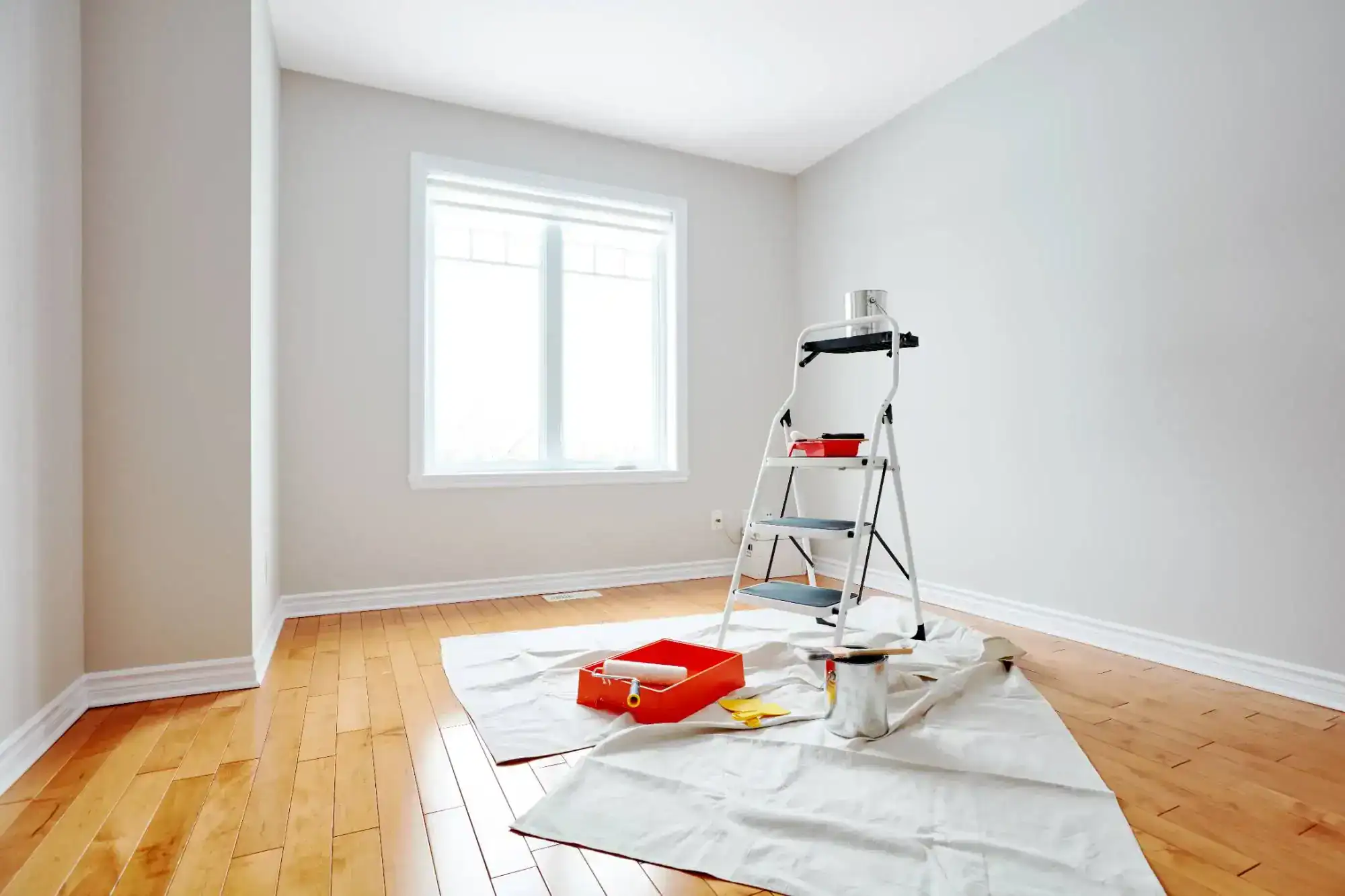
Hiring professional painting services for high ceilings costs more upfront than DIY. But the total cost calculation tells a different story. Start with equipment. Renting an extension ladder, scaffolding, and specialized poles for a weekend runs $100 to $300 depending on your location. If you don’t already own quality rollers, brushes, drop cloths, and safety equipment, add another $150 to $250. Premium paint suitable for high ceilings costs $50 to $80 per gallon, and you’ll need multiple gallons for proper coverage.
Now factor in your time. A DIY high-ceiling project easily consumes an entire weekend, often longer. If something goes wrong—and with inexperience, something usually does—you’re looking at additional days to fix mistakes. Your time has value. If you earn $30 per hour at your job, a 20-hour painting project represents $600 in opportunity cost.
The quality difference is significant. Professional painters deliver smooth, even coverage with clean lines and no visible flaws. DIY results often show streaks, missed spots, or uneven texture that you’ll notice every time you walk into the room. Redoing a poor paint job means buying more paint, spending more time, and living with subpar results in the meantime.
Professionals also handle the prep work that makes or breaks the final result. We repair drywall damage, sand rough spots, clean surfaces properly, and prime when necessary. We protect your floors, furniture, and fixtures with professional-grade materials. We clean up completely when finished. DIY projects often cut corners on prep work and cleanup, which shows in the final result.
The risk factor can’t be ignored. One ladder fall could mean thousands in medical bills, time off work, and potential permanent injury. Professional painters carry liability insurance and workers’ compensation. If something goes wrong, you’re not personally liable. That peace of mind alone justifies the cost for many homeowners.
Not all painting contractors deliver the same quality or service. Choosing the right professional painting services requires some homework, but it’s worth the effort to avoid problems later.
Start with licensing and insurance verification. In Michigan, painting contractors should be properly licensed and carry both liability insurance and workers’ compensation. Ask for proof of insurance and verify it’s current. If a contractor isn’t insured and someone gets hurt on your property, you could be held liable. If they damage your home during the project, insurance covers repairs. Never hire an uninsured painter, regardless of how good their price seems.
Experience with high ceilings specifically matters. A painter who primarily works on ranch-style homes may not have extensive experience with two-story foyers or vaulted ceilings. Ask about similar projects they’ve completed. Request references from customers with high-ceiling work. A quality contractor will gladly provide references and might even have photos of previous high-ceiling projects.
Detailed, written estimates protect both parties. A professional estimate should specify exactly what’s included—how many coats, what prep work, which paint brand and finish, cleanup procedures, and timeline. Vague estimates lead to disputes and surprise charges. If the estimate just says “paint living room” without details, that’s a red flag. You want itemized pricing that clearly outlines every aspect of the project.
Communication style tells you a lot about how the project will go. Does the contractor listen to your concerns and answer questions clearly? Do they explain their process and timeline? Are they responsive to calls and messages? Poor communication before the project starts usually means poor communication during the project. You want a contractor who keeps you informed, addresses issues promptly, and treats your home with respect.
Competitive pricing doesn’t mean the lowest bid. Extremely low estimates often indicate corners will be cut—cheaper paint, minimal prep work, inexperienced crew, or lack of proper insurance. You don’t need to hire the most expensive contractor, but be wary of bids significantly lower than others. Quality work costs money. Fair pricing reflects proper materials, experienced labor, insurance, and attention to detail.
For homeowners in Macomb County, MI and Oakland County, MI, finding local painting services with strong community ties often yields better results. Local contractors depend on reputation and word-of-mouth referrals. We’re invested in delivering quality work because our business success depends on satisfied customers who recommend us to neighbors and friends.
High ceilings add architectural interest and elegance to your home. Keeping them freshly painted maintains that appeal and protects your investment. The question isn’t whether they need painting—it’s whether you should tackle it yourself or hire professionals.
For most homeowners, professional painting services make the most sense for high-ceiling projects. The safety risks, specialized equipment requirements, and skill needed to achieve professional results tip the scale toward hiring experienced painters. You get better results in less time with zero personal risk. The cost difference between DIY and professional work is often smaller than people expect once you factor in equipment rental, materials, time, and the value of peace of mind.
If you’re in Macomb County, MI or Oakland County, MI and facing a high-ceiling painting project, we bring over 10 years of painting experience to every job. We focus on quality workmanship and competitive pricing, with the specialized equipment and expertise to handle challenging high-ceiling projects safely and efficiently. Reach out to discuss your project and get a detailed estimate that shows exactly what you’re paying for and what results to expect.
Article details:
Continue learning: