
Summary:
You’ve seen it all over your feed. Entire rooms wrapped in one rich, saturated color. Walls, trim, ceilings, even doors, all drenched in smoky jade or warm terracotta. It looks bold. Maybe too bold for your actual house.
Here’s what catches people off guard: this technique, called color drenching, is one of the most practical ways to make a small room feel larger and more pulled-together. When a professional painter executes it correctly, it doesn’t shrink a space or overwhelm it. It does the opposite.
The catch? It only works if the execution is flawless. Surface prep, paint selection, sheen choices, and application technique all matter more with color drenching than with traditional interior painting. Let’s break down what this trend actually is, why it’s dominating 2026, and what it takes to pull it off in Macomb County, MI homes.
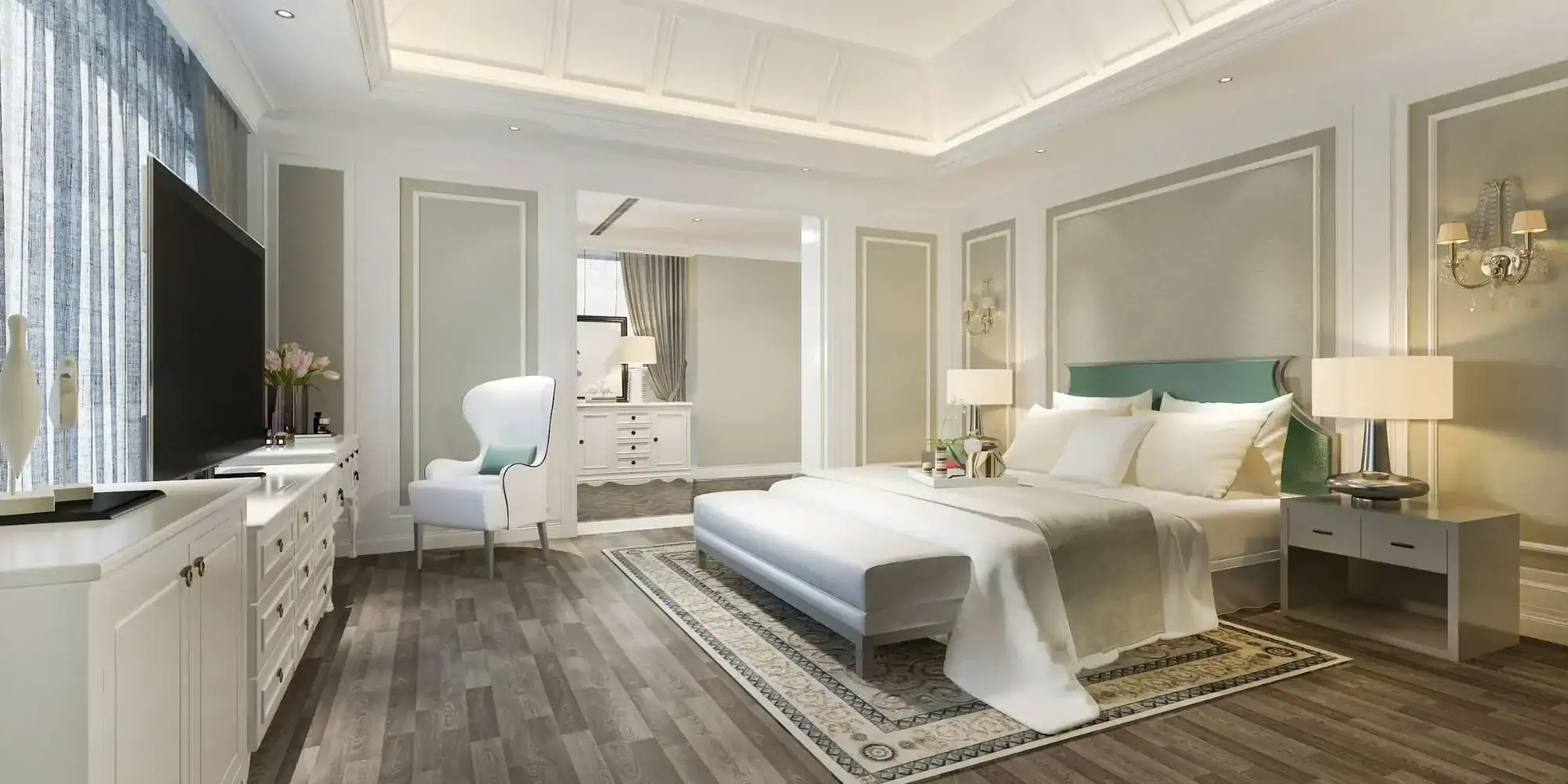
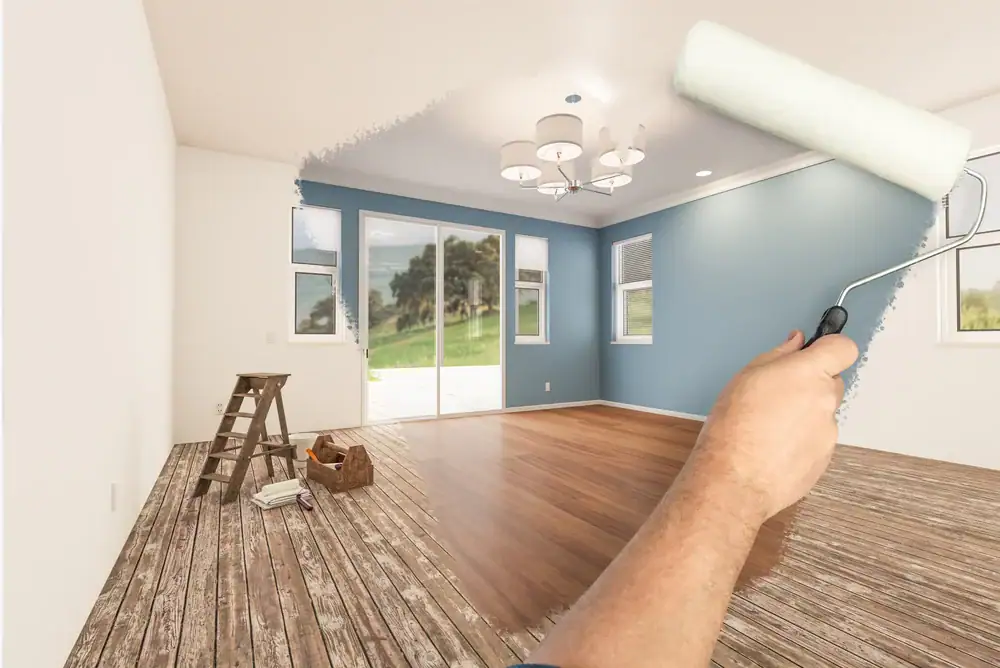
Color drenching means painting every surface in a room the same color. Not just the walls—the trim, the ceiling, the doors, sometimes even built-ins and radiators. You’re removing all the traditional contrast points, the white ceiling, the cream trim, and replacing them with one continuous hue.
The result is a room that feels wrapped, intentional, and surprisingly cohesive. Your eye doesn’t stop at the ceiling line or get interrupted by stark white trim. Instead, the space flows.
Multiple major paint brands chose variations of this monochromatic approach for their 2026 color forecasts, including greens, warm neutrals, and deep browns. It’s not a fringe trend anymore. It’s the direction interior design is moving, and homeowners across Macomb County are starting to ask us about it.
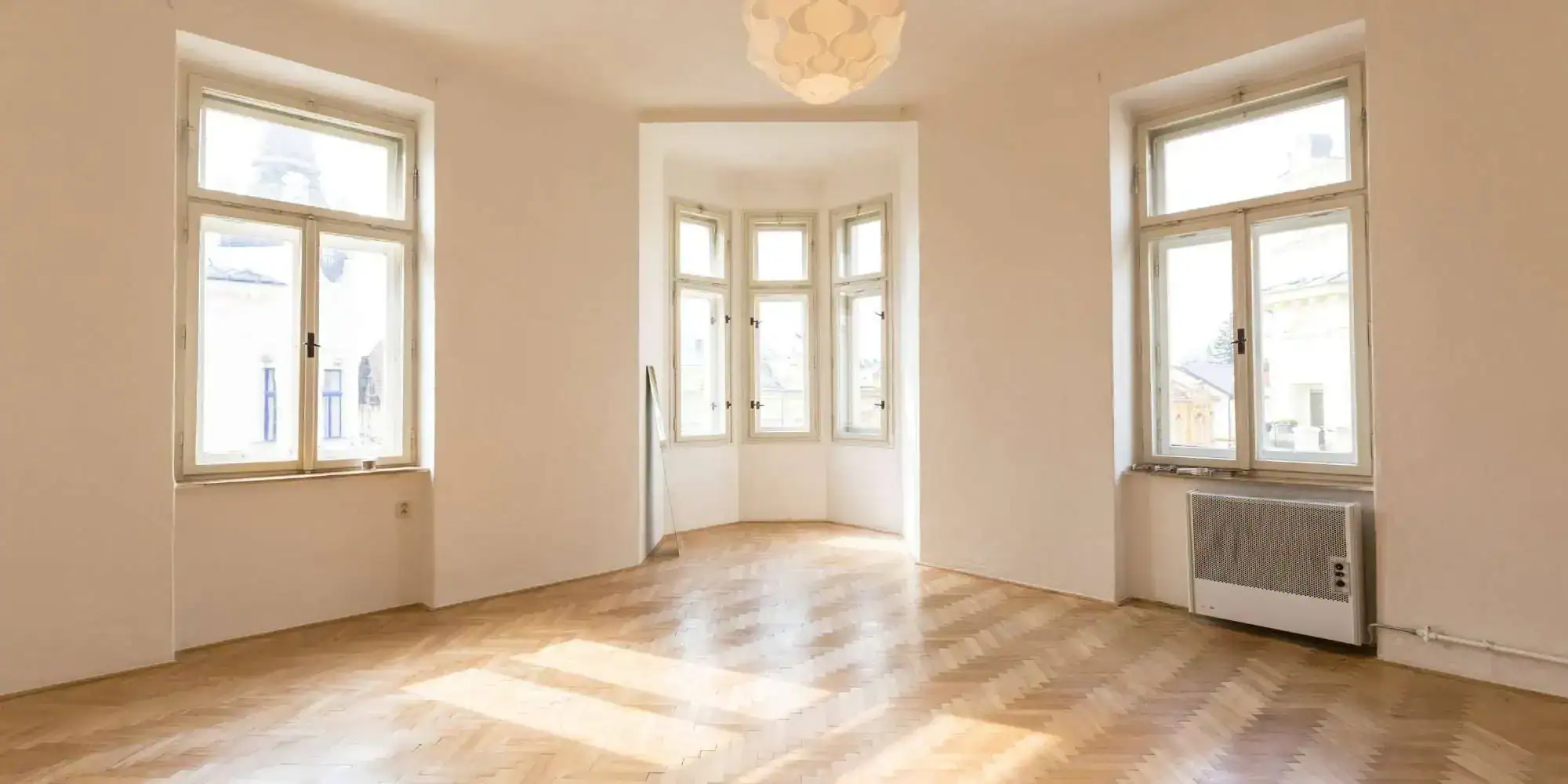
This is the part that sounds backward until you see it in person.
Dark, saturated colors are supposed to make rooms feel smaller, right? That’s the conventional wisdom. Color drenching flips it.
When you remove visual breaks—no white ceiling creating a hard stop, no contrasting trim chopping up wall space—your eye can’t easily measure where one surface ends and another begins. The boundaries blur. The room feels more expansive because there’s nothing interrupting the visual flow.
Think about a small bedroom in a Macomb County ranch home with an 8-foot ceiling. Paint the walls sage green and leave the ceiling white, and that white ceiling draws a clear line that makes the room feel boxed in. Now drench the entire room, ceiling included, in that same sage. Suddenly the ceiling height becomes less obvious. The space reads as one cohesive environment instead of a collection of surfaces fighting each other.
This works especially well in rooms with awkward proportions. A narrow hallway. A bathroom with a sloped ceiling. A home office tucked under the eaves. We use color drenching to turn those quirks into design features instead of problems you’re trying to hide.
The key is commitment. You can’t half-drench a room. It’s all or nothing. That’s where a lot of DIY attempts fall short—someone paints three walls and the ceiling but leaves the trim white “just to be safe,” and the whole effect collapses. The contrast they were trying to avoid comes back, and now the room just looks unfinished.
Not every color works equally well for this technique. You need hues with enough depth and saturation to create that enveloping effect without feeling flat or one-dimensional.
Muted greens are leading the pack this year. Sage, olive, eucalyptus—these aren’t the bright, primary greens from a kid’s bedroom. They’re sophisticated, grounded shades that bring a calming, nature-inspired feel to interiors. Multiple paint companies named green as their 2026 color of the year, which tells you everything about where design is headed. These tones work beautifully in bedrooms, living rooms, and home offices where you want focus without sterility.
Warm terracotta and clay tones are having a moment too.
These earthy oranges and rust shades create cozy, grounding spaces. They’re particularly effective in dining rooms and dens where you want a room to feel intimate and inviting. Terracotta reads as warm without being overly bold, and it pairs well with natural wood tones and brass fixtures that are common in Michigan homes.
Deep, moody blues—think navy, teal, or smoky blue-gray—create that cocoon effect in bedrooms and studies. These colors absorb light in the evening, making spaces feel wrapped and restful. They’re ideal for rooms you use primarily at night or for relaxation.
Warm neutrals and browns are the safer entry point if you’re hesitant about bold color. Greige, oatmeal, warm taupe, or even a rich chocolate brown can be drenched throughout a space to create warmth and cohesion without the drama of a saturated hue. These work everywhere and tend to age well as trends shift.
What doesn’t work as well? Cool grays. They’ve had their moment and now read as cold, especially in Michigan’s natural light. Pure whites defeat the purpose of drenching. And highly saturated primaries are too intense for most residential spaces unless you’re going for a very specific, bold look.
The undertone matters as much as the color itself. A green with too much yellow can read as sickly. A blue with too much gray can feel flat. This is where testing samples in your actual space, under your actual lighting, becomes non-negotiable. Any experienced interior painter will tell you the same thing.
Want live answers?
Connect with a Legends Painting expert for fast, friendly support.
Here’s where the gap between inspiration and reality shows up. Color drenching looks simple in photos. One color, one room, done. But the execution is more demanding than traditional interior painting, not less.
The biggest challenge is surface preparation. When you’re painting walls one color and trim another, small imperfections get hidden by the contrast. A slightly rough patch on the wall doesn’t stand out when your eye is drawn to white trim. But when everything is the same color, every flaw becomes visible.
Nail pops. Uneven drywall. Rough caulk lines. Old patches. They all show up under a single-hue treatment. We know this from over 10 years of painting experience. Surface prep isn’t optional. It’s the job. That means filling holes properly, sanding everything flush, caulking trim seams cleanly, and spot-priming any areas that might bleed through or absorb paint unevenly.

When you’re working with one color across multiple surfaces, sheen becomes your tool for adding dimension. If everything is the same color and the same finish, the room can feel flat. But if you vary the sheen—matte on the walls, satin on the trim, maybe eggshell on the ceiling—you create subtle shifts in how light hits each surface.
Matte finishes absorb light and create a soft, velvety look.
They’re ideal for walls in a color-drenched room because they don’t create glare or highlight imperfections. The downside is they’re harder to clean, so they’re better suited for low-traffic spaces like bedrooms and formal living rooms.
Eggshell has a slight luster that adds depth to paint colors without being shiny. It’s more durable than matte and easier to wipe down, which makes it a good choice for main living areas. Using eggshell on walls and ceilings in a drenched room gives you just enough light play to keep things interesting.
Satin has a noticeable sheen that reflects light and creates contrast even within the same color. It’s the go-to for trim, doors, and any high-contact surfaces because it’s durable and washable. In a color-drenched room, satin trim catches light differently than matte walls, which adds visual interest without breaking the color continuity.
Semi-gloss and high-gloss are usually too reflective for most color-drenched interiors unless you’re going for a very specific, dramatic effect. They highlight every surface imperfection and can make a bold color feel overwhelming. Most professional painters stick to the matte-eggshell-satin range for residential painting projects.
The combination that works best in most Macomb County, MI homes: matte or eggshell on walls and ceilings, satin on all trim and doors. This gives you durability where you need it and a soft, cohesive look everywhere else.
Color drenching is one of those techniques that looks deceptively simple but reveals every shortcut. DIY attempts often fail not because the homeowner chose the wrong color, but because the prep work wasn’t thorough enough or the application wasn’t consistent.
The most visible quality indicator in any paint job is the cut-in line—where the wall color meets the trim or ceiling. With traditional painting, a slightly wobbly line gets hidden by the color contrast. With color drenching, there’s no contrast to hide behind.
If your cut-in isn’t razor-sharp, it shows.
Most homeowners don’t have the brush control or steady hand to maintain clean lines across an entire room, and that’s where professional painters earn their value. It’s not about being “better” at painting. It’s about having done it hundreds of times and knowing exactly how much pressure, what angle, and which brush creates a perfect edge.
Surface preparation is the other area where DIY projects fall short. Patching a nail hole seems simple until you realize the patch needs to be sanded perfectly flush, primed separately, and feathered into the surrounding surface so it doesn’t show through the final coat. Experienced painters do this automatically. DIYers often skip steps or don’t know the steps exist.
Application consistency matters too. Roller marks, lap lines, thin spots, uneven coverage—these issues become obvious when there’s no contrasting trim to distract from them. Professional painters know how to maintain wet edges, use the right roller nap for the surface texture, and apply paint at the correct thickness to avoid these problems.
Time is the other factor. A professional crew can prep and paint a room in a day or two. A DIY project stretches over multiple weekends, sometimes months. And the longer it takes, the more likely motivation fades and quality drops. The last wall never looks as good as the first.
There’s also the equipment gap. Most homeowners don’t own professional-grade brushes, rollers, or sprayers. They don’t have scaffolding or extension poles for high ceilings. They’re working with basic supplies from a big-box store, and the tools matter more than people think.
For a single accent wall or a small powder room, DIY can work if you’re patient and detail-oriented. For a full color-drenched room, especially in a main living area, hiring an interior painter is the difference between a space that looks intentional and one that looks like a project you gave up on halfway through.
Color drenching isn’t going anywhere. It’s not a flash-in-the-pan trend that’ll look dated in two years. It’s a design approach that’s been used in various forms for decades, and the 2026 version just happens to favor bolder, more saturated hues that actually make spaces feel larger and more intentional.
If you’ve been looking at your small bedroom, cramped home office, or awkward hallway and wishing it felt more pulled-together, this technique might be exactly what the space needs. The key is choosing a color you genuinely love, committing fully to the approach, and making sure the execution is flawless.
That last part—the execution—is where working with an experienced painter makes the difference. We’ve spent over 10 years serving Macomb County, and we know what it takes to make bold techniques like color drenching work in real Michigan homes. If you’re ready to try something different and want it done right the first time, reach out to us at Legends Painting LLC.
Article details:
Continue learning: