Summary:
Your fence doesn’t need to scream for attention. In fact, the smartest thing it can do in 2026 is quietly step back and let your yard shine. Matte black had its moment in 2025, but this year’s fence color trends are more nuanced—think deep forest greens, midnight blues, and obsidian tones that carry subtle undertones instead of flat, stark finishes. These near-blacks create what landscape designers call the “infinite boundary effect,” where your fence visually recedes and your greenery becomes the star. If you’re in Macomb County and thinking about fence staining and painting, here’s what you need to know about the colors that are actually working right now.
Matte black fences looked sharp when they first hit suburban Michigan. Clean lines, modern vibe, instant curb appeal. But after a year or two, many homeowners noticed something: that stark black finish can feel heavy, especially in smaller backyards or shaded areas.
Enter near-blacks. These are deep, rich tones—obsidian with brown undertones, charcoal with hints of green, midnight blue that reads almost black but shifts in different light. They give you the same modern edge without the visual weight. More importantly, they work with your landscaping instead of competing against it.
In Macomb County, where backyards are often framed by mature trees and seasonal greenery, these softer dark tones create depth. Your fence doesn’t disappear completely, but it recedes just enough to let your hostas, hydrangeas, and evergreens take center stage.
Here’s the thing about forest green that most people don’t realize until they see it in person: it doesn’t blend in with your plants. It contrasts with them. A deep, near-black forest green fence creates a backdrop that makes lighter greens—your grass, your ferns, your spring foliage—look brighter and more vibrant.
Think of it like a gallery wall painted charcoal to make the artwork stand out. Your yard is the artwork. The fence is the wall. When you use a forest green with enough depth and richness, it reads as a shadow rather than a structure. Your eye doesn’t stop at the fence line. It moves through the space, making your yard feel larger and more open.
This works especially well in Macomb County’s suburban lots, where privacy fencing is common but space can feel enclosed. A lighter fence—white, tan, natural wood—draws the eye and defines the boundary. A deep forest green softens that boundary. It creates what designers call an “infinite look,” where the edges of your property seem to fade into the landscape rather than box it in.
And if you’re worried about it feeling too dark or moody, consider this: forest green pairs beautifully with warm wood tones, stone patios, and even modern metal furniture. It’s sophisticated without being stark. Grounded without being boring. If your backyard has mature trees, flowering shrubs, or any kind of layered landscaping, a forest green fence will make all of it look more intentional and well-designed.
The key is choosing a stain or paint with enough pigment to read as deep and rich, not muddy or washed out. In Michigan’s climate, you also want a product that resists fading from UV exposure and holds up through temperature swings. A quality fence staining and painting job with the right forest green can last 5-7 years without losing that depth.
If forest green isn’t your style, midnight blue and obsidian are the other heavy hitters in 2026’s fence color trends. Both offer the modern, high-end look of black but with more dimension and warmth. Midnight blue has cool undertones that shift depending on the light—sometimes reading as deep charcoal, sometimes as a rich navy. Obsidian leans warmer, with brown or bronze undertones that soften the overall effect.
Why does this matter? Because pure matte black can feel one-dimensional. It absorbs light. It can make a small yard feel smaller. And in Michigan, where we get plenty of gray winter days, an all-black fence can start to feel heavy by February.
Midnight blue and obsidian solve that problem. They still give you that sleek, contemporary vibe, but they have more personality. They interact with natural light in a way that feels dynamic rather than flat. And when your backyard is full of greenery—whether it’s summer blooms or evergreen shrubs—these near-blacks create contrast without overwhelming the space.
Here’s a practical example: imagine you have a patio with light gray pavers, some potted plants, and a few pieces of black metal furniture. A pure black fence might blend too much with the furniture and create a monochrome look. But a midnight blue or obsidian fence adds depth. It ties the space together without making everything feel matchy-matchy.
These colors also work well if you’re trying to create a cohesive look between your fence and other exterior elements—like a dark front door, shutters, or trim. Instead of everything being the exact same black, you get layers of dark tones that feel more curated and less cookie-cutter.
And let’s talk durability. In Macomb County, your fence faces brutal winters, scorching summers, and everything in between. Quality fence staining and painting with a near-black like midnight blue or obsidian should include products specifically formulated for Michigan’s climate—ones that resist moisture, UV damage, and temperature fluctuations. When done right, you’re looking at 5-7 years before you need to think about a refresh.
Want live answers?
Connect with a Legends Painting expert for fast, friendly support.
There’s actual psychology and design theory behind why dark fences make your yard look better. It’s not just a trend—it’s how our eyes process color and space. Dark colors recede. Light colors advance. That’s why a white fence feels like it’s right in your face, while a deep charcoal or forest green fence seems to step back.
When your fence recedes visually, your landscaping moves forward. Your bright green lawn, your colorful flower beds, your ornamental grasses—all of it pops against that dark backdrop. It’s the same reason museums use dark walls to showcase art. The contrast makes the subject stand out.
In Macomb County backyards—from Sterling Heights to Clinton Township—where privacy fencing is standard and lots aren’t massive, this visual trick can make a huge difference. A dark fence doesn’t just look modern. It makes your yard feel bigger, your plants look healthier, and your outdoor space feel more intentional.
The “infinite boundary” effect is what happens when your fence stops acting like a wall and starts acting like a shadow. Instead of clearly defining where your property ends, a dark fence blurs that line. Your eye doesn’t stop at the fence. It moves through the space, taking in the whole yard as one cohesive scene.
This works especially well if you have trees or tall shrubs near your fence line. A deep forest green or obsidian fence blends into those shadows. It creates layers—fence, foliage, sky—that make your yard feel deeper and more expansive than it actually is. Compare that to a white or tan fence, which creates a hard stop. Your eye hits that bright line and the space feels enclosed.
The infinite boundary look isn’t about making your fence disappear completely. It’s about making it recede just enough that your landscaping becomes the focal point. If you’ve invested in nice plantings, a patio, or outdoor furniture, you want those things to shine. A dark fence lets them.
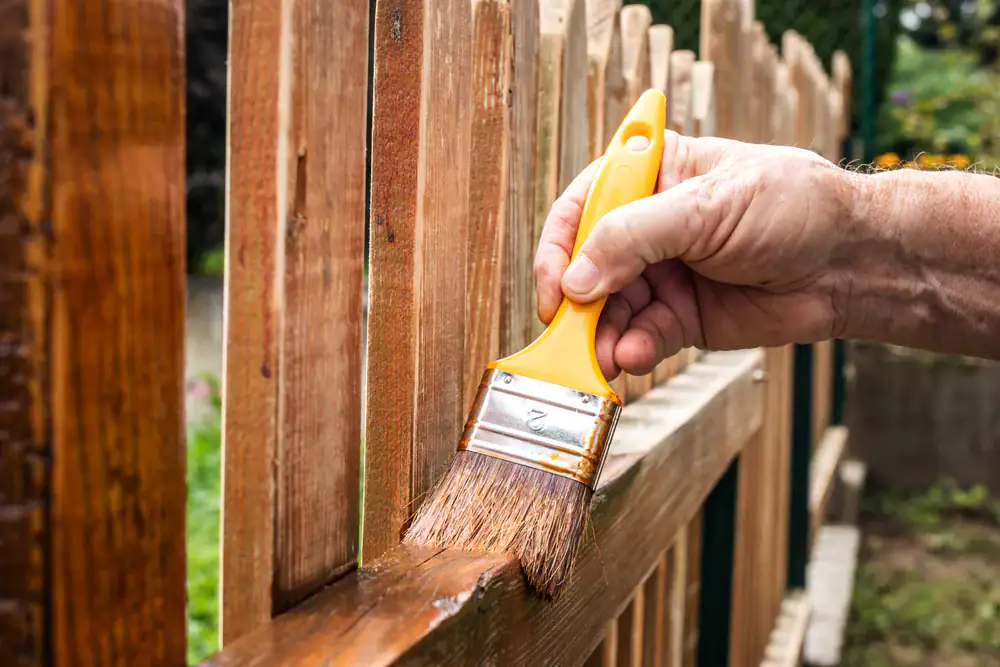
But here’s the catch: this only works if the fence is in good condition and properly stained or painted. A weathered, faded fence—even if it’s dark—will draw attention for the wrong reasons. That’s where professional fence staining and painting comes in. Proper surface prep, quality products, and skilled application make the difference between a fence that enhances your yard and one that detracts from it.
In Michigan’s climate, that means using stains or paints that resist moisture, UV damage, and temperature swings. It means cleaning and sanding the surface so the product actually adheres. And it means choosing colors with enough depth and pigment to maintain that rich, dark tone for years, not months.
Not all dark fence colors are created equal, and not all of them will give you the look you’re going for. Here’s what to watch out for: muddy browns that read as dirty rather than rich, flat blacks that absorb too much light and feel heavy, and cool grays that clash with warm-toned landscaping or brick homes.
The goal with near-blacks and deep greens is to create depth, not dullness. That means choosing colors with undertones that complement your home’s exterior and your yard’s natural palette. If your house has warm red brick, an obsidian with brown undertones will tie everything together. If you have cool gray siding, a midnight blue or charcoal with green undertones might be a better fit.
Another mistake people make is going too light. A medium gray or sage green might sound appealing, but it won’t give you that infinite boundary effect. You need a color that’s deep enough to recede visually. If you can’t decide, grab some sample stains and test them on a small section of your fence. Look at them in morning light, midday sun, and evening shade. See how they interact with your landscaping. A color that looks perfect on a paint chip might feel completely different on 200 square feet of fence.
And here’s the big one: don’t skip proper prep and quality products. Even the best color choice will fail if it’s applied over a dirty, weathered surface or if the stain isn’t formulated for Michigan’s climate. You’ll end up with peeling, fading, and frustration within a year or two. Professional fence staining and painting isn’t just about slapping on a coat of color. It’s about creating a durable, long-lasting finish that actually delivers on the promise of those trendy near-blacks and deep greens.
If you’re in Macomb County and you’re serious about getting this right, work with someone who understands the local climate, uses premium materials, and knows how to prep a fence properly. That’s the difference between a fence that looks great for a season and one that looks great for years.
The shift from matte black to near-blacks with undertones isn’t just a design trend. It’s a smarter way to think about your fence. Deep forest greens, midnight blues, and obsidian tones give you the modern, sophisticated look you want while making your landscaping shine. They create that infinite boundary effect that makes your yard feel bigger and more intentional.
But none of it works if the execution is off. The right color applied poorly will fail. The wrong color applied perfectly will still look wrong. That’s why fence staining and painting in Macomb County, MI requires someone who understands both the aesthetics and the science—someone who knows how Michigan’s climate affects wood, what products hold up, and how to prep a surface so the finish actually lasts.
If you’re ready to move beyond builder beige or weathered gray, and you want a fence that enhances your backyard instead of just enclosing it, reach out to us at Legends Painting LLC. With over 10 years of painting experience and a focus on quality workmanship at competitive prices, we know how to make your fence work for your yard.
Article details:
Continue learning: