

Hear from Our Customers

Most paint jobs that fail early don’t fail because of the paint — they fail because of what didn’t happen before the first coat went on. Skipped caulking, no primer, surfaces that weren’t cleaned or sanded. That’s what causes peeling within a season, and it’s more common than it should be.
In Marine City, that problem gets compounded by where you live. The St. Clair River and Belle River create a level of ambient humidity that inland Michigan towns simply don’t deal with the same way. Wood siding absorbs moisture. Paint loses adhesion. Homes along the waterfront and throughout the historic downtown age faster on the outside than their owners expect. When the prep is done correctly — surfaces cleaned, gaps caulked, the right primer applied for the substrate — the finish holds up through Michigan winters and humid summers instead of peeling by spring.
The homes here also aren’t typical. The Victorian-era captain’s homes and ornate cottages that define Marine City’s streetscape have original woodwork, intricate trim, and multi-layer paint histories that require a different level of attention. When that work is handled carefully, the result isn’t just a fresh coat — it’s a finish that actually respects the architecture and protects the investment you’ve made in a home that’s gaining real value. Marine City’s median home value rose over 9% from 2023 to 2024. That’s worth protecting.
We’re a family-owned painting contractor run by two brothers who have been doing this work for over a decade. The company has been operating under its current name for about two years, but the experience behind it goes back much further. Every project gets our direct involvement — not a rotating crew of subcontractors, not a franchise coordinator. The people doing the work are the same people whose names are attached to it.
That matters in a community like Marine City. In a city of roughly 4,000 people in St. Clair County, a contractor’s reputation doesn’t stay quiet for long. We’ve built a 4.9-star rating by doing straightforward work: show up when we say we will, do the job right, clean up completely, and make sure you’re satisfied before we leave.
If something isn’t right, you’re calling the owner. That’s the only way this works.
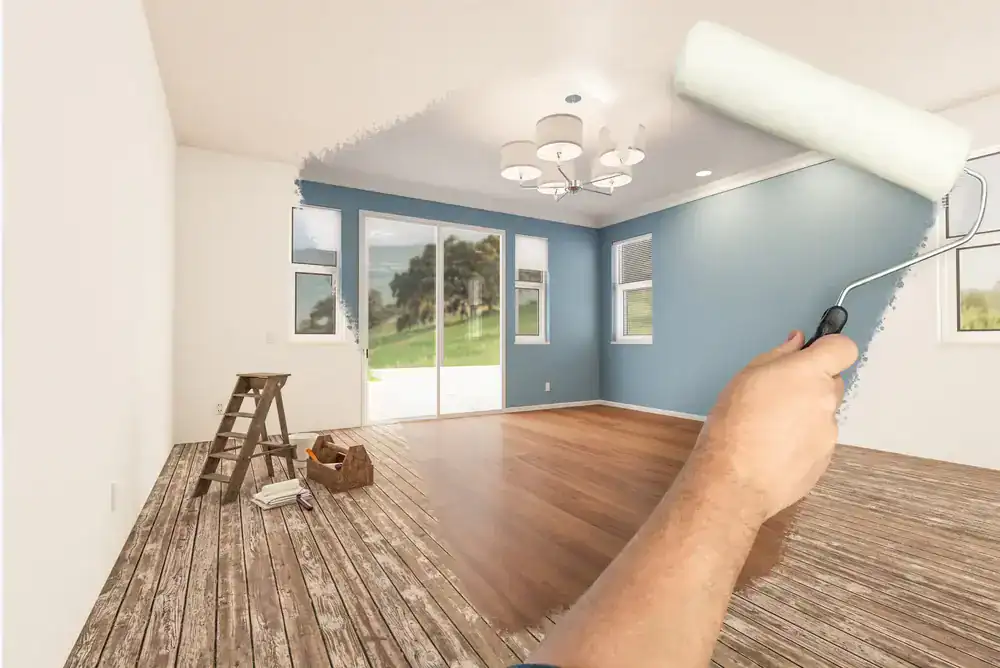
It starts with a free estimate. We come out, look at the project, assess the surfaces, and give you a written quote with no vague ballparks. You’ll know what you’re paying for before anyone picks up a brush. Given how many Marine City homeowners have expressed frustration with painters who show up, look around, and then never send a quote — that follow-through alone tends to stand out.
Once the project is scheduled, prep work comes first and it gets the most attention. For exterior projects on Marine City’s older homes, that means cleaning the surface, scraping and sanding any failing paint, caulking gaps around trim, windows, and siding seams, and applying the right primer for the substrate. Homes near the St. Clair River and Belle River get additional attention to moisture-prone areas. We schedule exterior work during the optimal Michigan windows — spring and fall — when temperatures and humidity levels allow paint to cure properly and adhere the way it’s supposed to.
For interior projects, the same logic applies: protect everything that isn’t being painted, prep the surfaces, and work cleanly. When the job is done, the space gets cleaned up and you do a walkthrough with us. If something needs to be addressed, it gets addressed. The goal isn’t just a finished job — it’s a job you’d actually call us back for.

Ready to get started?
We handle the full scope of painting work in Marine City and the surrounding St. Clair County area. On the residential side, that covers interior rooms, full home interiors, exterior repaints, trim and detail work, deck and fence painting, and the kind of careful prep that older homes in this area specifically require. If your home was built before 1978 — which describes a significant portion of Marine City’s housing stock — lead-safe work practices under the EPA’s Renovation, Repair and Painting Rule are part of how we operate, not an afterthought.
For commercial work, we serve downtown Marine City businesses, mixed-use properties, and commercial interiors throughout the area. Whether it’s a business on South Water Street refreshing its interior ahead of the Riverbank Theatre season or a commercial space that needs a clean, professional finish, the same standard applies. High-quality materials, proper prep, and a result that holds up under real use.
Every project — residential or commercial, interior or exterior — gets the same level of care. Competitive pricing doesn’t mean we’re cutting corners on prep or using builder-grade materials. It means we run an efficient, owner-operated business without the overhead that larger companies pass on to you. You get the quality, without paying for a name on the side of a truck.

The short answer is that waterfront and near-waterfront homes in Marine City tend to see exterior paint degrade faster than homes in inland Michigan towns. The St. Clair River and Belle River create elevated ambient humidity throughout the year, especially during spring and fall. That moisture accelerates the breakdown of paint film, promotes mildew growth on siding, and causes caulking to fail around windows and trim seams — all of which let water get behind the surface and start working on the wood underneath.
For most homes in Marine City, a realistic exterior repaint cycle is every five to seven years, though homes directly on the water or with older wood siding may need attention sooner. The key factor isn’t just how long it’s been since the last paint job — it’s the condition of the surface right now. If you’re seeing peeling, chalking, or mildew streaking, those are signs the protective layer has already been compromised and waiting longer will make the prep work more involved and more expensive.
Prep on an older home — especially the Victorian-era and early 20th-century properties that make up a large part of Marine City’s housing stock — is more involved than prep on a newer vinyl-sided home, and it should be. These homes have wood siding, intricate millwork, decorative trim, and in many cases multiple layers of old paint that need to be assessed before anything new goes on.
The process typically starts with a thorough cleaning to remove dirt, mildew, and chalking. Then any failing paint — anything that’s peeling, flaking, or bubbling — gets scraped and sanded down. All gaps, cracks, and open seams around trim, windows, and siding joints get caulked to seal out moisture. Then the right primer goes on for the specific substrate, whether that’s bare wood, previously painted wood, or spot-primed repairs. Only after all of that does the finish coat go on. Skipping any of these steps is the reason paint jobs fail in two seasons instead of lasting seven. On a home with irreplaceable original woodwork and architectural detail, doing it right the first time isn’t optional — it’s the only approach that makes sense.
For standard residential painting — interior or exterior — you typically don’t need a separate permit from the City of Marine City. Painting is generally considered a maintenance activity rather than a structural alteration, so it falls outside the permit requirements that apply to construction or renovation work.
That said, if the project involves any structural repairs alongside the painting — replacing rotted wood siding, repairing trim that’s deteriorated, or any work that affects the building envelope — those repairs may require a permit under the Michigan Building Code. It’s also worth noting that Michigan requires contractors performing work valued over $600 to hold either a Residential Builders License or a Maintenance and Alteration Contractors License through LARA, the state’s licensing authority. Before hiring anyone for a painting project that involves repair work, it’s reasonable to ask whether they’re properly licensed for the full scope. We’re happy to answer those questions directly.
If your home was built before 1978, there’s a real possibility it contains lead-based paint somewhere in the paint history — particularly in older layers under more recent coats. Marine City has a significant portion of pre-1978 housing, including many of the historic homes in the downtown and waterfront areas that are among the most desirable properties in the city.
Under the EPA’s Renovation, Repair and Painting Rule, contractors working on pre-1978 homes are required to follow lead-safe work practices — which includes specific procedures for containing dust, disposing of debris, and cleaning the work area. This isn’t optional, and it’s not something to gloss over. If you’re unsure whether lead paint is present, a certified inspector can test for it. When we work on older homes in Marine City, lead-safe protocols are part of how we operate. If you have questions about your specific property, bring it up when we come out for the estimate — it affects how we plan and price the job, and you deserve a straight answer before any work begins.
Spring and fall are the two best windows for exterior painting in Marine City, and the reasoning is straightforward. Paint needs a certain temperature range — generally above 50°F and below 90°F — and moderate humidity to apply and cure correctly. Michigan’s summers can push humidity levels high enough, especially near the St. Clair River, that paint takes longer to dry and is more prone to issues during application. Winter is off the table for most exterior work given the temperatures.
That leaves April through early June and September through October as the most reliable scheduling windows. Spring is when most homeowners are assessing winter damage and getting ahead of the season. Fall is when you’re protecting the home before freeze-thaw cycles start working on any exposed or compromised surfaces. If you’re thinking about an exterior project, reaching out early in the season is worth it — those windows book up, and rushing the work to fit a tight schedule is how corners get cut. Interior painting can be scheduled year-round without the same weather constraints.
Every estimate starts with a site visit. Square footage matters, but it’s not the only factor — and for Marine City homes specifically, the condition of the existing surface often has more impact on the final cost than the size of the project does. A home with well-maintained, previously painted siding in good condition is a straightforward job. A Victorian-era home with peeling paint, failed caulking, and original wood trim that needs careful attention is a more involved project, and the prep work alone takes more time.
Other factors that affect pricing include the number of coats required, the type of surfaces being painted (wood versus composite, smooth versus textured), the height and accessibility of the work area, and whether any repair work needs to happen before painting can begin. Interior projects are influenced by the number of rooms, ceiling height, the amount of trim and detail work, and whether furniture needs to be moved and protected. We give written estimates with clear line items so you know exactly what you’re paying for — no vague ranges, no surprise additions at the end. If the scope changes during the project, we talk about it before it affects the price.