
Hear from Our Customers
Living on the St. Clair River means your wood fence is dealing with something most Michigan homeowners never have to think about — persistent, year-round moisture exposure that quietly works its way into every grain line and end cut. Humidity levels here regularly push past 87%, and that’s not a weather stat, that’s a slow, ongoing attack on unprotected wood. Professional fence staining in Marine City puts a penetrating moisture barrier between your fence and that river air before the damage becomes structural.
Then winter shows up. Michigan’s freeze-thaw cycles are hard enough on their own, but when your fence has already absorbed months of riverfront humidity, the damage compounds fast. Water locked inside wood fibers expands when it freezes, cracking and splitting the wood from the inside out. A properly stained fence dramatically reduces how much moisture gets in — which means dramatically less damage when temperatures drop.
Beyond protection, a freshly stained fence changes how your property looks and feels. Marine City’s historic housing stock — the Victorian-era homes, the captain’s houses near downtown, the well-kept properties along Cherry Beach — carries a character that deserves to be maintained. A weathered, graying fence pulls that character down. A clean, evenly stained fence brings it back up, and in a market where waterfront properties command a real premium, that visual difference matters more than most homeowners realize.
We’re a family-run operation — two brothers who have been working in the painting and wood staining trade for over a decade. We’ve been operating under our current name for about two years, but the experience behind it goes back much further than that. Every job gets the same level of attention, whether it’s a small backyard fence in a quiet residential neighborhood or a longer run of fencing on a waterfront property in Cherry Beach.
Serving Marine City and St. Clair County is something we take seriously. The riverfront conditions here, the older housing stock throughout downtown and the surrounding neighborhoods, and the close-knit community character all factor into how we approach the work. This isn’t a franchise dispatching a crew you’ve never met — it’s a small team that shows up, does the job right, and leaves your property cleaner than we found it.
Our 4.9-star rating on Angi and HomeAdvisor reflects what customers throughout this region consistently experience: quality work, honest communication, and no surprises. That reputation matters in Marine City, where the work we do is remembered and talked about.
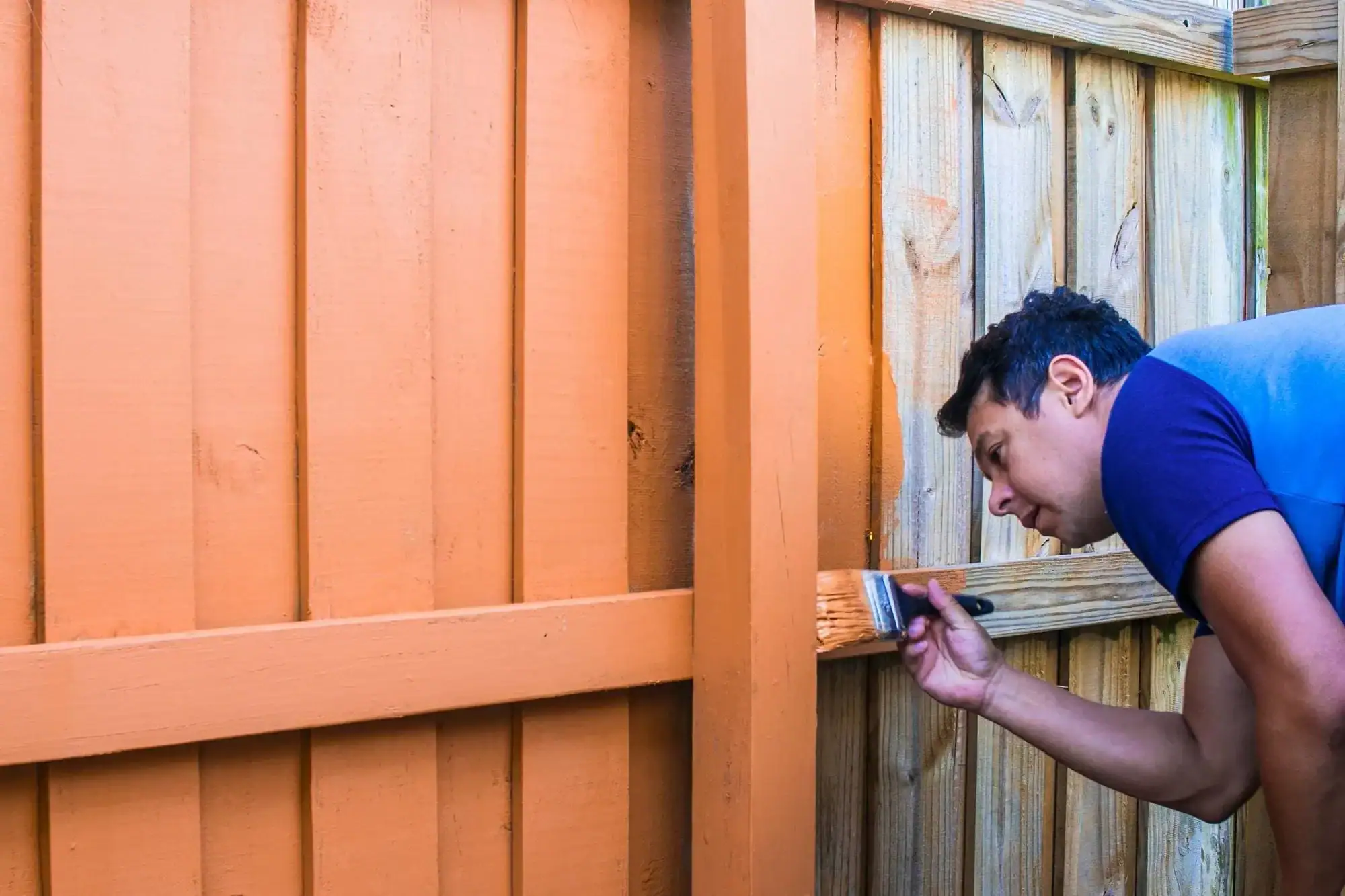
It starts with an honest assessment of your fence’s current condition. Older wood — and Marine City has plenty of it, given the age of the housing stock throughout the historic downtown and surrounding neighborhoods — doesn’t always respond the same way newer wood does. Before any stain goes on, the fence gets a thorough cleaning to remove dirt, mildew, and the gray oxidation that builds up from UV exposure and river humidity. If the wood needs brightening or light prep work beyond that, we handle it. Skipping prep is how you end up with blotchy, uneven results that peel within a season.
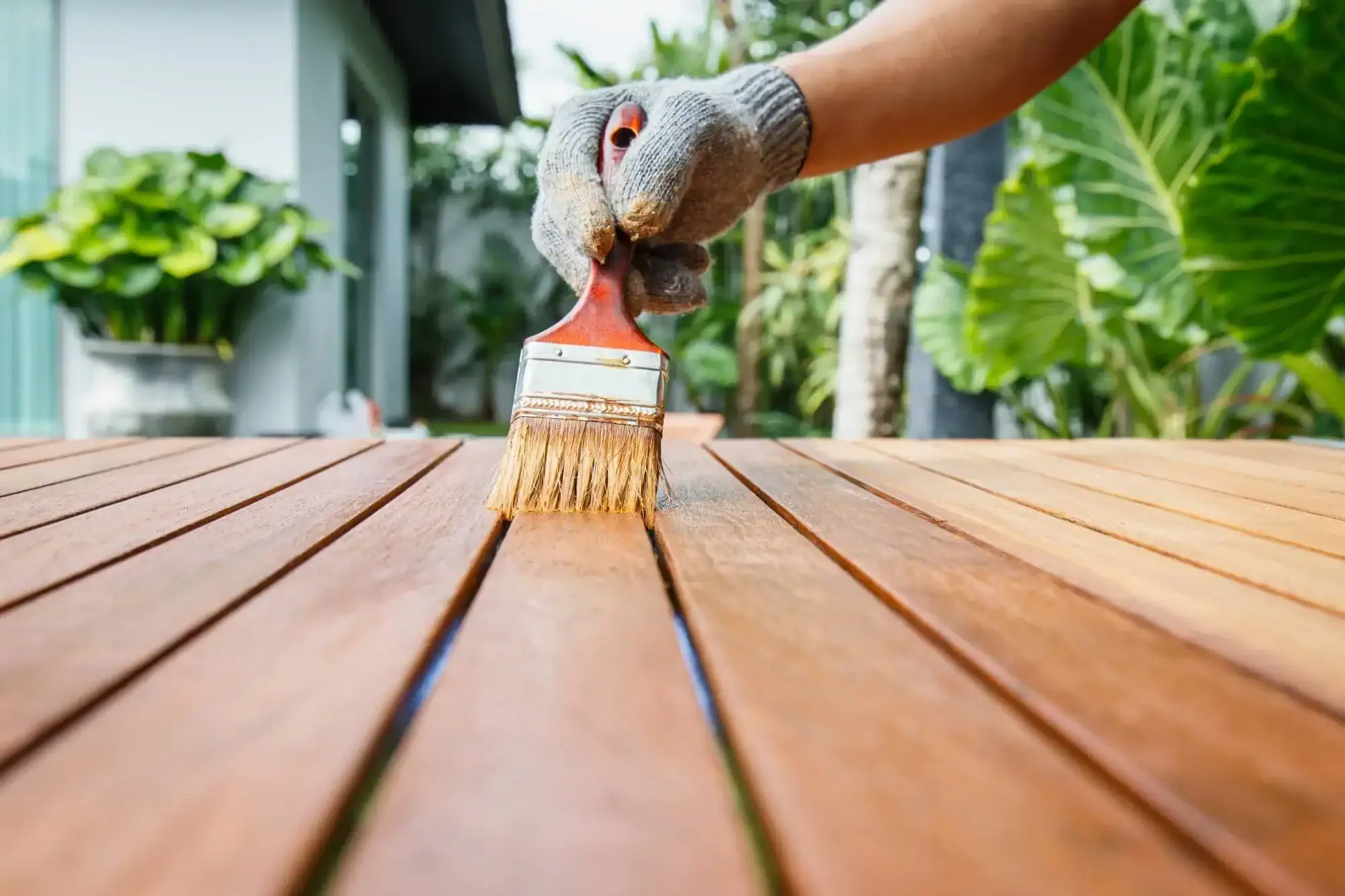
Once the surface is clean and dry, we select the right stain for your specific fence — its wood type, its age, its sun exposure, and the level of opacity that fits your property’s character. Penetrating oil-based and water-based formulas both have their place, and the choice matters in a high-humidity riverfront environment like Marine City’s. Stain gets applied evenly, with the coverage and technique that ensures it actually penetrates the wood rather than sitting on top of it.
Timing is a real factor here. Michigan’s staining window — temperatures between 50°F and 90°F with no rain in the forecast — is limited, and Marine City’s fall window is especially important. Getting stain down before the first hard freeze protects your fence through the worst of what the river and the Michigan winter can throw at it. Scheduling early, especially in spring and fall, is the difference between getting it done and losing the window entirely.
Ready to get started?
Every fence staining project we handle in Marine City starts with a proper surface assessment — not a quick glance, but an actual evaluation of the wood’s condition, moisture exposure history, and what prep work it needs before stain can be applied effectively. For properties near the St. Clair River waterfront or in neighborhoods like Cherry Beach, that assessment accounts for the elevated humidity environment those fences live in year-round. The prep phase includes cleaning, mildew treatment where needed, and wood brightening if the surface has oxidized to the point where stain won’t absorb evenly without it.
From there, stain selection is handled with your specific fence in mind. Semi-transparent, semi-solid, and solid stain options each serve a different purpose depending on the wood’s age and condition. Newer wood with good grain worth showing off typically does well with a semi-transparent formula. Older, more weathered wood — common throughout Marine City’s historic residential areas — often benefits from a semi-solid or solid stain that evens out the surface while still penetrating and protecting the wood fiber. Whatever is selected, the goal is the same: maximum penetration, even coverage, and a finish that holds up to Marine City’s specific climate demands.
Landscaping and adjacent surfaces are protected throughout the project. Drop cloths go down, masking goes up where needed, and when the work is done, cleanup is complete before we leave. If you’re in a neighborhood with association guidelines — Cherry Beach has documented community restrictions — it’s worth confirming stain color choices with your HOA before work begins, and we’ll flag that conversation proactively rather than leaving it to chance.
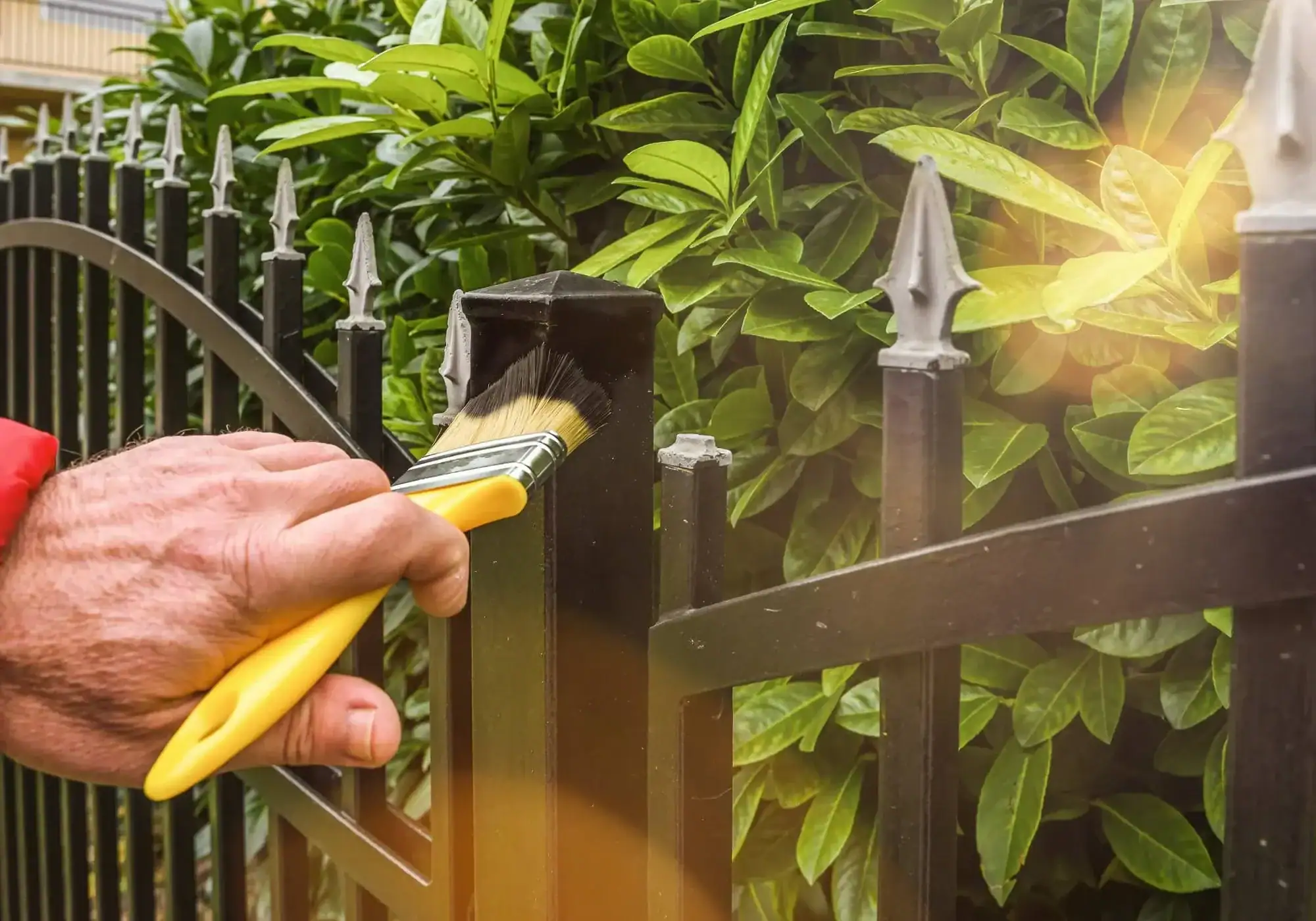
Professional fence staining generally runs between $3 and $14 per linear foot, which puts most residential projects somewhere in the $300 to $2,800 range depending on fence length, height, wood condition, and the stain type being applied. Marine City properties with longer fence runs — common on larger lots near the Belle River area or on waterfront properties along the St. Clair River — will naturally sit toward the higher end of that range, though the per-foot cost typically stays consistent.
The more useful number to keep in mind is what fence replacement costs — typically $1,500 to $4,000 or more for a standard residential wood fence. In Marine City’s high-humidity riverfront environment, an unprotected or poorly maintained fence deteriorates faster than it would in a drier inland community. Regular professional staining every two to five years is a fraction of that replacement cost and extends the fence’s useful life significantly. Getting an accurate quote for your specific fence is straightforward — reach out and we’ll assess the project and give you a clear number before any work begins.
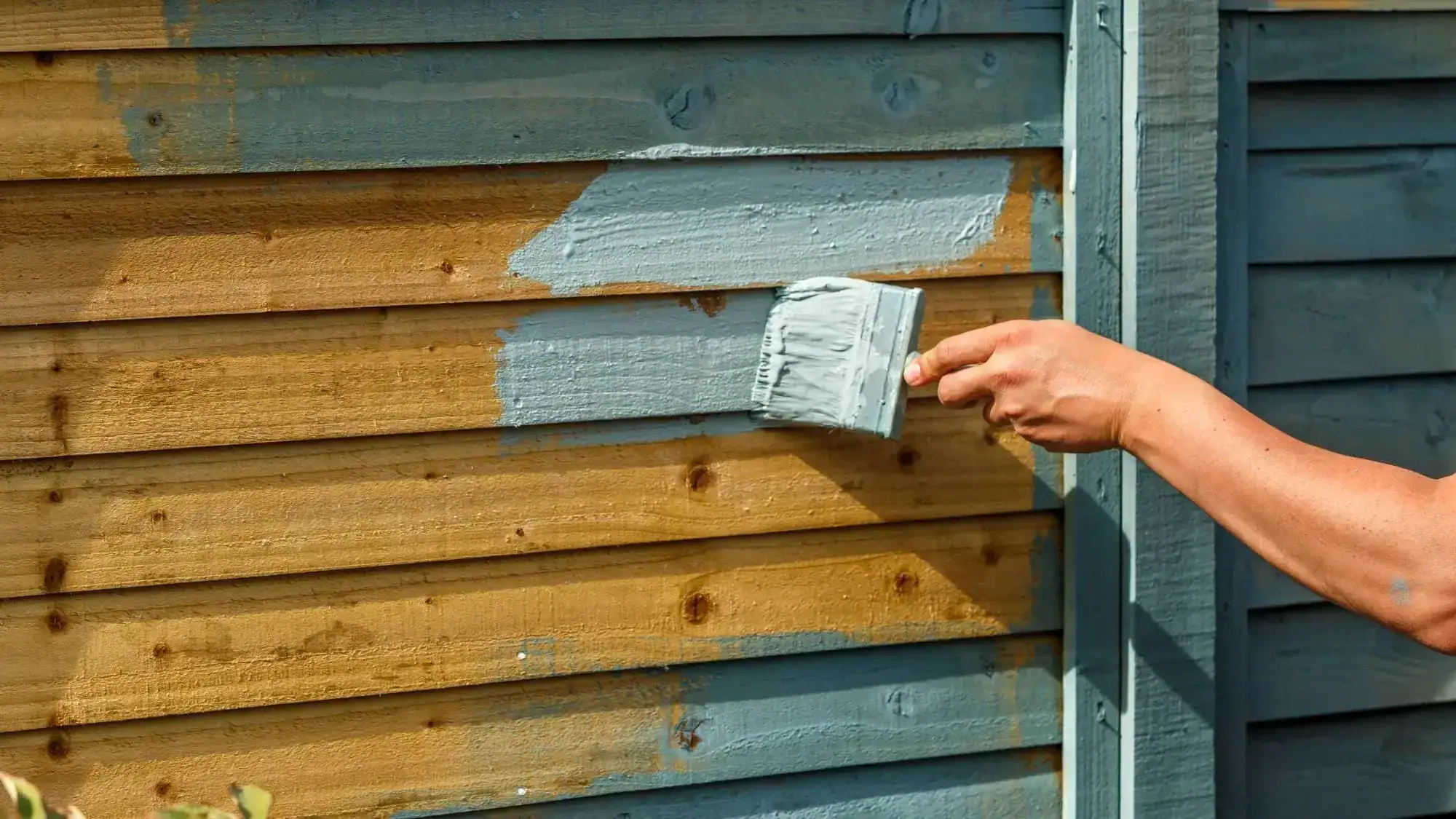
For most wood fences in Marine City, stain is the better choice — and the reason comes down to how each product behaves in a high-moisture environment. Paint forms a surface film over the wood. That film looks clean initially, but in a riverfront climate where humidity is consistently elevated and freeze-thaw cycles are part of every winter, that surface bond eventually fails. When paint peels or blisters, stripping it before repainting is labor-intensive and adds significant cost to the next maintenance cycle.
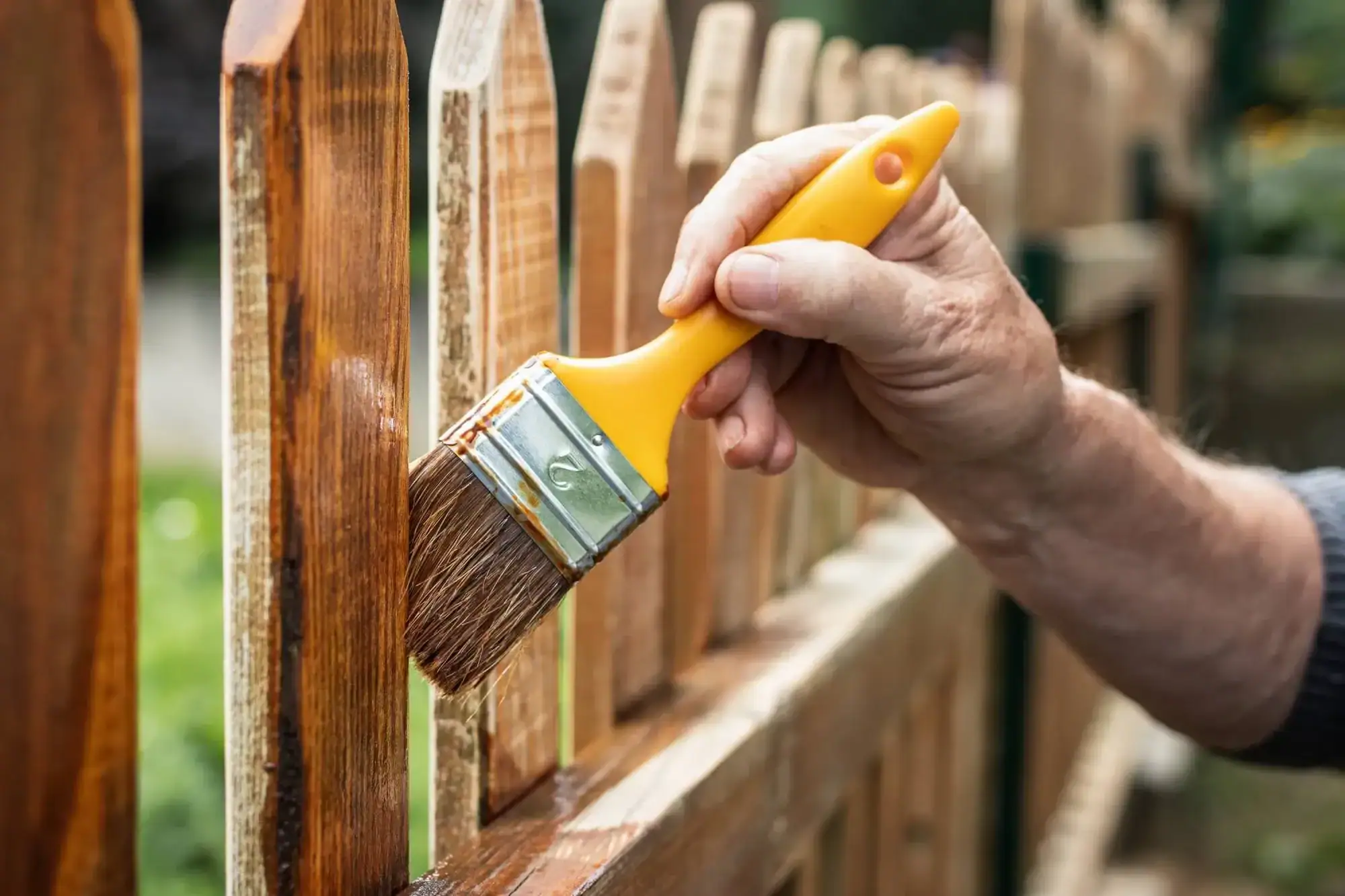
Stain penetrates the wood fiber rather than coating the surface. It doesn’t peel or crack, it doesn’t trap moisture beneath a surface film, and when it’s time to reapply, you clean the surface and add a fresh coat — no stripping required. For fences that are already weathered or have been previously painted, the assessment gets more nuanced, and that’s worth discussing before any product goes on. We evaluate each fence individually and will give you a straight answer on which approach makes more sense for your specific situation.
The general industry guidance is every two to five years, but in Marine City’s riverfront environment, leaning toward the shorter end of that range makes more sense than waiting it out. The St. Clair River’s ambient humidity — regularly exceeding 87% — means wood fences here are under more consistent moisture pressure than fences in inland Michigan communities. Add Michigan’s freeze-thaw cycles on top of that, and the conditions that break down stain protection are more intense here than in most markets.
A practical way to gauge where your fence stands is the water bead test: splash some water on the wood surface. If it beads up and rolls off, the stain is still doing its job. If it absorbs quickly and darkens the wood, the protective barrier has worn down and it’s time to restain. Fences on river-facing sides of properties or in areas with heavy shade — where moisture lingers longer — will typically need attention sooner than fences in more sheltered or sun-exposed locations.
Spring and fall are the two primary windows, and both matter for different reasons. Spring — typically late April through May — is when most homeowners in Marine City first notice what winter has done to their fences. The freeze-thaw damage is visible, the wood is accessible, and there’s enough warm weather ahead to allow proper stain curing. It’s also when contractor schedules start filling up quickly, so reaching out early in the season gives you the best shot at getting the project done before summer heat sets in.
Fall is arguably the more important window for Marine City specifically. Getting stain down before the first hard freeze — ideally September through mid-October — means your fence enters winter with a full moisture barrier in place. Given how much ambient humidity the St. Clair River generates throughout late summer and fall, that protection matters. Staining cannot be done when temperatures drop below 50°F, and Marine City’s proximity to Lake Huron means cold snaps can arrive earlier than expected. Homeowners who wait too long regularly lose the fall window and spend another winter with an unprotected fence.
In most cases, yes — but the prep work is what makes or breaks the result. The graying you see on an older fence is UV oxidation, which breaks down the surface of the wood over time. It looks like permanent damage, but it’s typically a surface condition that can be addressed with proper cleaning and a wood brightener before stain is applied. Once the oxidized layer is removed and the wood is clean and dry, stain can penetrate and restore both the appearance and the protection.
The exception is when the wood has progressed beyond surface weathering into actual structural deterioration — soft spots, significant cracking, or rot. At that point, staining over compromised wood won’t fix the underlying problem, and replacing those sections before staining is the honest answer. Marine City’s older housing stock means some fences have been weathering without maintenance for longer than they should have, and a proper assessment before any product goes on is the only way to know which situation you’re dealing with. We evaluate fence condition upfront and will tell you exactly what the wood can and can’t support before committing to a staining project.
Yes — we serve Marine City and the broader St. Clair County area as part of our regular service territory. We operate across Macomb County, Oakland County, and St. Clair County, and Marine City’s riverfront conditions are something our team is specifically familiar with. The elevated humidity along the St. Clair River, the older wood on historic properties throughout the downtown area, and the seasonal staining windows that matter most in this part of Michigan all factor into how we approach the work here.
If you’re in Marine City — whether you’re near the Belle River neighborhood, in Cherry Beach, or anywhere else in the city — getting a quote is straightforward. We assess the fence, give you a clear price, and schedule the project around the seasonal window that makes the most sense for your property. There’s no pressure and no guesswork on pricing. Reach out through legendspaintingmi.com to get the conversation started.