
Hear from Our Customers
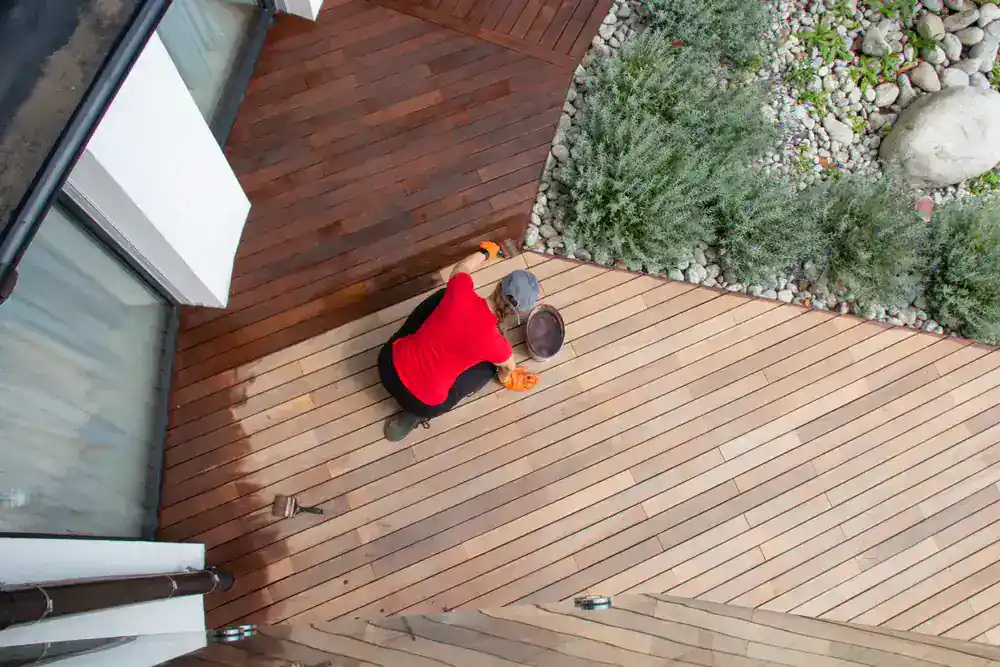
A properly stained deck does not just look better — it stops the slow damage that most homeowners do not notice until it is too late. Cracking, warping, and rot do not announce themselves. They build quietly through every Michigan winter, every freeze-thaw cycle, and every season your wood sits unprotected. By the time you see the problem, the repair bill is already significant.
In Pearl Beach, the conditions are harder on outdoor wood than most people realize. Properties along the North Channel and Anchor Bay sit in a moisture-saturated environment that inland homes simply do not face. River humidity, wave spray, and persistent waterborne moisture work into untreated wood year-round — and when winter arrives, that moisture freezes, expands, and forces wood fibers apart. Repeat that across 30 to 40 freeze-thaw cycles in a single Michigan winter, and you understand why Pearl Beach decks age faster than decks in drier communities further inland.
A professional deck staining service creates the barrier that stops this cycle. The wood stays sealed, the moisture stays out, and the structure stays sound. For a community where the deck is often the first thing guests see when they pull up to the pier, that matters in more ways than one. Most Pearl Beach homes were built between 1950 and 2000 — which means the majority of wooden decks here are overdue for serious attention, not just a coat of whatever is on sale at the hardware store.
We are a family-owned operation — two brothers who have been in the painting and exterior finishing trade for over a decade. Our company has been running for about two years, but the experience behind it is not new. This is not a side hustle or a startup figuring things out on your property. We are a focused team that has spent years learning what Michigan’s climate does to exterior surfaces and how to protect against it.
We serve homeowners across St. Clair County and the broader waterfront corridor along M-29, including Pearl Beach properties that face some of the toughest moisture and weather conditions in the region. We bring the same approach to every project: thorough prep, quality materials, and work that is meant to last more than one season. When you hire us, you are hiring the people who will actually show up and do the job — not a dispatcher routing a crew you have never met.
In a close-knit community like Pearl Beach, reputation travels fast. That accountability is built into how we operate, and it shapes every decision we make on every job.
The reason most deck staining jobs fail early has nothing to do with the stain itself — it is everything that did not happen before the stain went on. Surface preparation is where the result is actually determined, and it is where most shortcuts get taken.
The process starts with a thorough assessment of your deck’s current condition. In Pearl Beach, that means checking for boards that have absorbed significant moisture from the river environment, identifying any areas where mold or algae has already taken hold — which is common on waterfront properties near the St. John’s Marsh corridor — and flagging any boards that need replacement before staining begins. Staining over compromised wood does not fix the problem; it hides it temporarily and accelerates the failure.
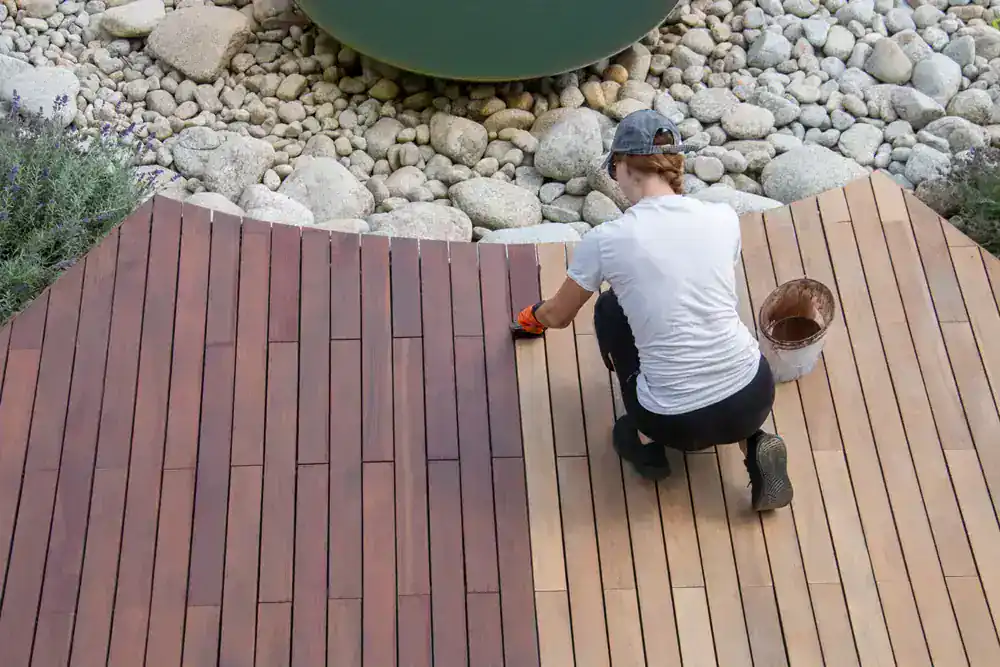
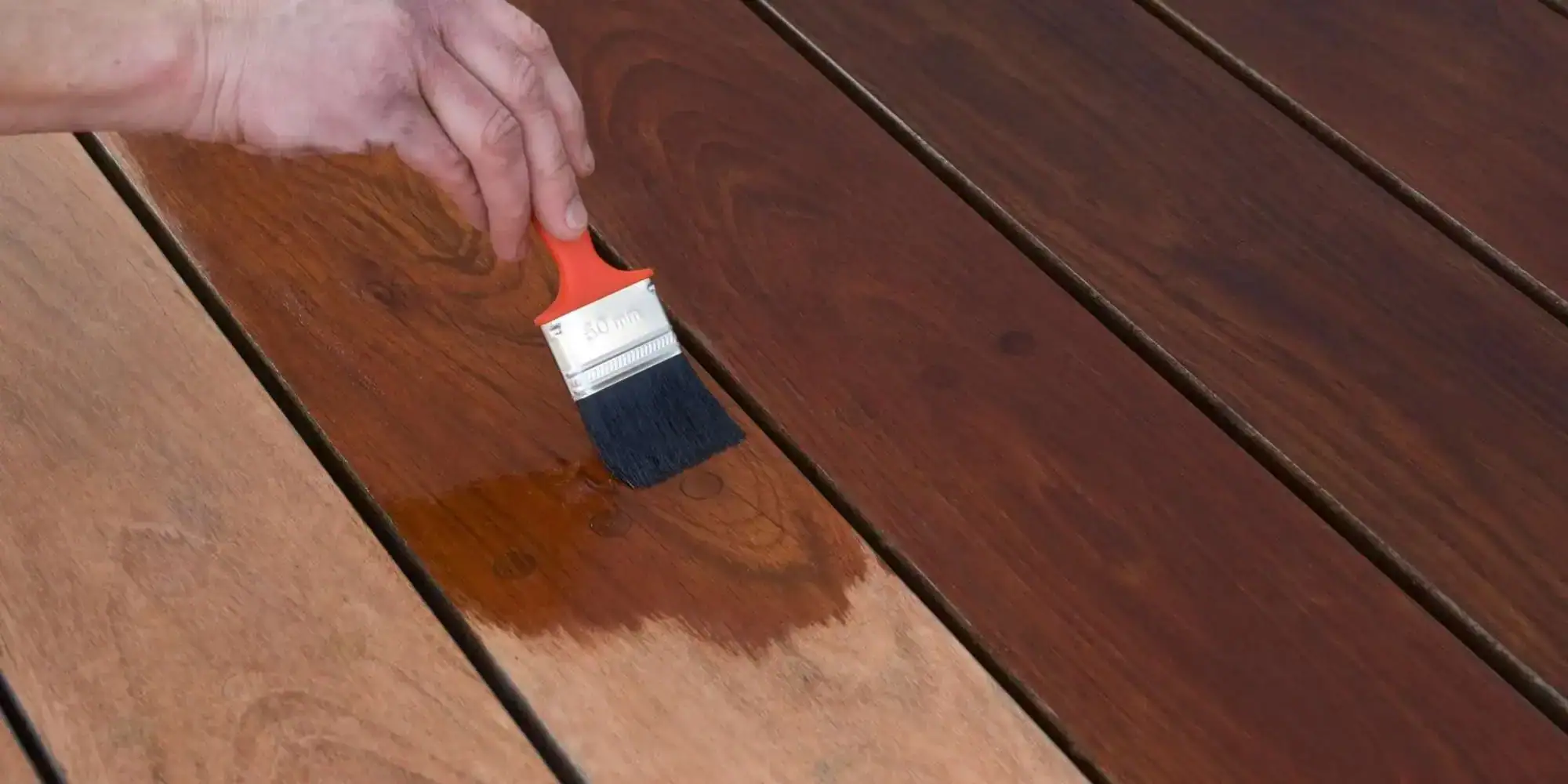
From there, the deck gets cleaned properly — not just rinsed, but treated to remove any existing mildew, organic debris, and surface contamination. Once the wood is clean and fully dry, we select the right stain product based on your specific wood type, its current condition, and the level of moisture and UV exposure your property faces. Pearl Beach waterfront decks need products formulated for high-moisture environments, not general-purpose options. Application follows, and the result is a finish that is built to hold through Michigan winters, not just look good on the day it dries. Deck staining in Pearl Beach does not require a permit from Clay Township — it is a maintenance service, not a structural alteration — so there is no bureaucratic delay between booking and getting started.
Ready to get started?
What we deliver in Pearl Beach is not a standard deck painting service with your address swapped in. The entire approach — product selection, prep method, application timing — is shaped by the specific conditions your deck actually faces. That includes the North Channel humidity, the Anchor Bay exposure, the organic debris that drifts in from the adjacent wildlife area, and the particular demands of a Michigan winter on wood that starts each season already saturated.
Our service covers full surface preparation, which is the most labor-intensive and skill-dependent part of the job. That means cleaning, mildew treatment where needed, sanding of rough or raised grain areas, and a full dry-time assessment before any product goes on. The stain type — transparent, semi-transparent, or solid — is chosen based on your deck’s age, wood condition, and how much of the natural grain you want preserved. Older decks with significant weathering often do better with a semi-transparent or solid formula that provides more coverage and protection. Newer or better-preserved wood can typically hold a transparent stain that lets the grain show through.
For Pearl Beach homeowners with larger waterfront decks, dock-adjacent structures, or multi-level outdoor living spaces, the scope of prep and application scales accordingly. The goal in every case is the same: a finish that protects the wood through real Michigan conditions and holds long enough to be worth every dollar you put into it. Competitive pricing and a free estimate mean you know exactly what you are getting before any work begins.
For most Pearl Beach waterfront properties, every two to three years is the realistic maintenance window — and for decks with direct exposure to the North Channel or Anchor Bay, leaning toward two years is the safer bet. The elevated moisture environment along the water accelerates the breakdown of stain and sealant faster than it would on an inland deck. You can do a simple water test to check where you stand: pour a small amount of water on the deck surface. If it beads up, the sealant is still working. If it soaks in, the wood is unprotected and it is time to restain.
Do not wait until the deck looks visibly grey or weathered to act. By that point, the wood has already been absorbing moisture unprotected for at least one full season, and in Pearl Beach’s waterfront climate, that translates to real structural wear. Catching it at the two-year mark — or before the summer boating season begins — keeps the job straightforward and the cost manageable.
The ideal window for deck staining in Pearl Beach runs from late May through early September, with June and July being the most reliable months for temperature and conditions. Stain needs dry weather and temperatures between 50°F and 90°F to cure properly — and in Pearl Beach, even summer days can carry elevated ambient humidity from the surrounding waterways, so picking the right day within that window matters as much as picking the right month.
One often-overlooked option is early fall — specifically September and into early October. Staining after the peak boating season but before the first hard freeze gives the sealant time to cure fully before winter moisture sets in. If you are thinking about booking, earlier in the season is always better. The best contractors in this area fill up fast once summer hits, and Pearl Beach homeowners who wait until July often find themselves pushed to August or later — which cuts into the curing time before winter arrives.
Staining and painting are not the same thing, and the right choice depends on what your deck actually needs. Stain — whether transparent, semi-transparent, or solid — penetrates into the wood fibers and protects from the inside out. Paint sits on top of the surface and forms a film. For most exterior decks, especially those exposed to the kind of moisture and temperature swings Pearl Beach properties face, stain is the better long-term choice. It flexes with the wood as it expands and contracts through Michigan’s seasons, which means it is less likely to peel, crack, or blister over time.
Paint can make sense in specific situations — particularly on older decks where the wood surface is too weathered or inconsistent to hold a clean stain finish, and where a solid, opaque coating is needed to unify the appearance. But for most Pearl Beach decks in reasonable condition, a quality semi-transparent or solid stain will outperform paint on durability and require less maintenance over time. Part of the initial assessment process is looking at your specific deck and recommending the right product for what the wood actually needs — not defaulting to whatever is easiest to apply.
No — deck staining is a maintenance service, not a structural alteration, so it does not require a building permit from Clay Township. You can schedule the work, get it done, and move on without any township approval or bureaucratic delay. That distinction matters in Pearl Beach, where Clay Township’s building department at 4710 Pointe Tremble Road in Algonac does require permits for deck construction, expansion, or structural repairs — but routine staining and sealing falls outside that requirement entirely.
If your deck assessment turns up boards that need replacement before staining — which is not uncommon on Pearl Beach waterfront properties where wood has been absorbing river moisture for years — that repair work may be a different conversation depending on scope. A straightforward board replacement as part of prep typically does not trigger a permit requirement, but if the work starts to involve structural framing or significant alteration, it is worth a quick call to Clay Township to confirm. We will flag anything that looks like it warrants that conversation before any work begins.
For a standard-sized deck, professional deck staining typically runs in the range of $300 to $1,000 depending on the deck’s size, current condition, and what prep work is required. For larger waterfront decks — the kind common on Pearl Beach properties along the North Channel, where outdoor living spaces are often more expansive and may include multi-level structures or dock-adjacent areas — a full project with thorough prep can run $1,500 to $3,000 or more.
The most useful way to think about that cost is against the alternative. Full deck replacement in Michigan averages $5,000 to $15,000 depending on size and materials. A professional staining job maintained on a consistent two-to-three-year cycle can extend a deck’s functional lifespan from the typical 10 to 15 years of an untreated structure to 20 to 25 years or beyond. For Pearl Beach homeowners who have invested in waterfront properties at median values of $329,000 and above, that math is straightforward. Our free estimate gives you a specific number for your specific deck before you commit to anything.
You can stain a deck yourself, and plenty of people do. The honest answer is that the quality of the result depends almost entirely on the prep work — and prep is where most DIY staining jobs fall short. Power washing alone is not adequate surface preparation. Proper prep involves treating any existing mildew or algae growth, sanding rough or raised grain areas, and making sure the wood is completely dry before any product is applied. In Pearl Beach’s waterfront environment, where decks often carry mold and algae from the humidity and organic debris near the St. John’s Marsh area, skipping or rushing that step means the stain will not bond properly and will fail well before it should.
The other variable is product selection. The stains available at big-box hardware stores are general-purpose products — they are not formulated specifically for high-moisture waterfront exposure. Applying the wrong product to a Pearl Beach deck does not just produce a subpar result; it can lock in moisture or create a surface condition that makes the next proper staining job harder and more expensive. We bring the right product for the actual conditions your deck faces, apply it correctly, and back the result. For most homeowners, that combination is worth more than the cost difference between DIY and professional deck staining services in Pearl Beach, MI.
