
Hear from Our Customers

Most St. Clair kitchens were built in the 1950s and 1960s. The cabinets are solid — good wood, good bones — but decades of cooking, humidity off the St. Clair River, and Michigan winters have left the finish looking tired. That’s not a replacement problem. That’s a painting problem, and it’s one worth solving the right way.
When cabinet painting is done with proper prep — real degreasing, sanding, bonding primer, and a cabinet-grade finish — it lasts 7 to 15 years. That’s not a guess. That’s what happens when the process isn’t rushed and the right materials are used. For a home sitting along the St. Clair River corridor or a few blocks from Palmer Park, where ambient humidity runs high year-round, that prep work isn’t optional. It’s what separates a finish that holds from one that starts peeling by year two.
The cost difference compared to full replacement is hard to ignore. New cabinetry in Michigan typically runs $15,000 to $30,000 or more. Professional cabinet painting in St. Clair runs a fraction of that — and if you’re thinking about selling, freshly painted cabinets return 60 to 80 percent of the investment at resale. For a home in a market where the St. Clair median is pushing $287,000, that’s not a small number.
We’re a family-run, two-brother painting operation with over 10 years of hands-on experience. The company name is a couple of years old. The craftsmanship behind it isn’t. Every cabinet painting job in St. Clair, MI gets the same attention — no shortcuts, no subbing it out, no sending someone who doesn’t care about the result.
We serve St. Clair County and the communities along the M-29 river corridor — Marine City, Marysville, and the surrounding area. When you search for cabinet painters near St. Clair, most of what comes up is from St. Clair Shores, a completely different community more than 35 miles away. We’re not that. We know this area, we work in it regularly, and we’re not treating your home like a number on a route sheet.
Our rating on HomeAdvisor and Angi sits at 4.9 out of 5 stars. That didn’t happen by accident. It happened because when your name is on the work, you do it right.
It starts with a free estimate. We come out, take a look at your cabinets, talk through your goals, and give you a detailed number before anything else happens. No vague ranges, no surprises at the end. You know what you’re getting and what it costs before we ever pick up a brush.
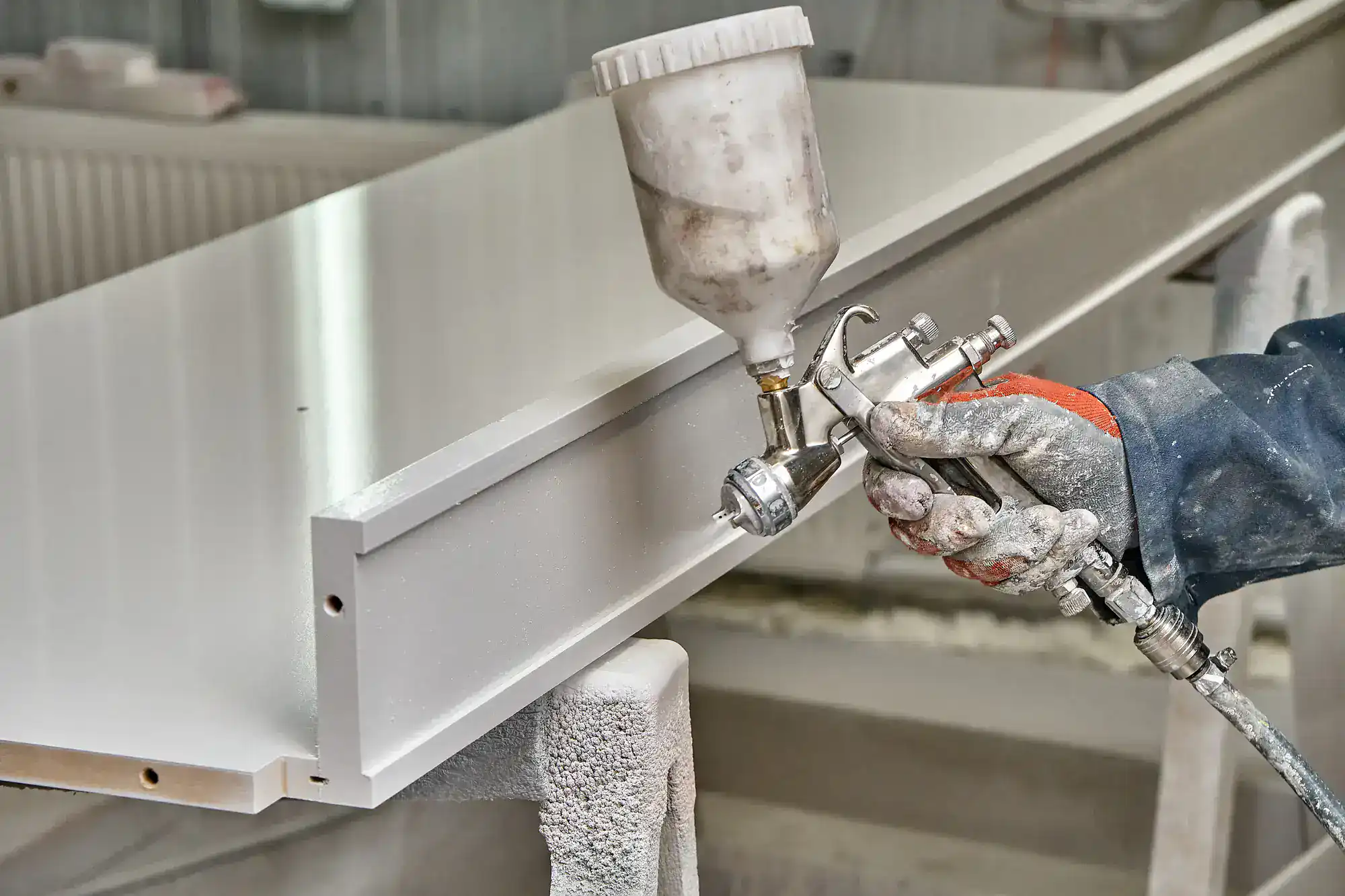
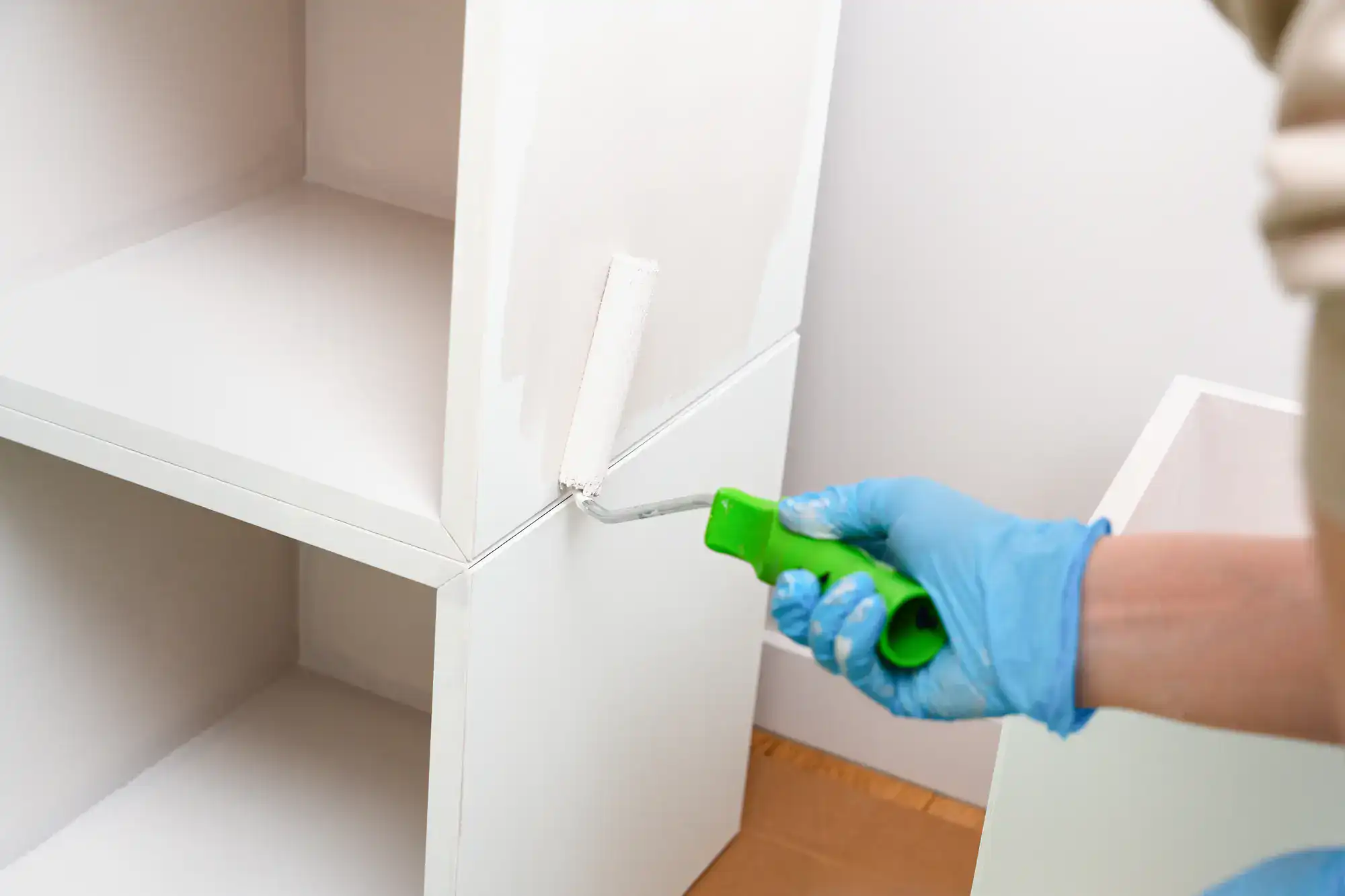
Once the job starts, we remove every cabinet door and all hardware. That’s not something every painter does, but it’s the only way to get a clean, even finish on all surfaces. Then we degrease — thoroughly. Grease is the number one reason painted cabinets fail, and in a kitchen that’s been cooking for 40 or 50 years, it builds up in places you wouldn’t expect. After degreasing, we sand for mechanical adhesion, apply a bonding primer, and then the cabinet-grade finish coats. We don’t use wall paint on cabinets. The materials matter, especially in a home where kitchen humidity is already working against you.
Most projects in St. Clair wrap up in approximately one week. Before we leave, we reassemble everything and walk through the finished job with you. If something isn’t right, we handle it on the spot. Given that most homes in the city predate 1978, we’re also mindful of lead-safe practices throughout — that’s not a footnote, it’s part of how we work.
Ready to get started?
Cabinet painting in St. Clair isn’t a one-size-fits-all job. The homes here — particularly the mid-century builds that make up the majority of the city’s housing stock — have older wood, original finishes, and in many cases surfaces that have never been properly prepped before. That history shows up when you try to paint over it without doing the work first. We don’t skip that work.
Every job includes full door and hardware removal, chemical degreasing, surface sanding, bonding primer, and cabinet-grade topcoats that are formulated for kitchen conditions — not repurposed wall paint. We account for the elevated humidity that comes with living near the St. Clair River and the Pine River, which means we also allow full curing time before reassembly. Rushing that step is how you end up with a finish that looks fine on day one and starts sticking or chipping within months.
If you’re updating a waterfront property, preparing a home for sale, or just tired of walking into a kitchen that looks like it hasn’t been touched since 1965 — this is the service. We handle full kitchens, bathroom vanities, and built-in cabinetry throughout the home. Color guidance is included if you want it. The goal is a finish that looks intentional, holds up to daily use, and doesn’t need to be redone in two years.
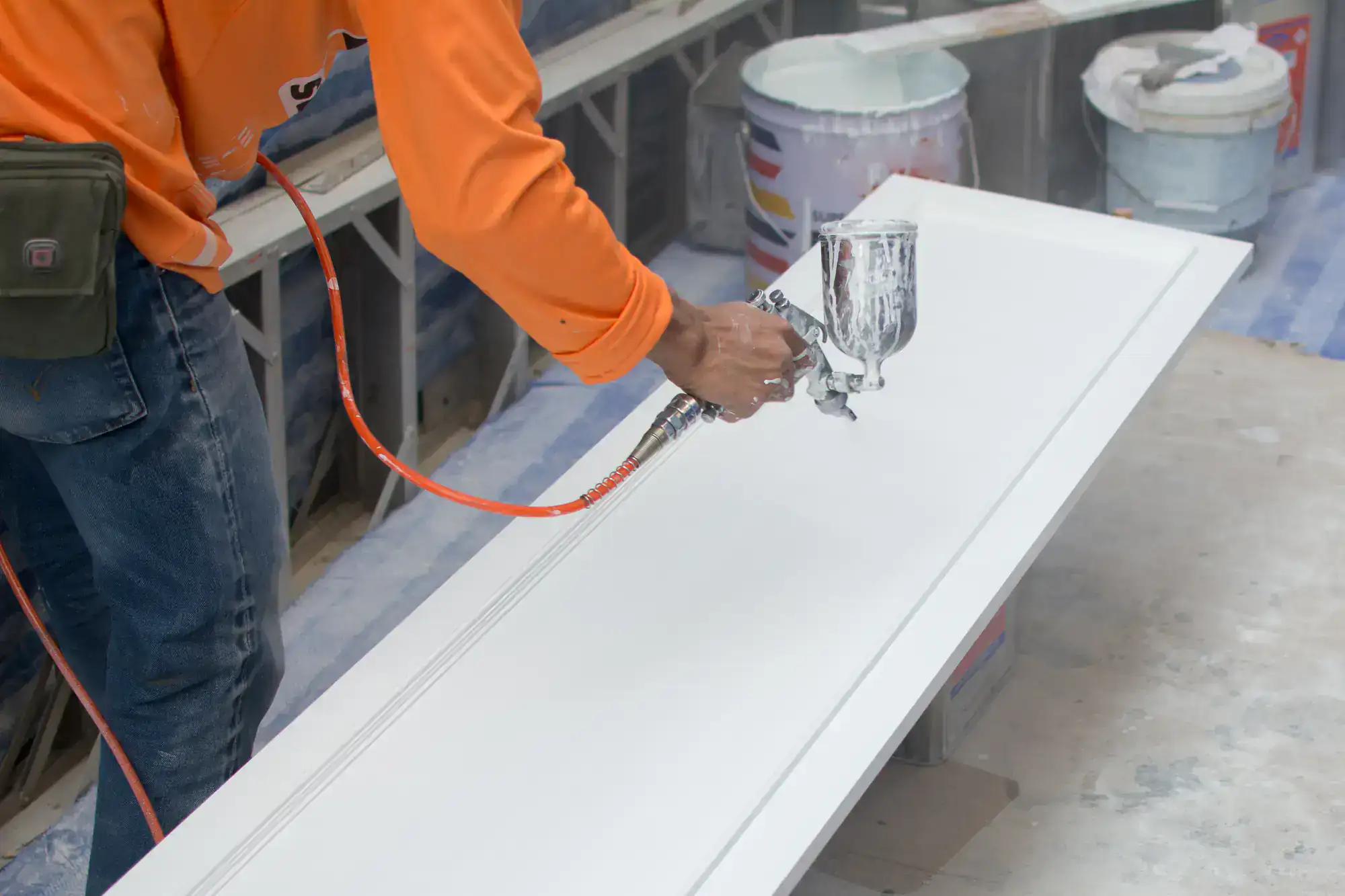
Done correctly, a professional cabinet painting job lasts anywhere from 7 to 15 years. The range comes down to prep quality, material choice, and how the kitchen is used day to day. A finish applied over properly degreased, sanded, and primed surfaces — using a cabinet-grade paint rather than standard wall paint — holds up significantly longer than a rushed coat over an old, greasy surface.
In St. Clair specifically, the humidity coming off the St. Clair River and Pine River adds real-world stress to any interior finish. That’s why the prep process matters more here than it might in a drier inland community. When we work on cabinets in this area, we factor in that moisture exposure — using bonding primers and finishes rated for kitchen environments, and allowing full cure time before reassembly. That’s what gets you toward the longer end of that lifespan range.
Cabinet painting in St. Clair, MI typically runs between $2,000 and $6,500 for a full kitchen, depending on the number of cabinet doors, the condition of the existing surfaces, and the finish selected. Most mid-size kitchens in the city’s older housing stock land somewhere in the middle of that range.
Compare that to full cabinet replacement, which in Michigan generally starts around $15,000 and can push well past $30,000 once installation and finishing are factored in. For a St. Clair home where the cabinets are structurally sound — which is common in the solid-wood construction of 1950s and 1960s builds — painting is the smarter financial move. You’re not paying to fix something that isn’t broken. You’re updating the finish on something that was built to last. We provide a detailed estimate before any work begins, so you know the exact number upfront.
Yes — if the prep work is done right. Homes near the St. Clair River and Pine River deal with higher ambient humidity than inland properties, and that moisture is one of the main reasons painted cabinet finishes fail prematurely. But the failure isn’t caused by the location. It’s caused by skipping the steps that protect against it.
Proper degreasing removes the surface contamination that blocks adhesion. Sanding gives the primer something real to grip. A bonding primer creates the foundation the topcoat needs to stay put. And a cabinet-grade finish — not wall paint — is formulated to handle the heat, moisture, and daily contact that a kitchen surface takes. When all of those steps are done in sequence and the finish is allowed to fully cure before the doors go back on, river-adjacent humidity is a manageable condition, not a dealbreaker. We’ve painted cabinets in homes throughout St. Clair County with exactly these conditions, and the results hold.
Yes, and honestly, older cabinets are often better candidates for painting than newer ones. The solid wood construction common in St. Clair’s mid-century homes takes paint well when the surface is properly prepared. The challenge with older cabinets isn’t the wood — it’s the decades of grease, old finishes, and in some cases original paint that may contain lead.
Because the vast majority of homes in St. Clair were built before 1978, lead-based paint is a real possibility on original surfaces. We work with lead-safe practices throughout the process — that means proper containment, careful sanding procedures, and handling any disturbed material responsibly. It’s not something to ignore or work around. Beyond that, older wood sometimes has surface irregularities that need extra attention during prep, and we account for that in the estimate. The result is a finish that looks intentional and updated, without losing the character of a kitchen that’s been part of the home for 60 or 70 years.
Most cabinet painting projects in St. Clair wrap up in approximately one week. That timeline covers door removal, full prep work, primer, finish coats, curing time, and reassembly. Your kitchen stays accessible throughout — we’re not gutting anything, and the space remains usable for basic needs while the work is in progress.
The one variable that can extend the timeline is curing. Cabinet-grade finishes need adequate time to harden before the doors go back on and back into daily use. In St. Clair’s more humid months — particularly late spring through summer, when moisture off the river is at its peak — we account for that in the schedule rather than rushing reassembly. A finish that’s reassembled too early can stick, dent, or mark before it’s fully hardened, and that’s not a result either of us wants. We’d rather take an extra day than hand you back a kitchen that fails in the first month.
For most sellers, yes — it’s one of the better-returning updates you can make before listing. Freshly painted cabinets return an estimated 60 to 80 percent of the project cost in added sale value, and more importantly, they change how a kitchen photographs and shows. In a market where St. Clair’s median home value is approaching $287,000 and buyer expectations are rising alongside it, a dated kitchen with worn cabinet finishes can cost you more in negotiated price reductions than the painting project itself would have.
The other factor is timing. Cabinet painting takes about a week and causes minimal disruption compared to a full renovation. If you’re preparing to list in spring — which is a strong selling season in St. Clair, especially with the waterfront appeal drawing buyers from across the county — booking a cabinet painting project in late winter gives you time to complete the work, let the finish fully cure, and stage the kitchen before it hits the market. It’s a straightforward update with a clear payoff, and we can walk you through what’s realistic for your specific kitchen during the estimate.